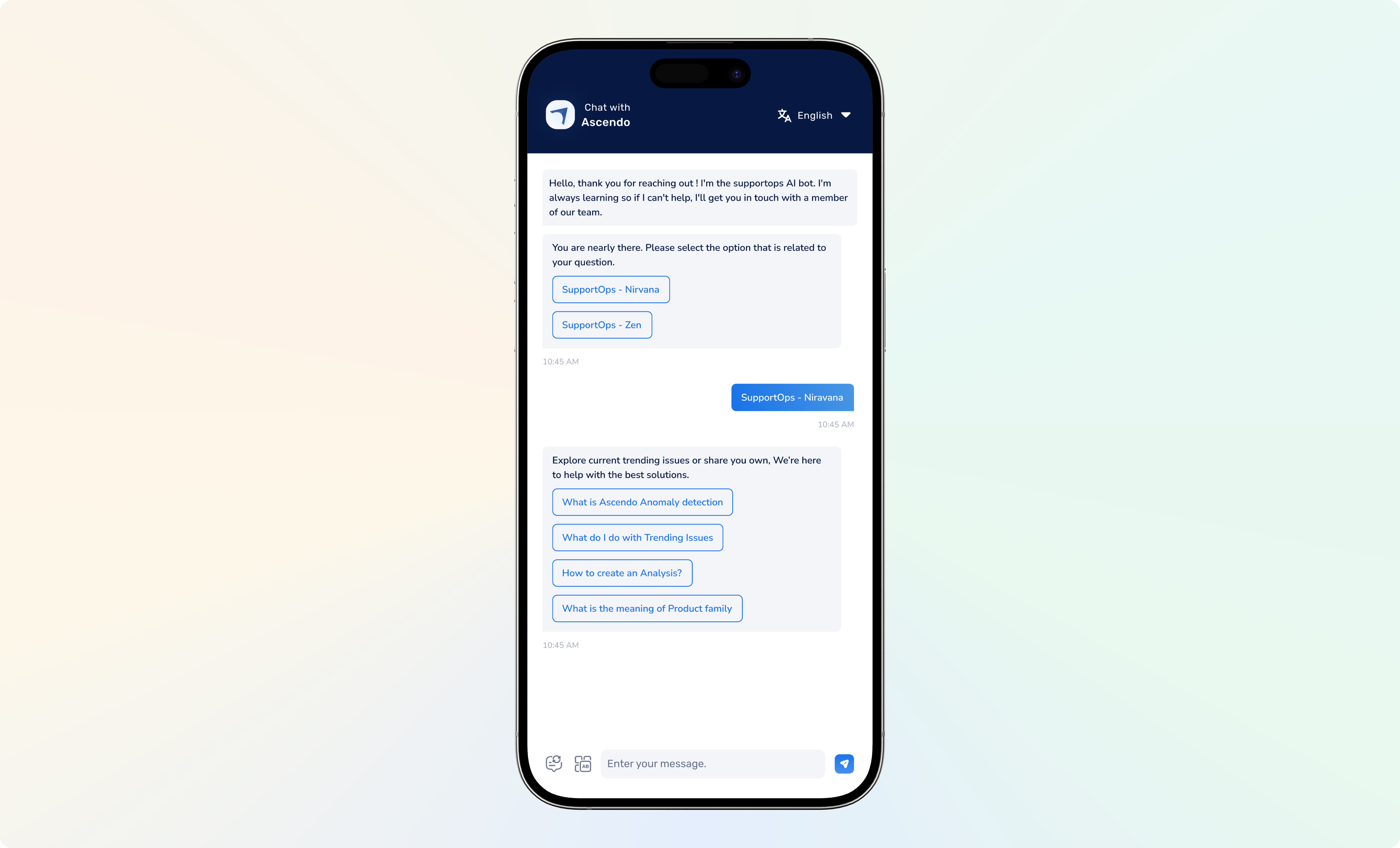
The exit is what makes it honest
Any self-service system can keep a customer busy. What separates a good one is knowing when it is not helping and saying so early. That costs a deflection and earns a customer.
A customer resolves their own issue without opening a ticket. The tour follows the whole path — including the point where the system decides it cannot help and routes to a person, rather than looping the customer through dead ends until they give up.
Every self-service programme reports a deflection rate, and most are measuring the wrong thing. A contact that did not become a ticket is not necessarily a customer who got their answer. It might be a customer who gave up.
Those two look identical in the reporting and are opposites in reality. One saved you a ticket; the other cost you trust and comes back next week through a more expensive channel.
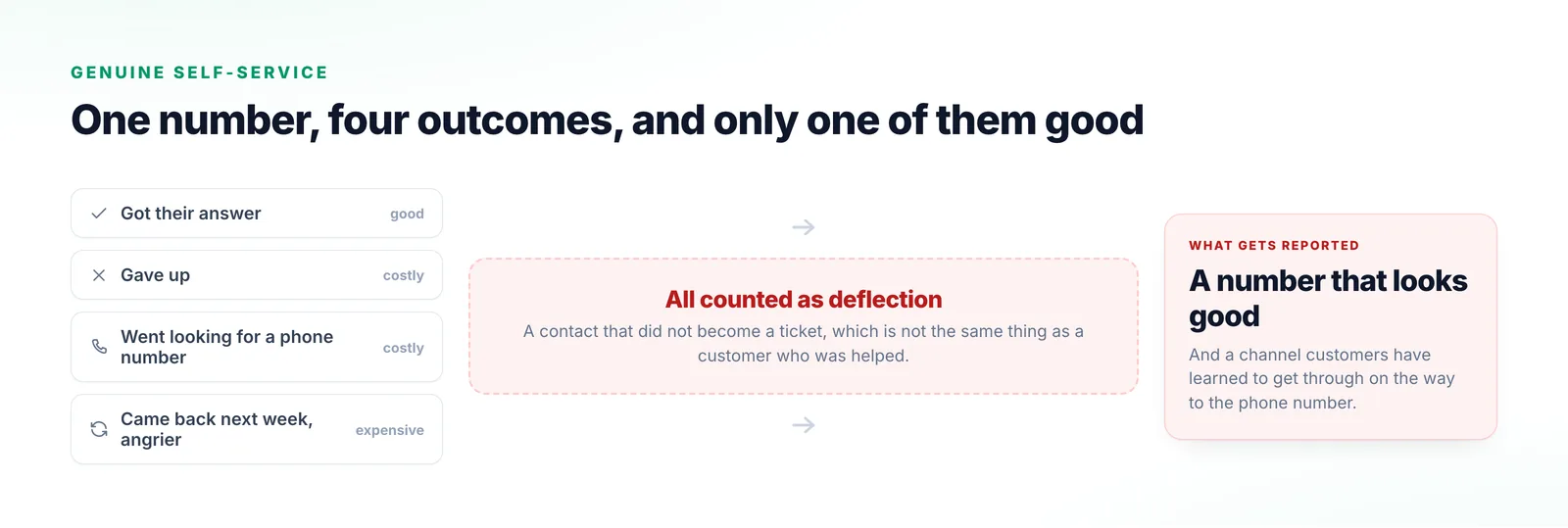
The fourth step is the one that makes the first three trustworthy.
What the customer describes is read as a problem rather than matched against article titles.
The response comes from your documentation and the cases your team has resolved, which is what makes it specific enough to fix something.
The customer is taken through the steps rather than handed a document, with what they report back shaping what comes next.
Where the path is not leading anywhere it routes to a person with everything gathered attached.
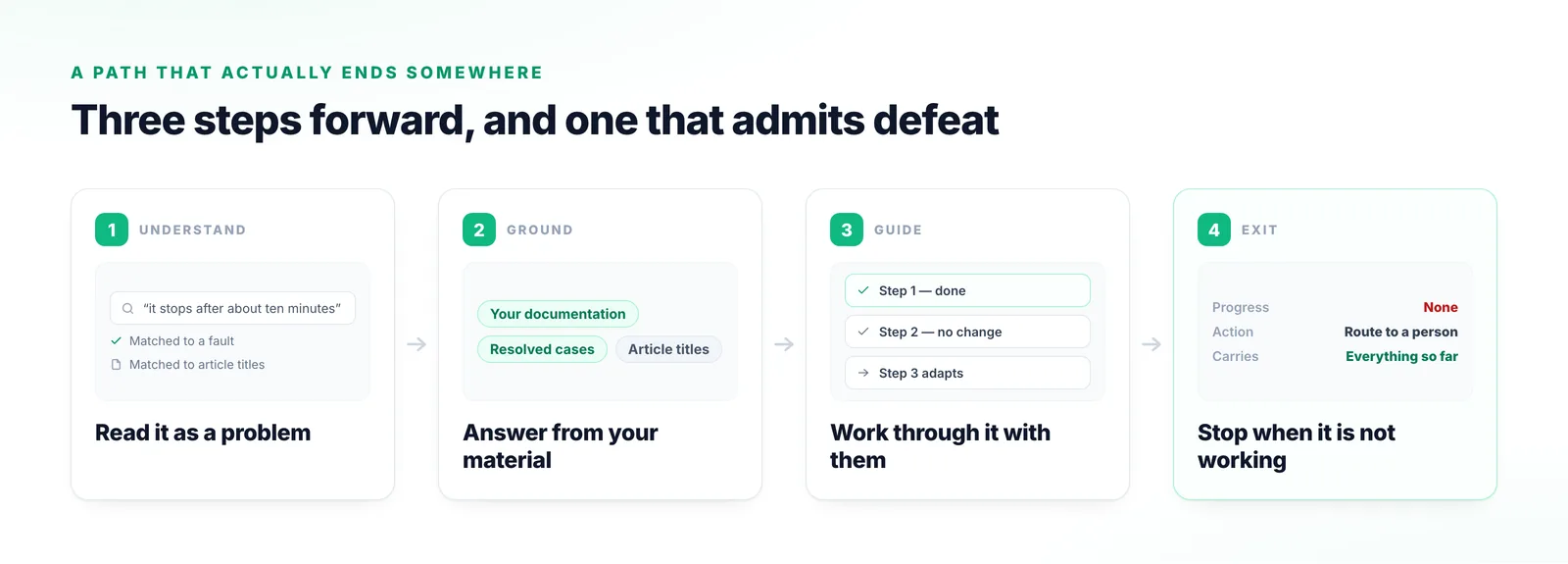
One of these is a design decision most vendors avoid making.
Any self-service system can keep a customer busy. What separates a good one is knowing when it is not helping and saying so early. That costs a deflection and earns a customer.
Traditional self-service matches the customer’s words against a document library. Answering from your own material is the difference between being handed something to read and being told what to do.
A deflection rate counts contacts that did not happen, which includes every customer who gave up. What is worth measuring is whether the problem went away.
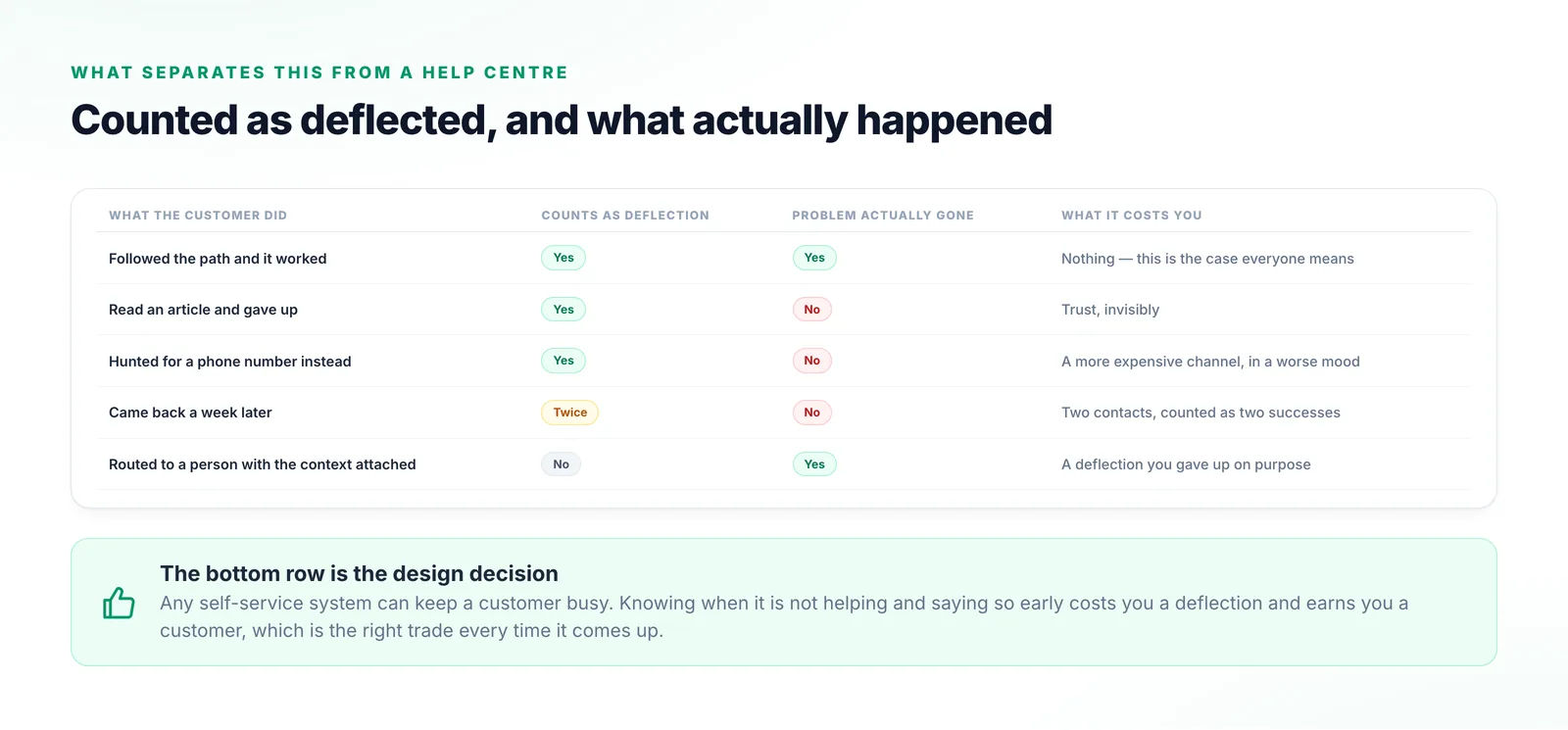
Three of them report well and help less than the number suggests.
Matches words against article titles and hands over a document.
Conversational packaging on the same lookup, and it usually fails by looping.
Sends an article and closes the contact. It counts as a deflection whether or not it helped.
Every routine question reaches a person, including ones a customer would have solved at midnight.
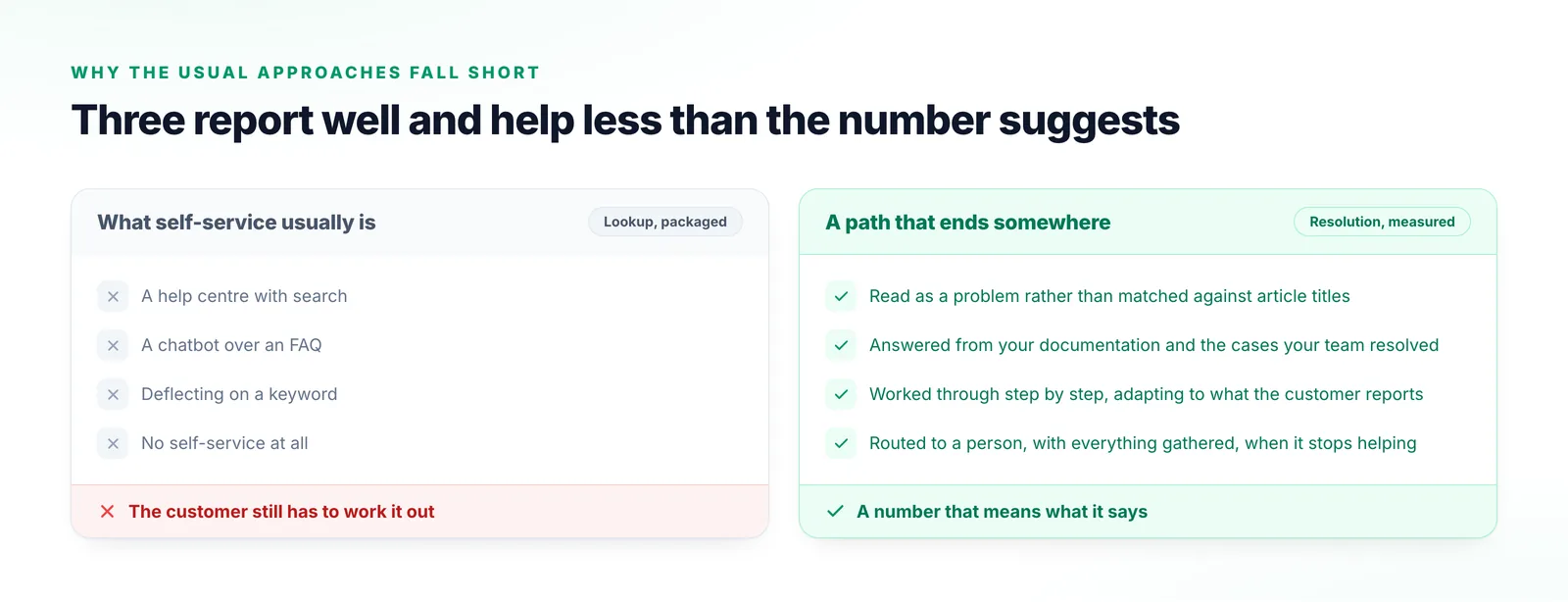
Deflection and resolution are the pair worth keeping apart.
What carries across at the moment self-service stops and a person takes over.
Running a different assistant per product line, segment or channel over one knowledge foundation.
The pluggable component for putting this into an existing website or portal.
Support Channels
Take last month’s deflected contacts and look at who came back. We will show you the difference between avoided and resolved.
Talk to us