Compare approaches to service AI
Straight comparisons of the decisions service organisations actually weigh, written to be useful whichever way you decide.
Every page here names the conditions under which the alternative is the better choice. A comparison that concludes the same way in every row is not worth reading.
Ascendo vs the tools you already have
Knowledge bases, enterprise search, general-purpose AI assistants and in-house builds: what each does well, and where service resolution needs something else.
Ascendo vs Knowledge Bases
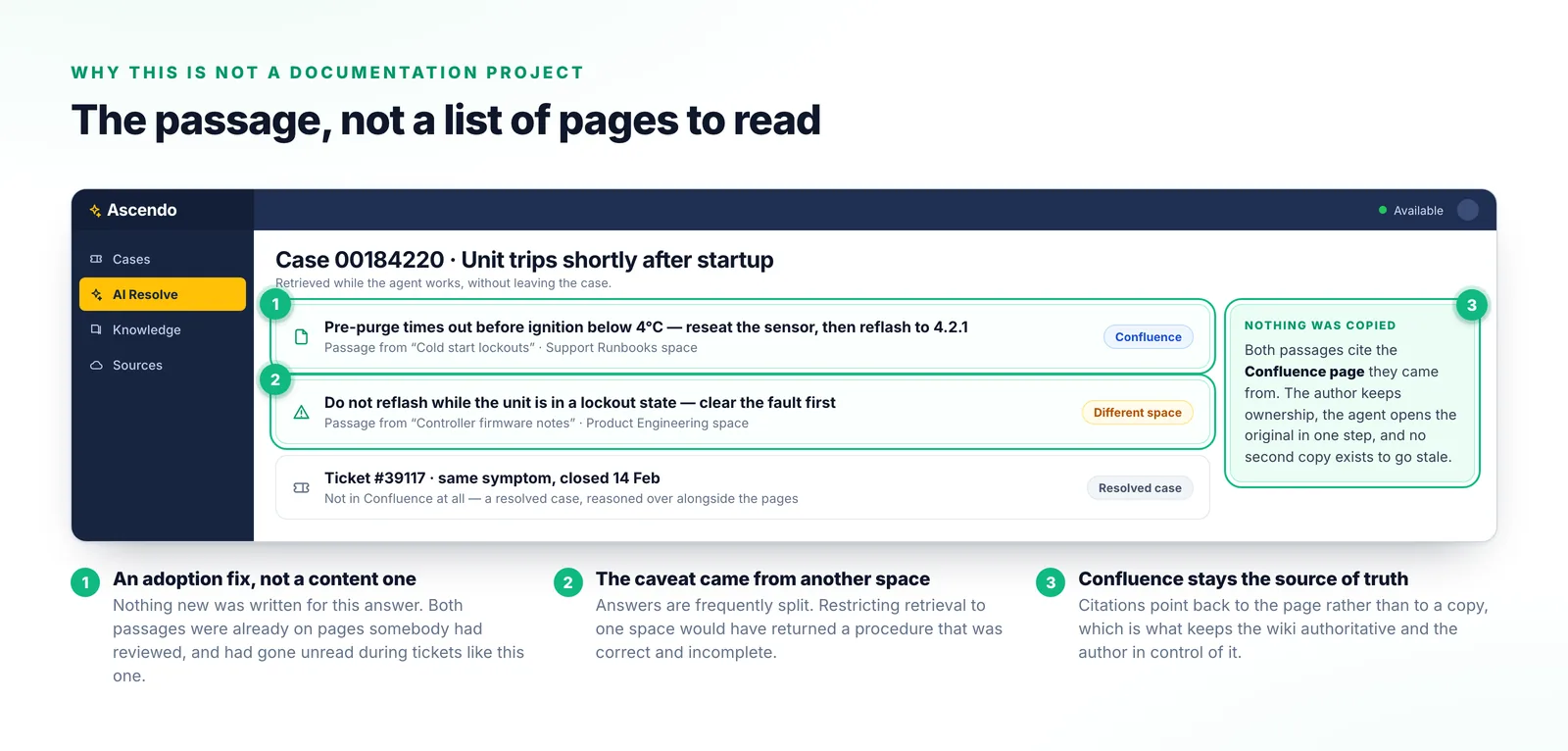
A knowledge base stores the articles someone wrote and returns them when searched, so it covers only what was documented. Ascendo reasons over those articles together with closed cases, service logs and asset history, and returns a cited resolution for faults nobody documented. It reads the knowledge base rather than replacing it.
Read the comparison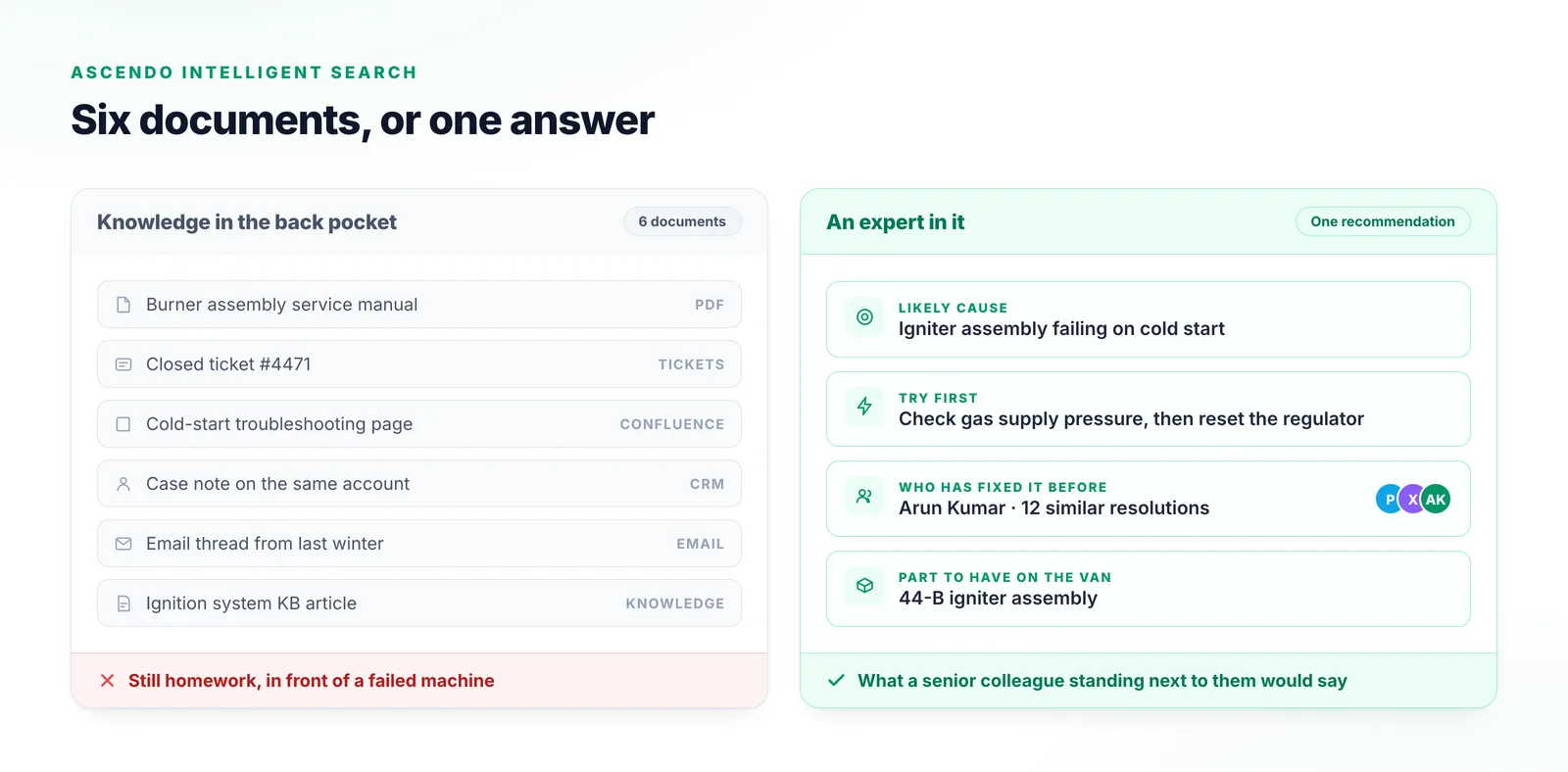
Ascendo vs Enterprise Search
Enterprise search indexes content across company applications and returns the most relevant documents or a generated summary, so a person still has to work out the fix. Ascendo is built for service resolution: it reasons over resolved cases, manuals and asset history to propose the likely cause and repair steps, citing the sources behind each one.
Read the comparison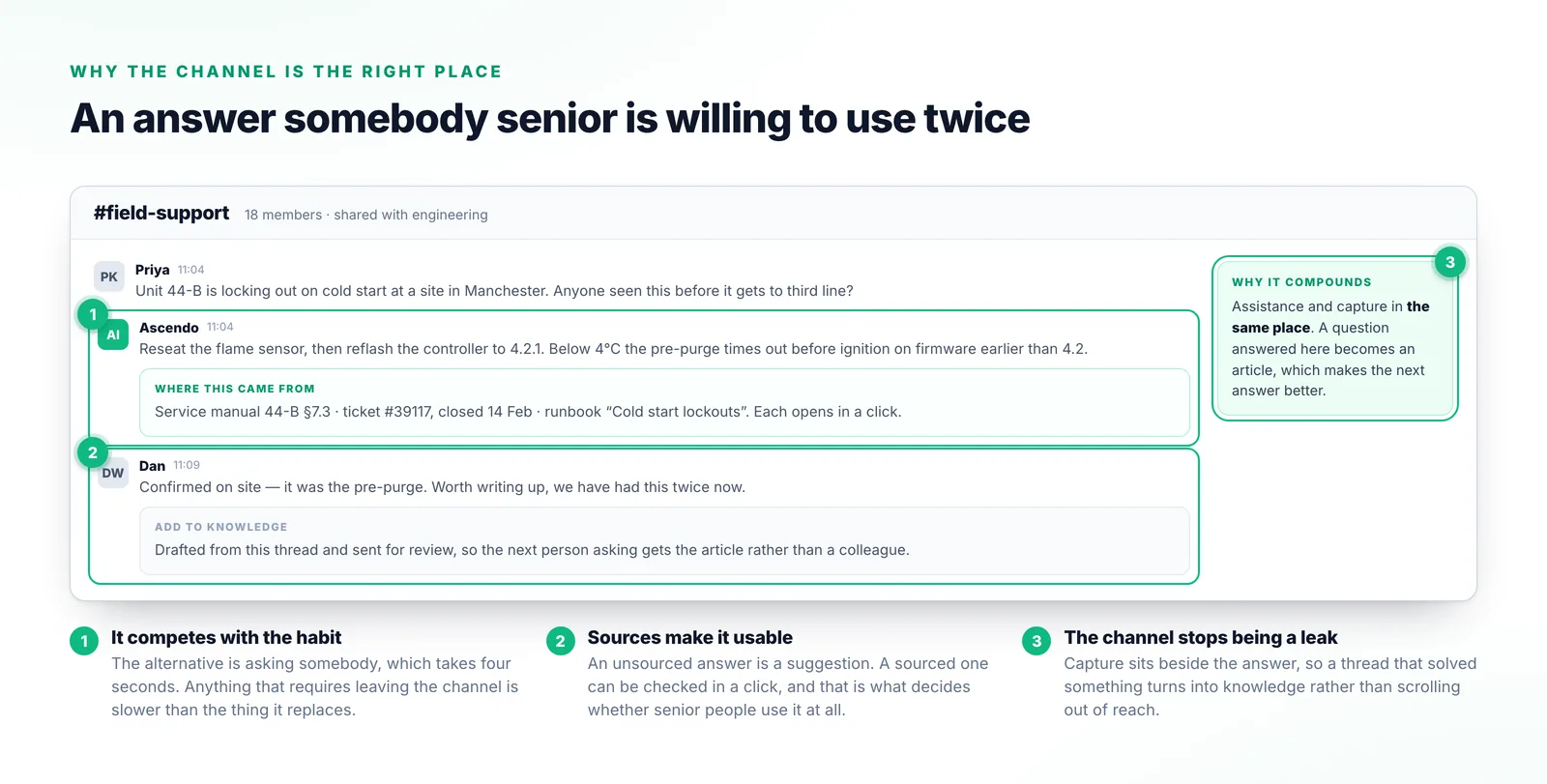
Ascendo vs Generic AI Assistants
General-purpose AI assistants such as ChatGPT and Microsoft Copilot answer from broad training data and whichever documents they are connected to, which suits general questions better than diagnosing a specific fault on a specific asset. Ascendo works from an organisation’s own service records, asset history and resolved cases, cites its sources, and acts in the systems of record.
Read the comparison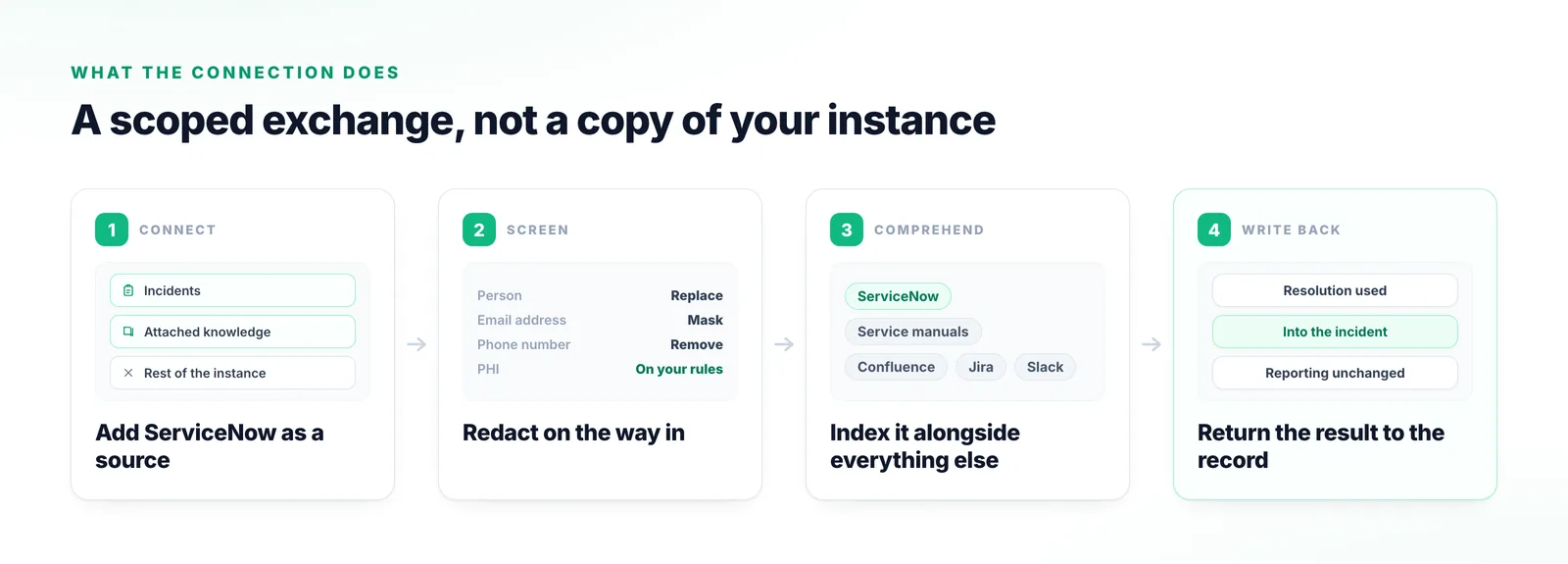
Ascendo vs Building It In-House
Building service AI in-house on a foundation model gives full control, and commits an engineering team to data pipelines for every source, evaluation, security review and maintenance as models change. Ascendo provides that layer already built for service operations, with agents for resolution, dispatch, parts and root cause that connect to existing systems.
Read the comparison
Choosing an approach
The structural decisions behind service AI: agents against chatbots, field service management software, ERP forecasting and hiring.
AI Agents vs Rule-Based Chatbots
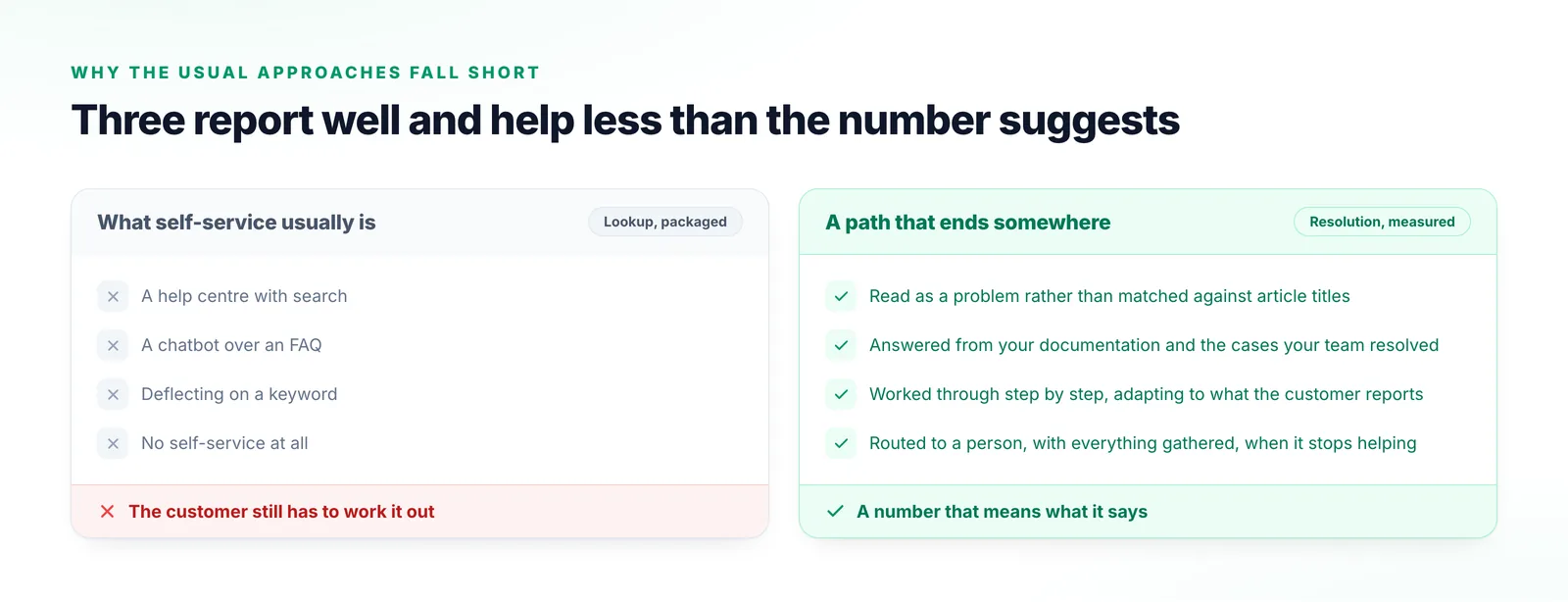
A rule-based chatbot follows a decision tree written in advance, so it answers only the questions someone anticipated. An AI agent reasons over service history, documentation and asset data to construct an answer it was never scripted for, cites where that answer came from, and can act in connected systems rather than only reply. Ascendo builds agents of this kind for service teams.
Read the comparison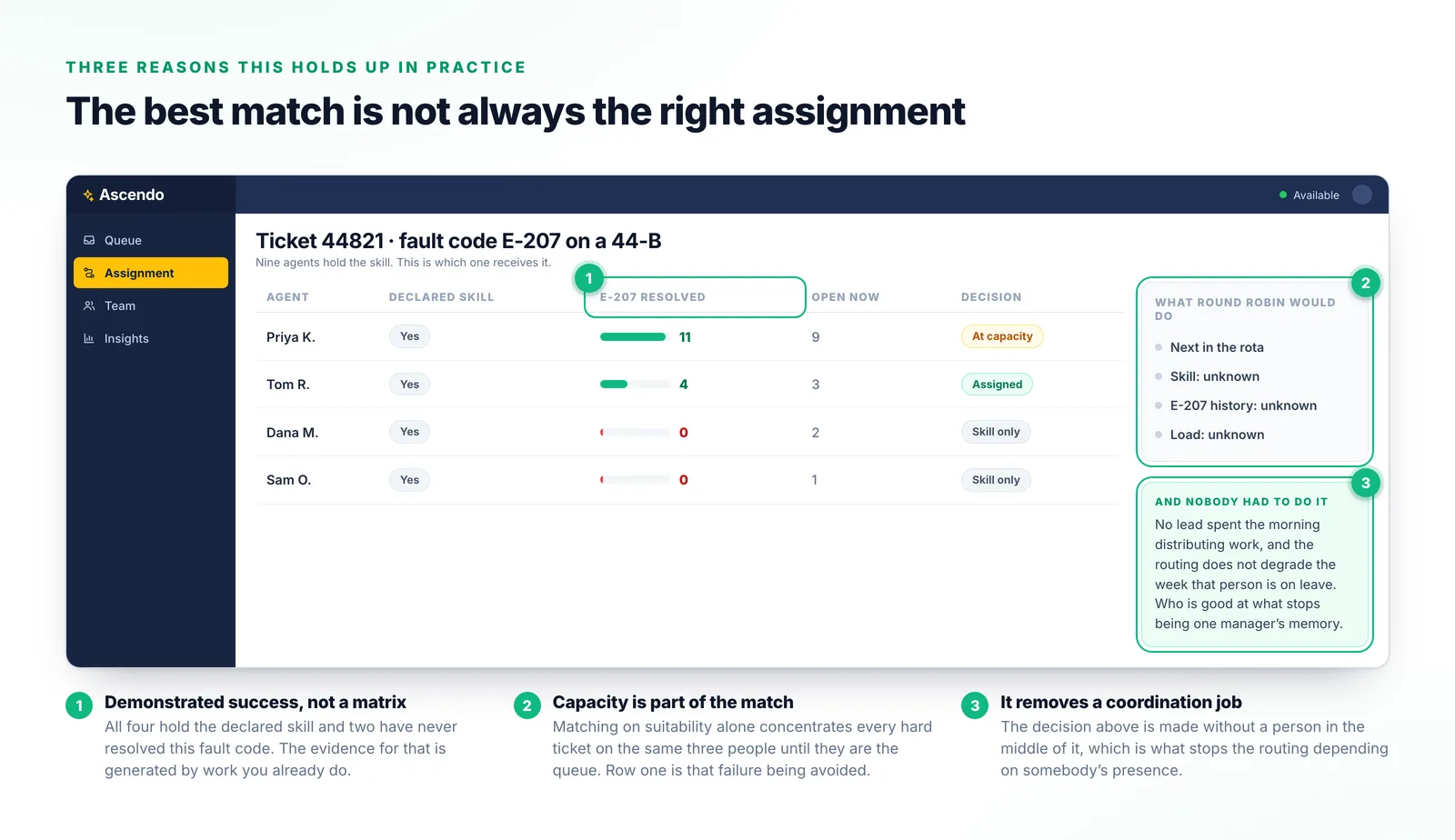
Agentic AI vs Field Service Management Software
Field service management software is the system of record: it stores work orders, assets, contracts and technician schedules, and tracks work through to completion. Agentic AI is the system of judgment: it predicts which asset will fail, which part to pre-position, which technician to send and what the likely fix is. Most organisations run both, with Ascendo supplying the judgment layer over the FSM record.
Read the comparison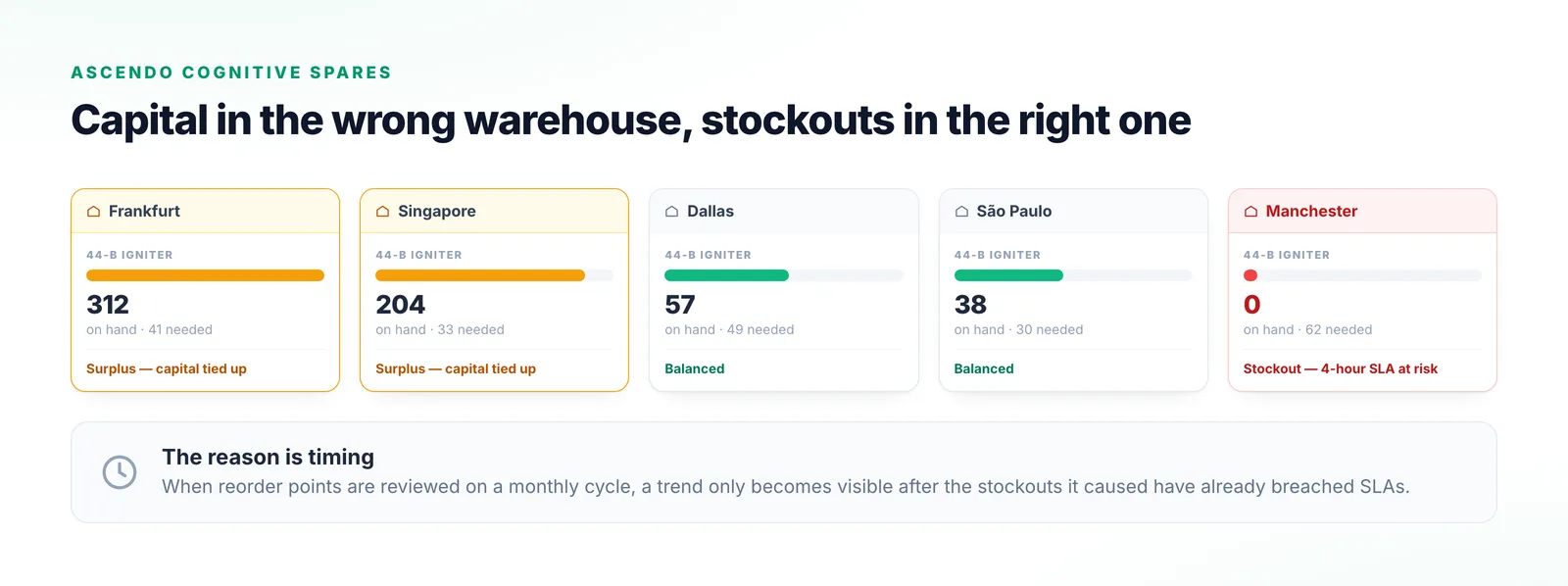
AI Spare Parts Planning vs ERP Forecasting
ERP forecasting projects spare parts demand from past consumption, so it plans accurately for parts that move steadily and poorly for parts that fail rarely and unpredictably. AI spare parts planning predicts demand from failure signals — asset telemetry, service history and open cases — so a critical slow-moving part can be positioned before the failure that consumes it. Ascendo’s spare-parts agent forecasts this way.
Read the comparison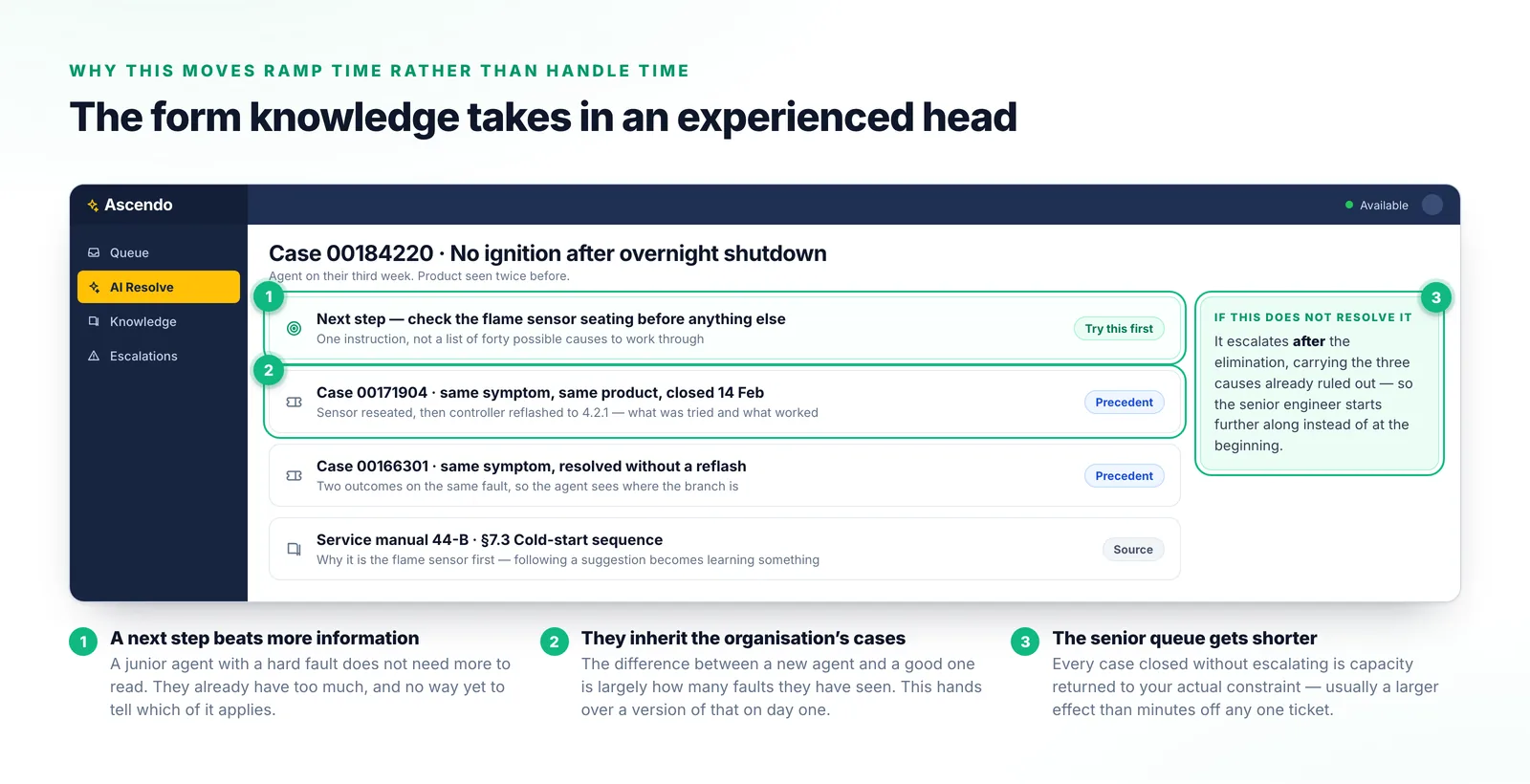
AI Agents vs Hiring More Technicians
Hiring adds capacity, but a new service technician takes months to a year to reach senior productivity, and that expertise leaves when the person does. AI agents capture how experienced technicians diagnose and deliver it at the point of work, so newer technicians resolve unfamiliar faults like experienced ones. The two solve different constraints. Ascendo captures that expertise as a company brain.
Read the comparison