The customer keeps what they asked for
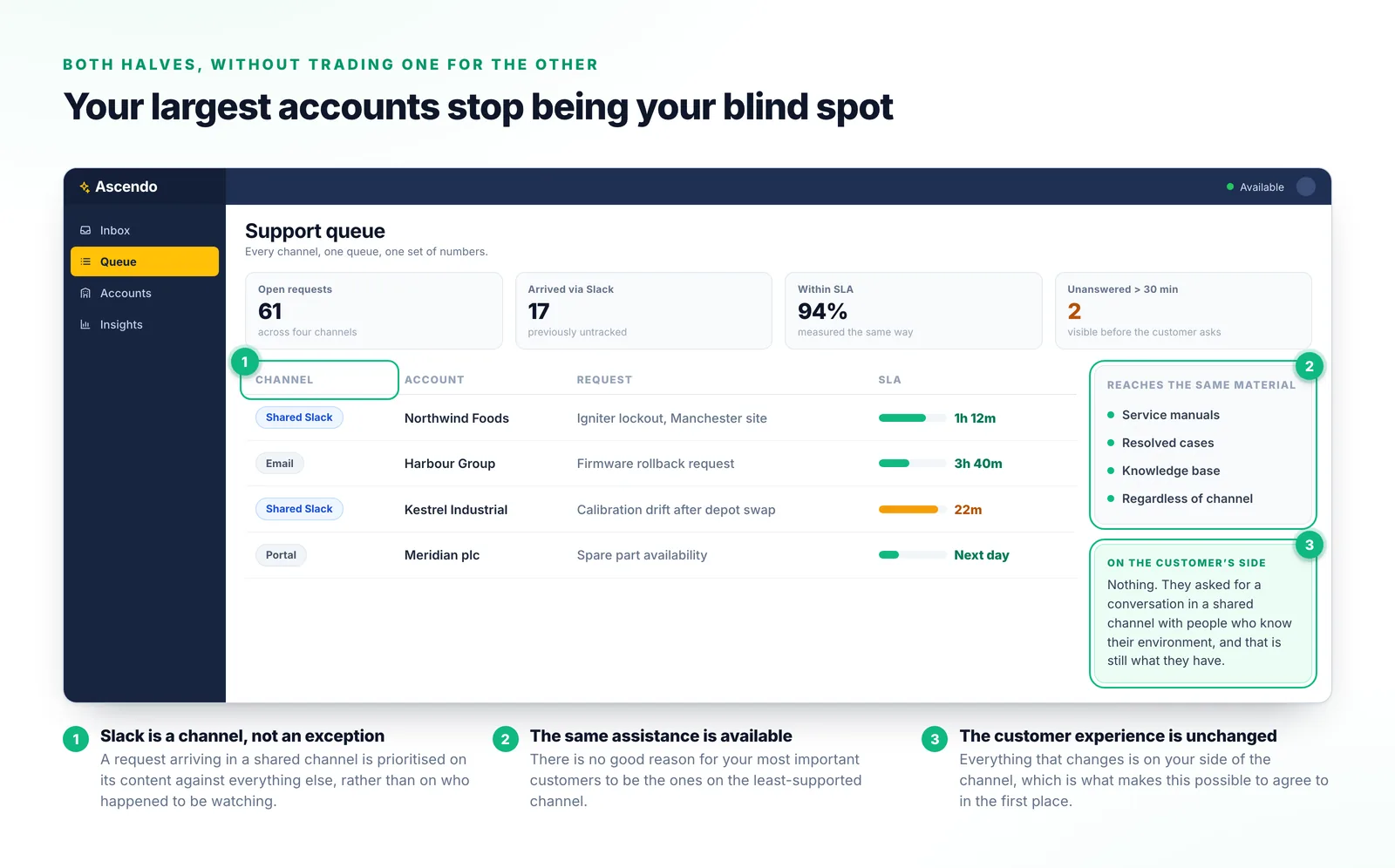
None of this changes the customer’s experience. They wanted a conversation with people who know their environment, and that is still what they have.
Enterprise customers increasingly expect a shared Slack channel rather than a ticket portal, and support operations needs something a shared channel does not naturally provide: a record, an SLA and a way to report on it. This is running one without giving up the other.
High-touch enterprise accounts increasingly ask for a shared channel, and they are not being unreasonable. It is faster, it is where their engineers already are, and it feels like a relationship rather than a queue.
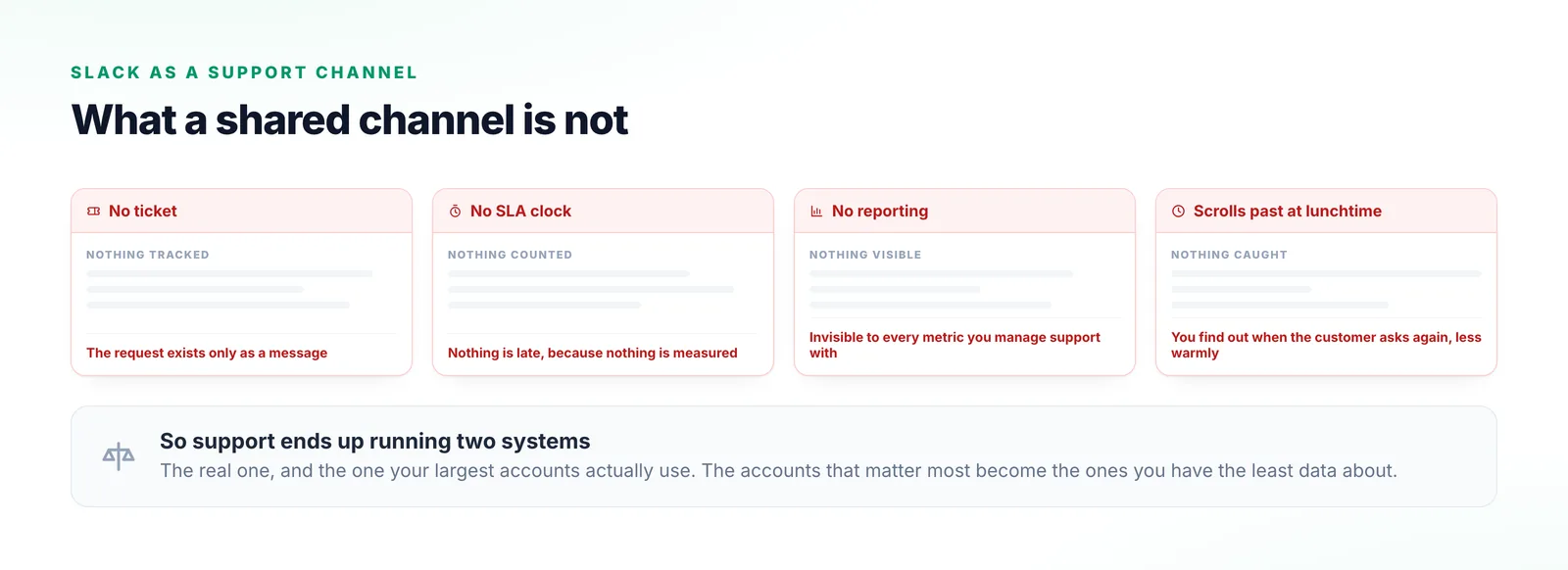
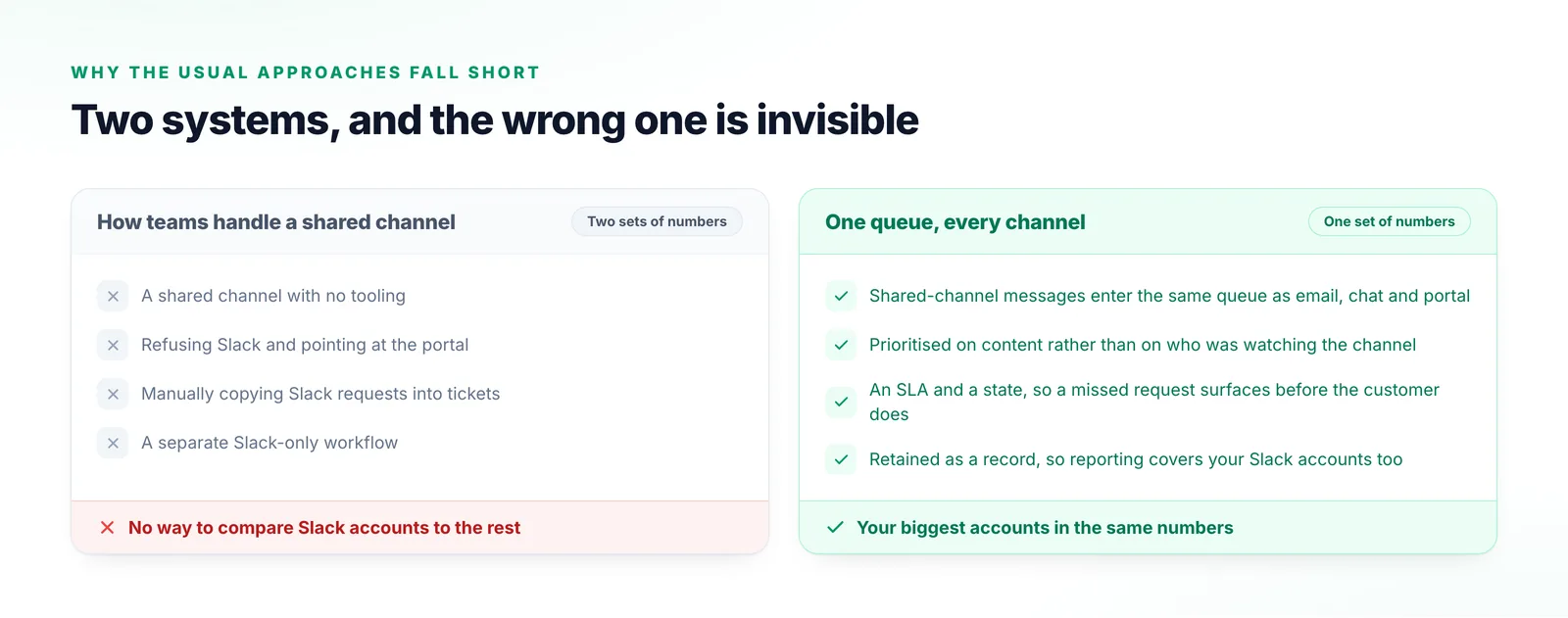
The problem is what a shared channel is not. No ticket, no SLA clock, no reporting. So support runs two systems — the real one, and the one your largest accounts actually use — and the second is invisible to every metric you manage the first with.
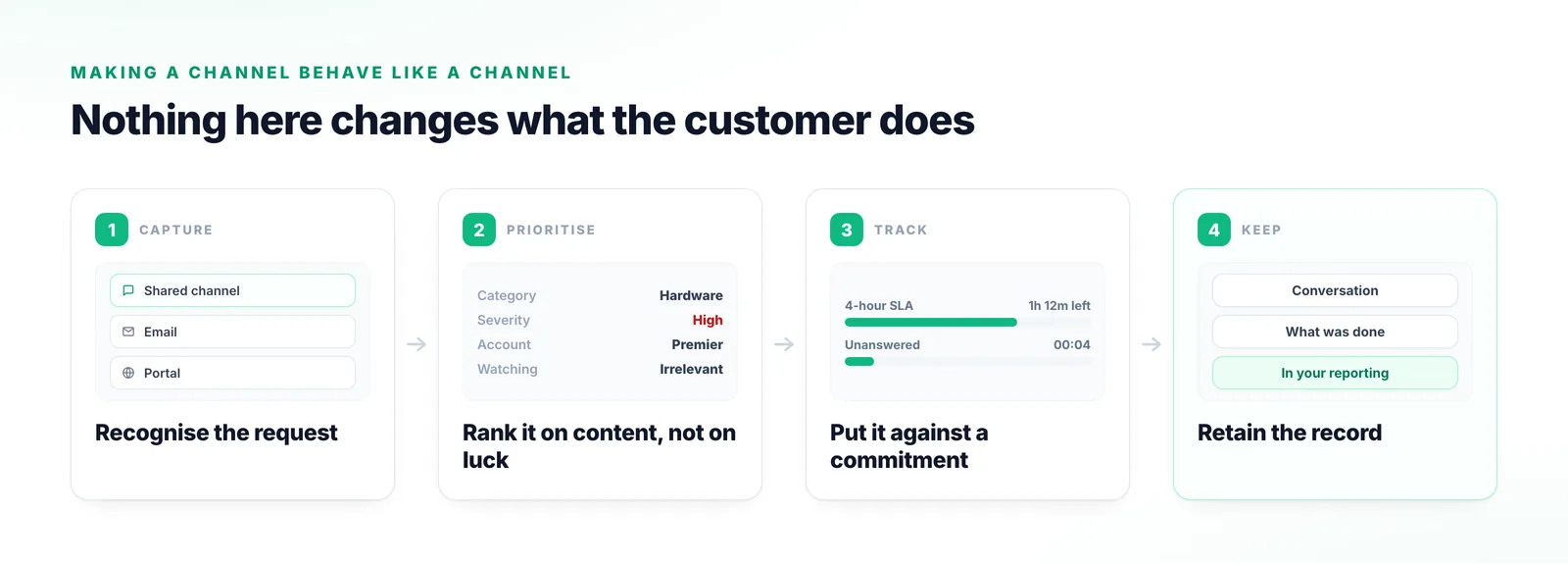
All four happen on your side. The customer’s experience is deliberately unchanged.
A message in a shared channel is recognised as a support request and enters the same queue as email, chat and portal.
It is categorised like anything else, so it is prioritised on content rather than on who happened to be watching.
It carries a state and an SLA instead of scrolling away, so something unanswered surfaces before the customer raises it again.
The conversation and how it resolved are retained, so reporting covers your Slack accounts too.
The customer keeps the channel. You get the record.
None of this changes the customer’s experience. They wanted a conversation with people who know their environment, and that is still what they have.
A channel with no record is invisible to every metric you run, which makes your largest accounts the ones you have least data about.
A request arriving in Slack reaches the same manuals, cases and knowledge as one arriving by email. Your most important customers should not be on the least-supported channel.
The third one is the most dangerous, because the reporting looks complete.
Fast and personal, and completely invisible. A request missed at lunchtime stays missed.
Defensible on process grounds, and it costs goodwill with accounts who will use Slack anyway.
Somebody does it when they remember. Partial coverage is worse than none, because the reporting looks complete.
Two processes, two sets of numbers, and no way to compare Slack accounts against everybody else.
The operational vocabulary a shared channel usually lacks.
Support Channels
If your largest accounts are on Slack, they are probably your least measured. Tell us how you run them today and we will show you what visibility over them looks like.
Talk to us