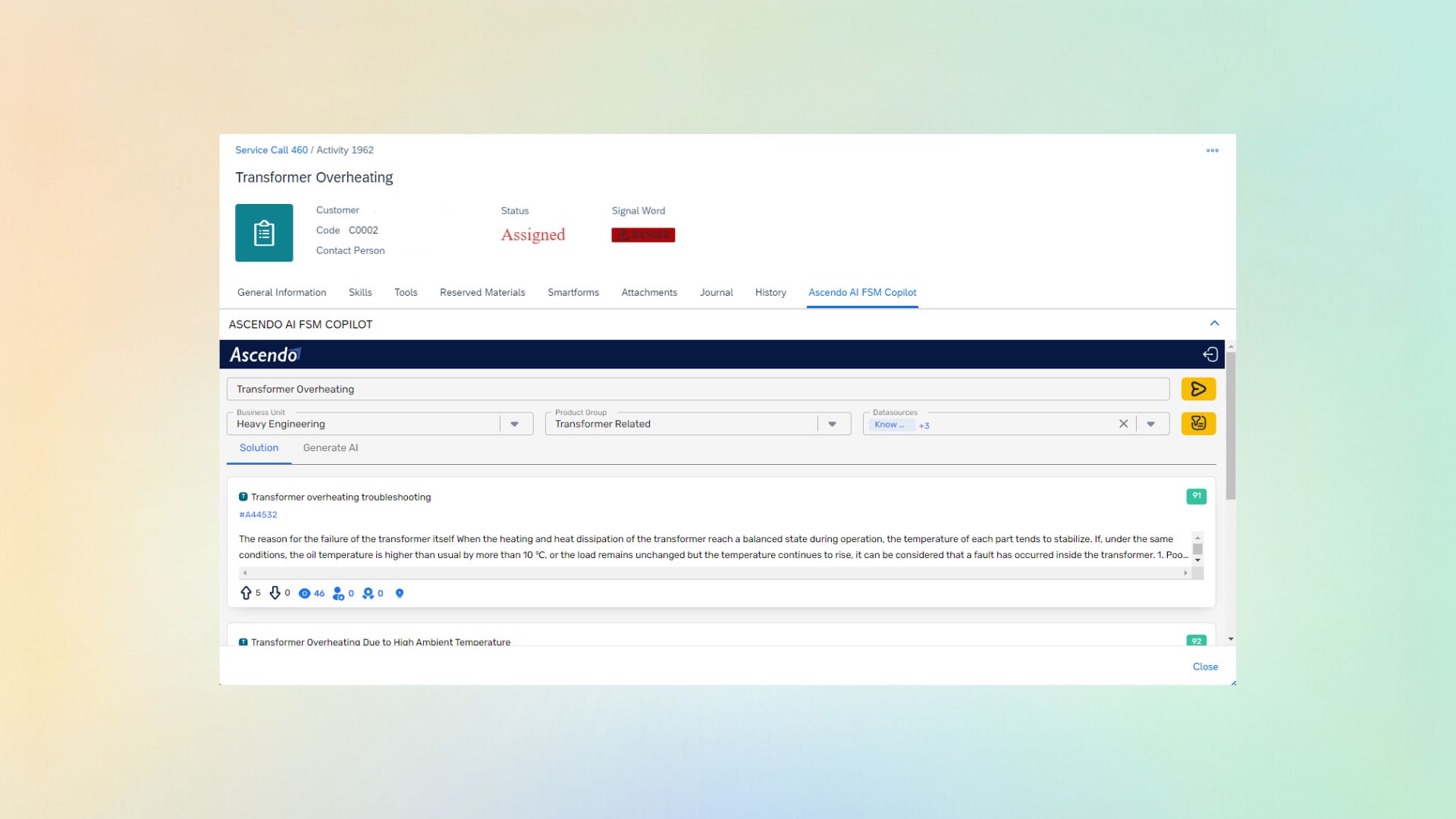
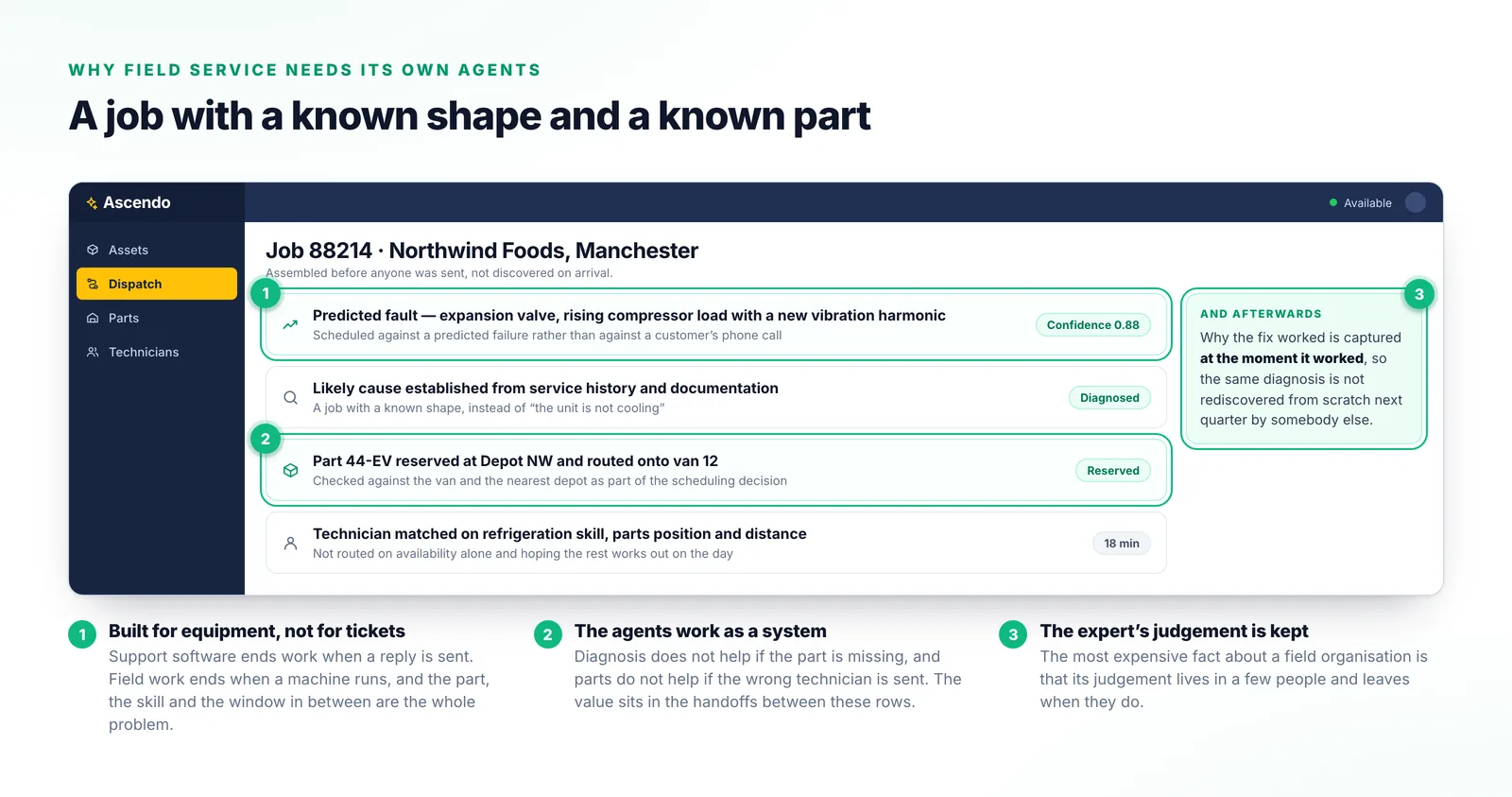
Built for equipment, not for tickets
Most service AI is adapted from support software, where work ends when a reply is sent. Field work ends when a machine runs, and the part, the skill and the window in between are the entire problem.
Field service is not customer support with a van. The constraint is physical — a technician, a part, a location and a window, and every one of them has to line up before anything actually gets fixed. This is the shape of the platform for teams whose work ends in front of a machine.
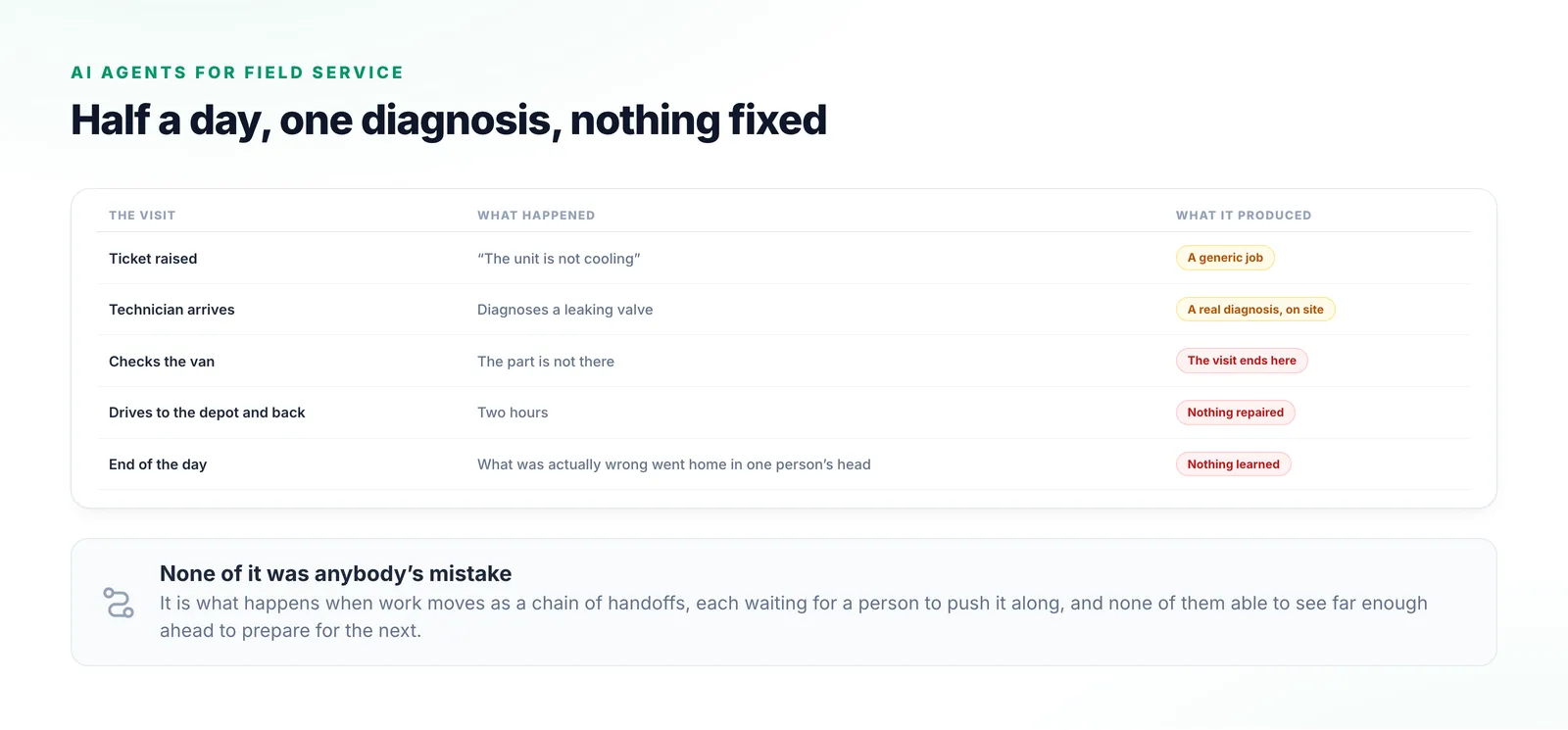
A generic ticket says the unit is not cooling. The technician arrives, diagnoses a leaking valve, checks the van, and the part is not there. Half a day gone and nothing fixed.
The technician spent it driving rather than repairing, and nobody learned anything that would prevent it next week. None of that was a mistake — it is what happens when work moves as a chain of handoffs, none of them able to see far enough ahead to prepare.
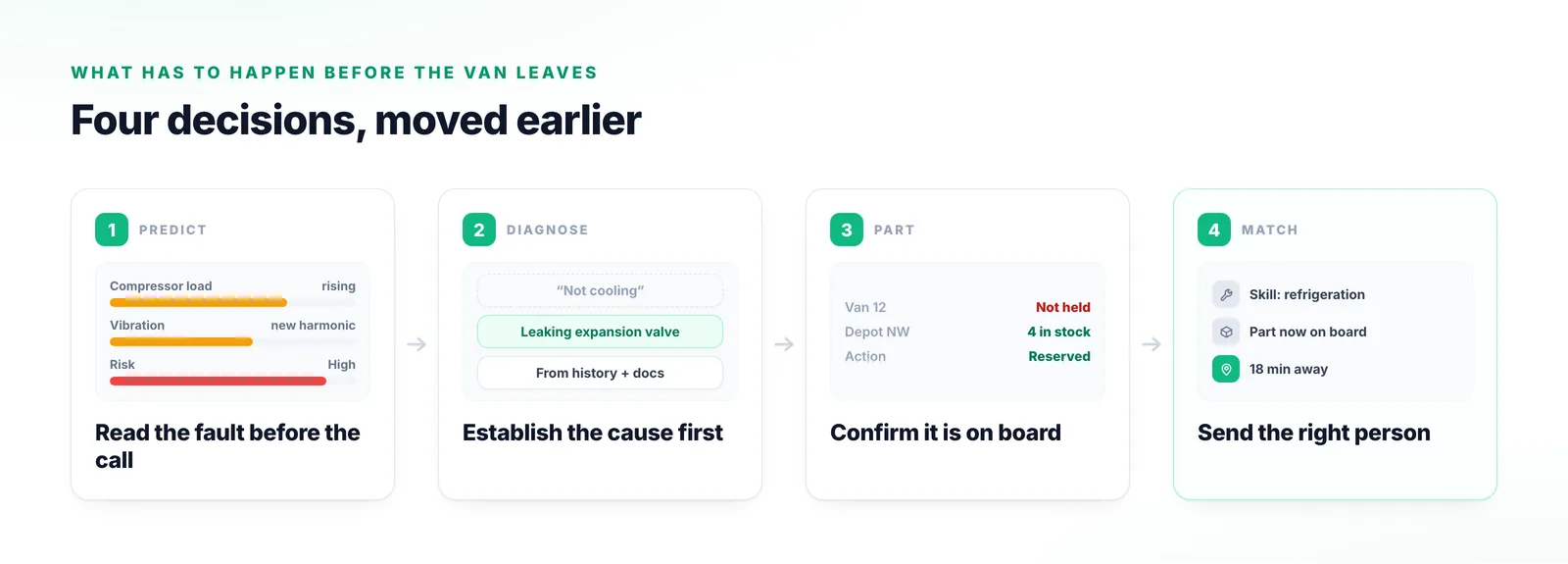
Every one of these is a decision currently made on site, too late to change the outcome.
Telemetry from connected equipment is read for the correlated signals that precede a failure, so work is scheduled against a predicted fault rather than a phone call.
The likely cause is established from the symptom, the service history and the documentation before anyone is sent.
Availability is checked against the van and the nearest depot as part of the scheduling decision, so a job is not planned into a shortage.
Assignment weighs skills, the parts position and location together, instead of routing on availability and hoping.
The differences from support software are structural, not cosmetic.
Most service AI is adapted from support software, where work ends when a reply is sent. Field work ends when a machine runs, and the part, the skill and the window in between are the entire problem.
Diagnosis does not help if the part is missing, and parts do not help if the wrong technician is sent. The value sits in the handoffs between them.
The most expensive fact about a field organisation is that its judgement lives in a handful of people and leaves when they do.
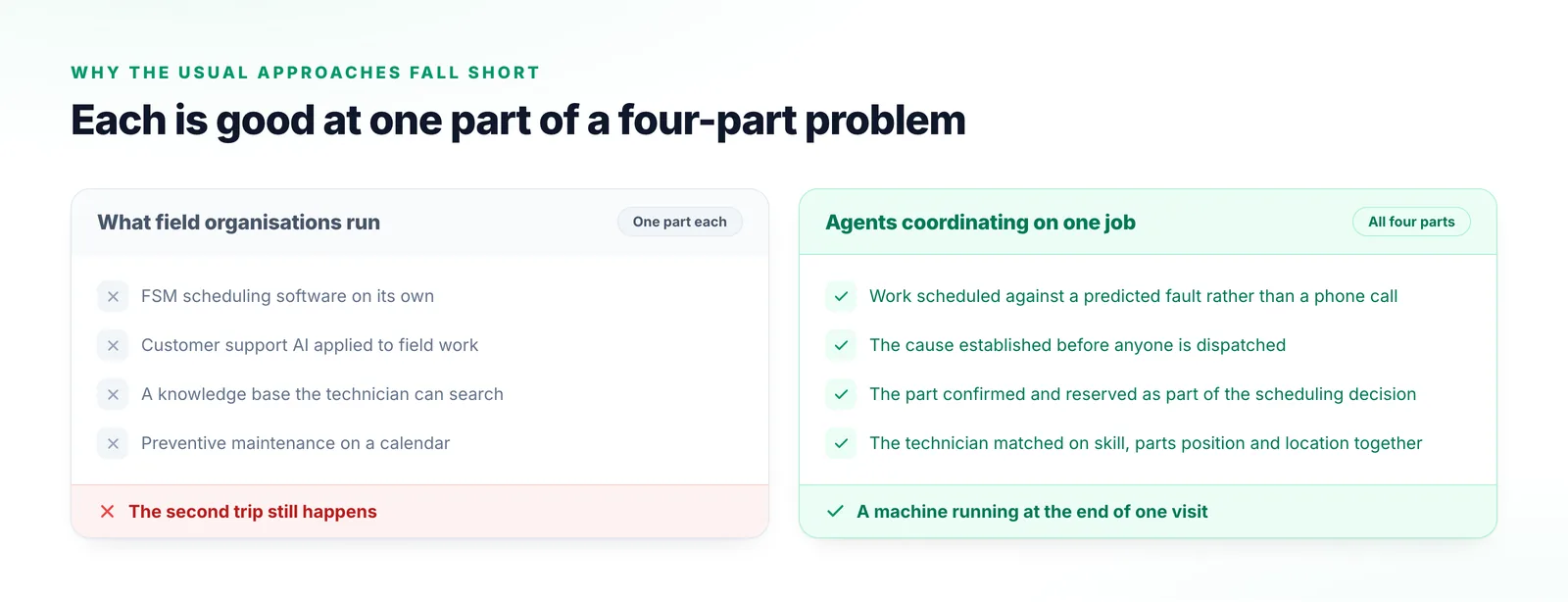
Each of these is good at one part of a problem that has four parts.
Excellent at moving people around and blind to what is wrong with the machine.
Optimises for closing an interaction. Field work closes when equipment runs.
Puts documents in a back pocket and leaves the interpretation to somebody standing in front of a fault.
Services healthy assets on schedule and misses the one that failed early.
Field service vocabulary, and the two terms Ascendo uses differently.
The same agents running as one continuous loop, and the decisions that stay with people.
The predictive layer: correlated signals that precede a failure, scored per unit.
The parts side: predicted demand per part and depot, with SLA coverage scored per customer.
Field Service
Tell us where jobs actually fail today — the diagnosis, the part, or the person who was sent — and we will show you which agents change that, and in what order.
Talk to us