Understanding, not storage
A conventional ticket is a container that holds text. A cognitive one has read it. Routing, prioritisation, reporting and automation all become possible off the back of that single difference.
A traditional ticket is a container. It stores what somebody typed and waits for a human to read it and work out what it is. A cognitive ticket arrives already understood — intent, urgency, the asset involved and the likely resolution path all determined before anyone opens it.
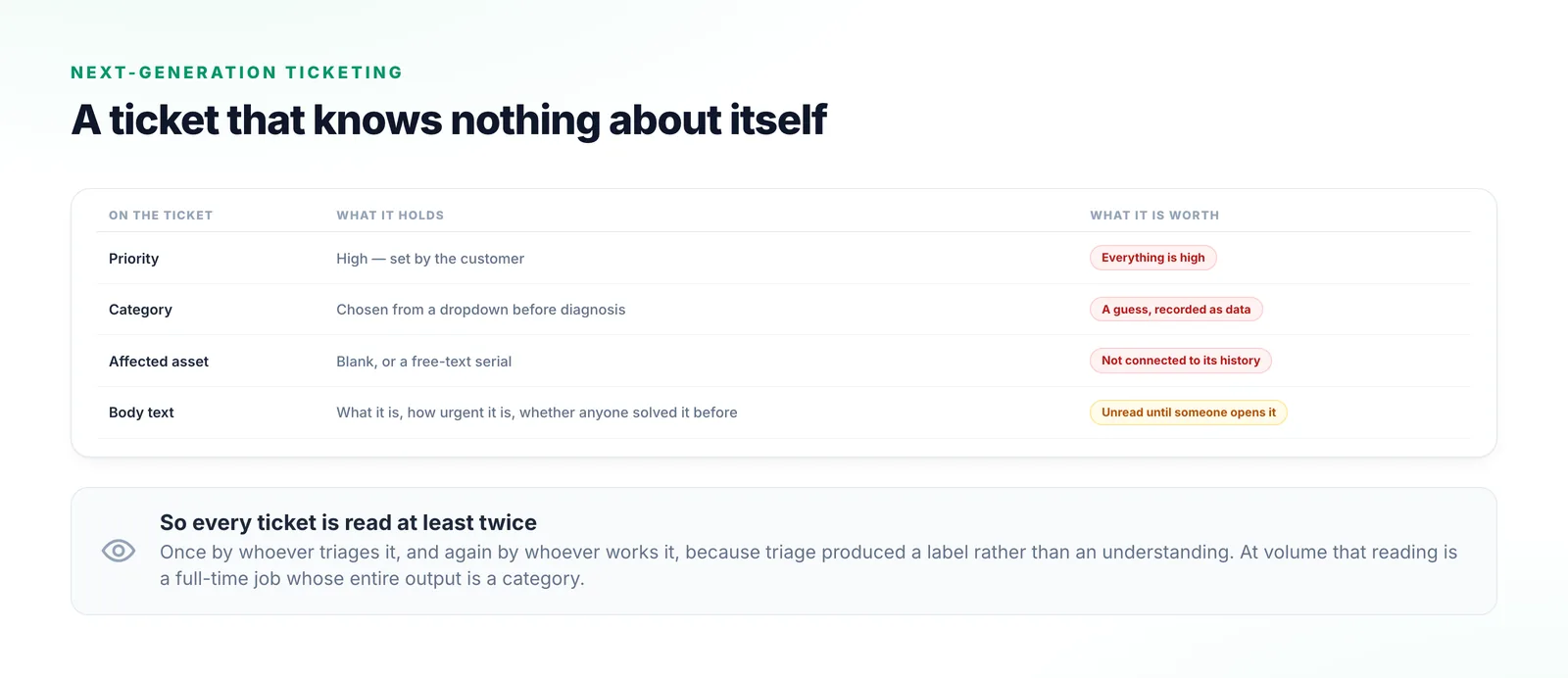
A conventional ticket is a form with a body of free text in it. Everything that matters — what the request is, how urgent it really is, which asset it concerns, whether anybody has solved it before — sits in that text, unread.
So every ticket gets read at least twice: once by whoever triages it, and again by whoever works it, because triage produced a label rather than an understanding. The structured fields meant to prevent this make it worse — priority is set by the customer, who says high.
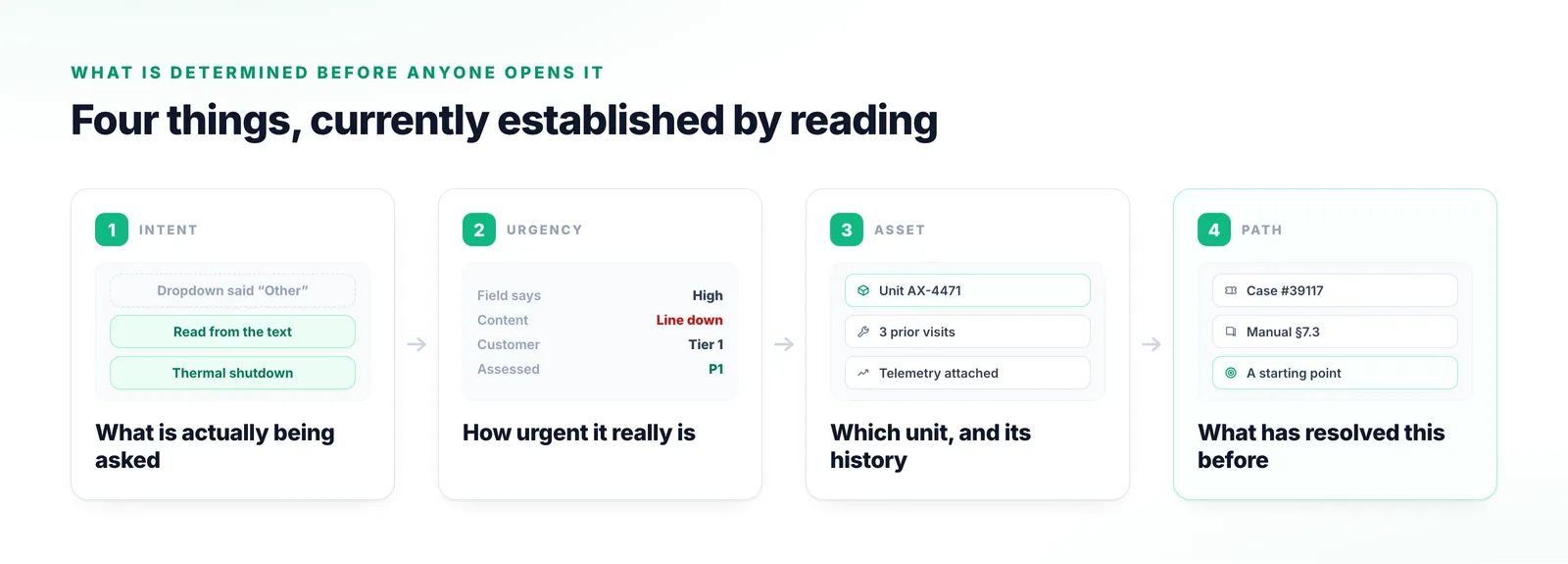
Four things a person currently works out by reading, on every single ticket.
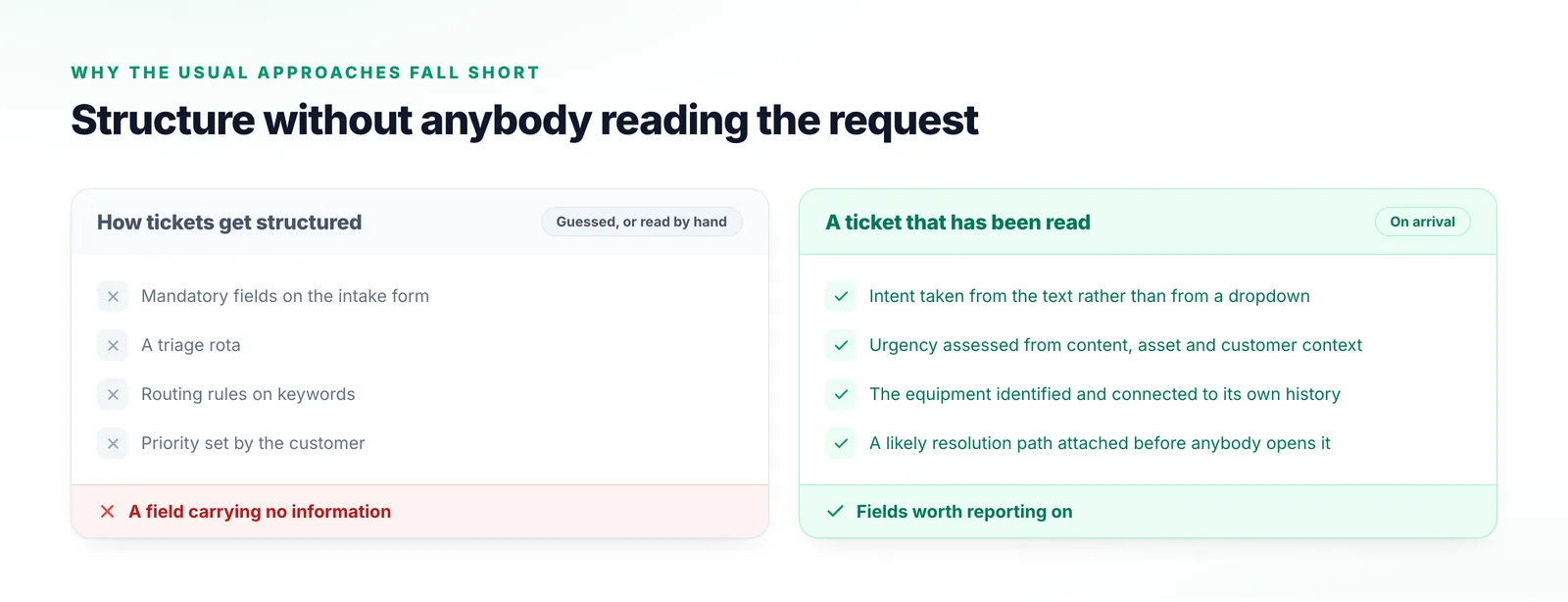
The intent is read from the text rather than taken from a dropdown, so what the ticket is about does not depend on a customer classifying a problem they have not diagnosed.
Urgency is assessed from the content, the asset and the customer context rather than from a priority field everybody has learned to ignore.
The equipment involved is identified and connected to its own history, so the ticket arrives attached to what has happened to that unit.
What has resolved this before is established up front, so the ticket carries a starting point.
The change is not a feature. It is what the system knows about a request.
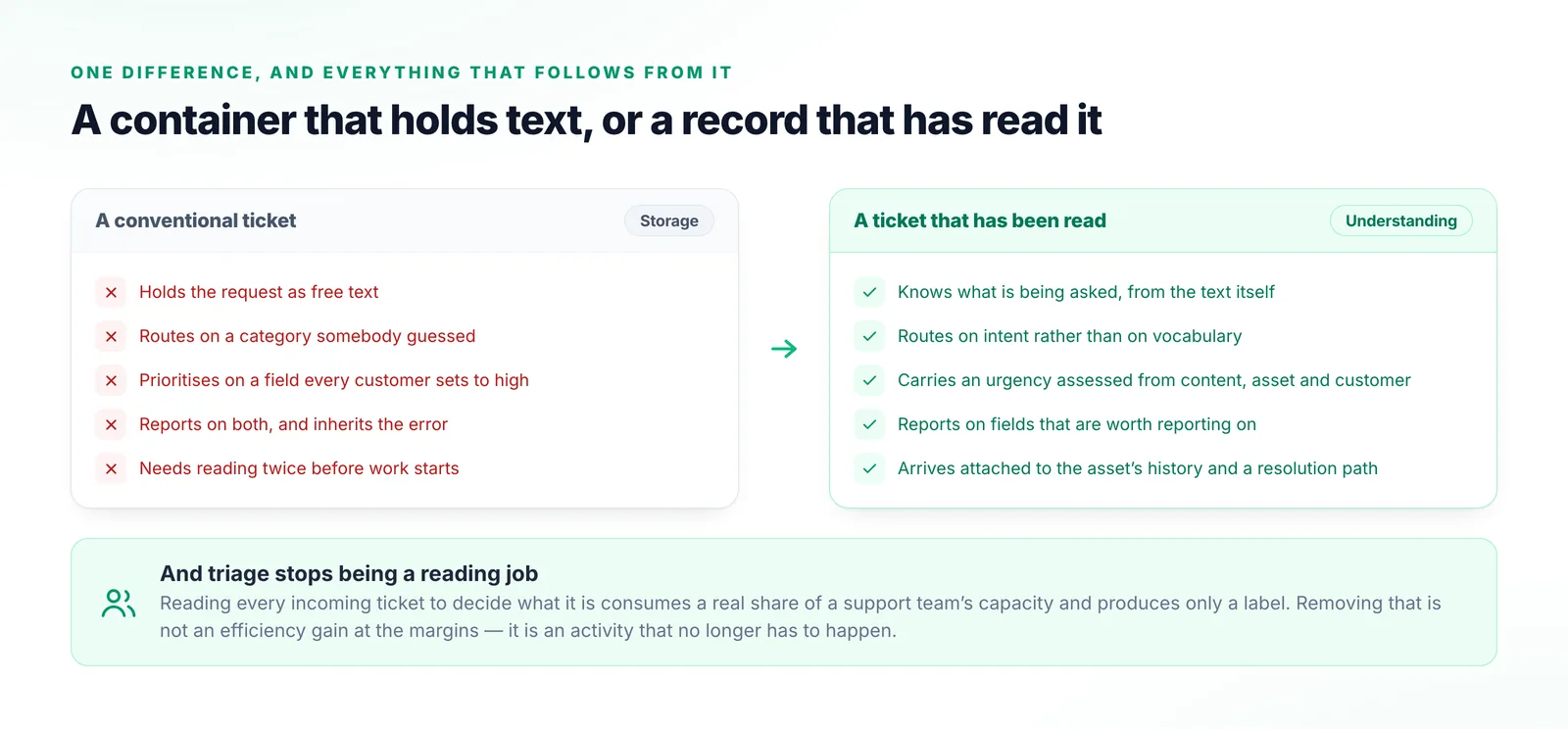
A conventional ticket is a container that holds text. A cognitive one has read it. Routing, prioritisation, reporting and automation all become possible off the back of that single difference.
Priority set by the customer and category chosen from a dropdown are the least trustworthy data on the ticket, and every report inherits that.
Reading every incoming ticket to decide what it is consumes real capacity and produces only a label. Removing that is an entire activity that no longer has to happen.
Each of these tries to get structure without anybody reading the request.
Asks a customer to classify a problem they have not diagnosed.
Accurate, and it spends real capacity reading tickets to produce labels.
Fire on wording rather than meaning. The rule set grows forever.
Everything is high. The field ends up carrying no information whatsoever.
Terms that separate this from a conventional ticketing conversation.
The reading underneath all of this: what the customer meant rather than what they typed.
The issue type applied on arrival, and how requests spanning more than one are handled.
The more radical version of the same question: which of these interactions needed a ticket at all.
Agent to Agent Workflows
Take a week of tickets your team has already triaged and let us run them through. Where the two disagree is where the interesting conversation starts.
Talk to us