A ticket becomes an artifact of escalation
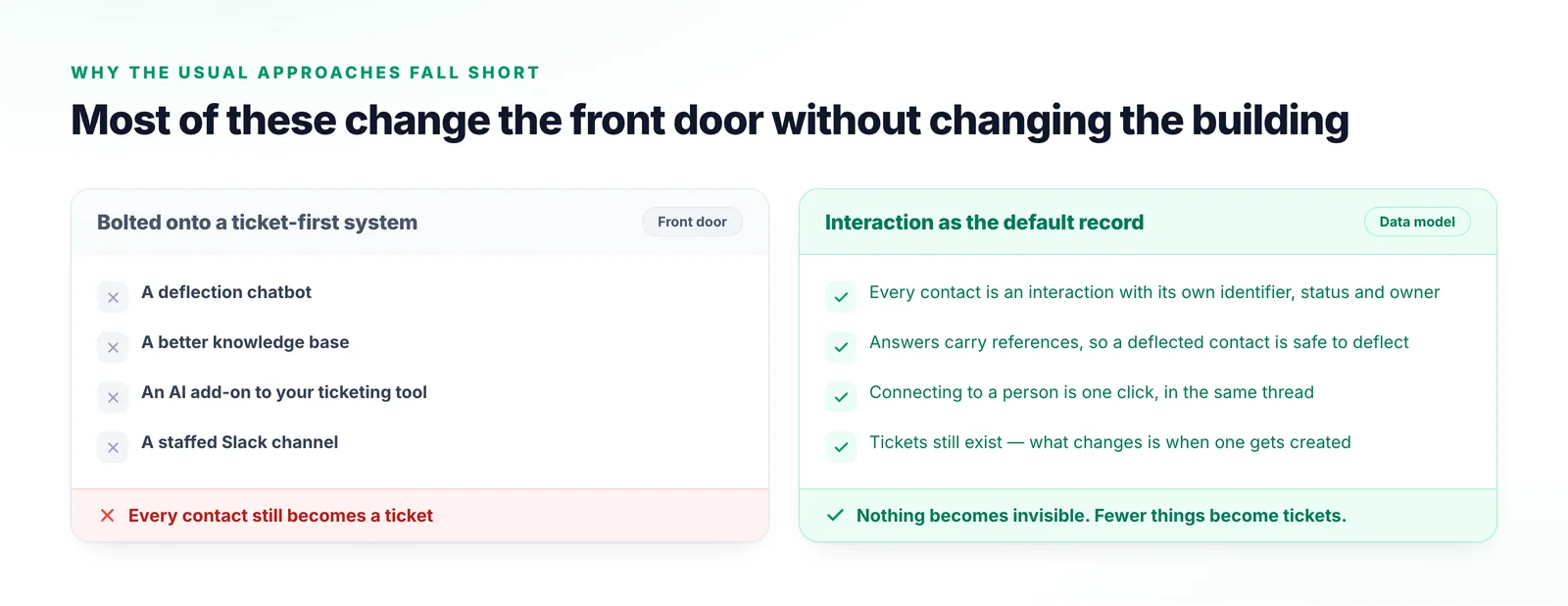
Everything starts as an interaction with its own identifier, promoted to a ticket only when a person judges it needs to be one. The rest follows from that one decision.
Most support requests never needed a ticket. Ascendo treats every contact as an interaction, resolves what it can with cited answers, and creates a ticket only when a person decides one is genuinely warranted.
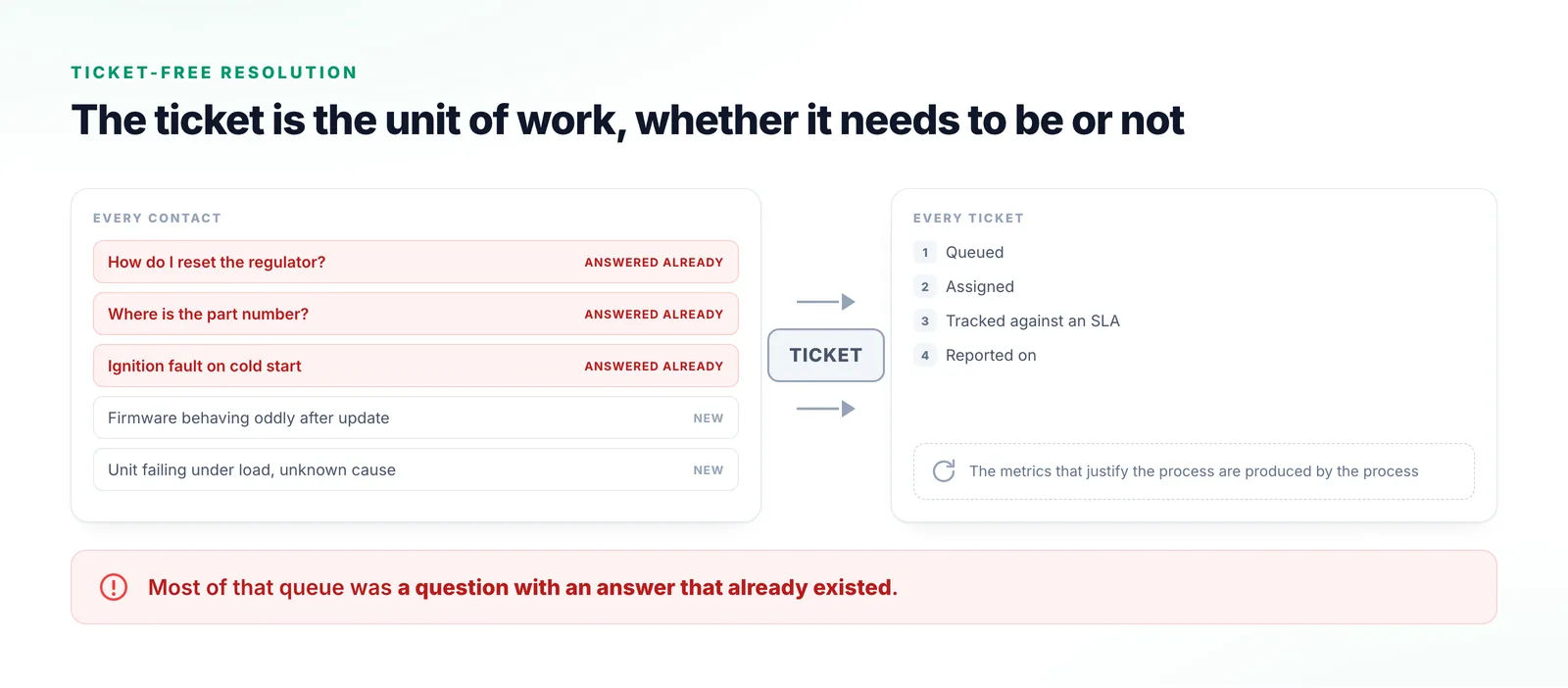
Every contact becomes a ticket: queued, assigned, tracked against an SLA, reported on. Including the large share that were questions with an answer that already existed. The ticket system is both the bottleneck and the reporting system, which is why nobody questions it.
This tour proposes a different default. Everything is an interaction. It becomes a ticket only when a human decides it must be one.
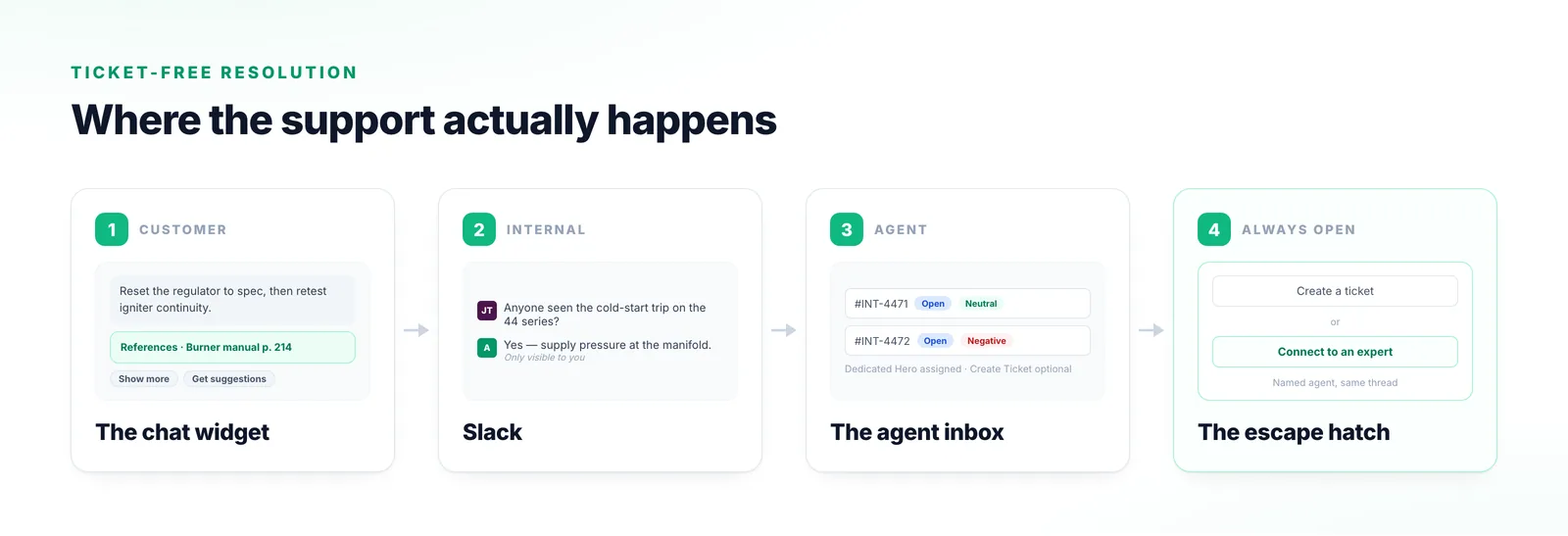
Widget, Slack, inbox, and the handoff to a person.
Answers directly, with a references block linking to the real source and suggested follow-ups.
A colleague asks in-channel and the app replies, visible only to them. No portal, no context switch.
It arrives with a subject, status, scored sentiment and an owner. Create Ticket is a button, present but optional.
Connecting to an expert collects an email, assigns a named agent and hands over in the same thread.
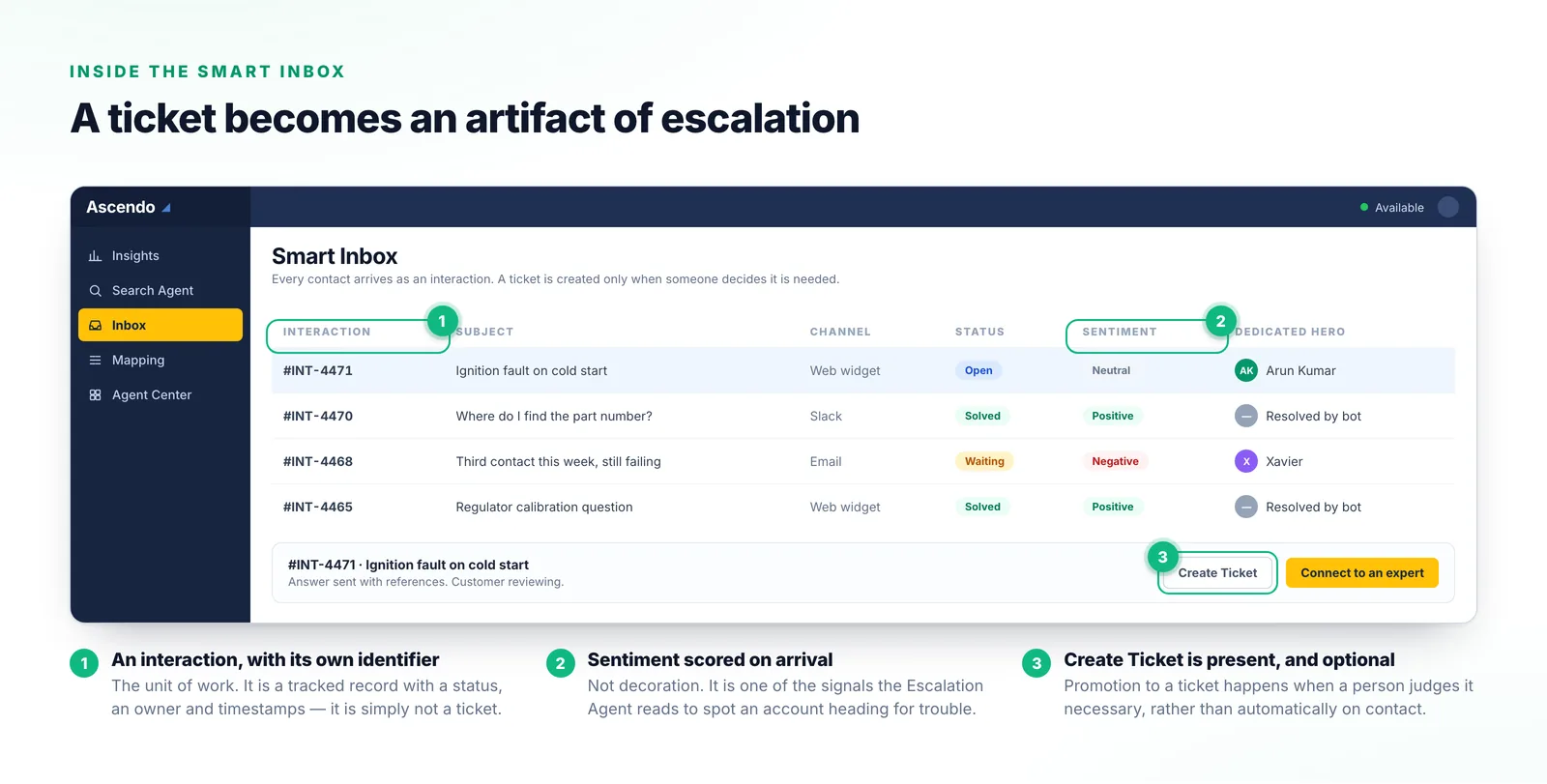
One data-model decision, and two consequences of it.
Everything starts as an interaction with its own identifier, promoted to a ticket only when a person judges it needs to be one. The rest follows from that one decision.
The widget points at the page the answer came from. Being able to check it is what makes a deflected contact safe to deflect.
Each interaction carries a scored sentiment alongside its status and owner — one of the signals the Escalation Agent reads to spot an account in trouble.
Most change the front door without changing the building.
Answers arrive without sources, and the path usually dead-ends in a ticket form anyway.
Helps agents work faster, and does nothing to the intake model. Every contact still becomes a ticket.
Ticket-first by architecture. Every contact still creates a record first and gets triaged second.
Works socially, scales badly, and the knowledge in the thread is unfindable an hour later.
The vocabulary on screen is deliberate, and it is worth reading closely.
What happens after the handoff: pulling an expert onto the case instead of escalating a tier.
The intake layer where interactions arrive from every channel and get prioritised.
What consumes the sentiment score: spotting an account heading for trouble before it complains.
Ticket-Free Resolution
Take last month’s volume and estimate what share were questions with an answer that already existed. That number is the conversation worth having.
Talk to us