Capture happens while the knowledge exists
The window is short. An explanation is complete and precise while the person giving it still has the problem in their head.
One conversation, three agents, nobody retyping anything. A call is transcribed, the Knowledge Agent turns what resolved it into a reusable article, and the result is written back into Salesforce — a concrete example of agents handing work between them rather than being separate features you switch on individually.
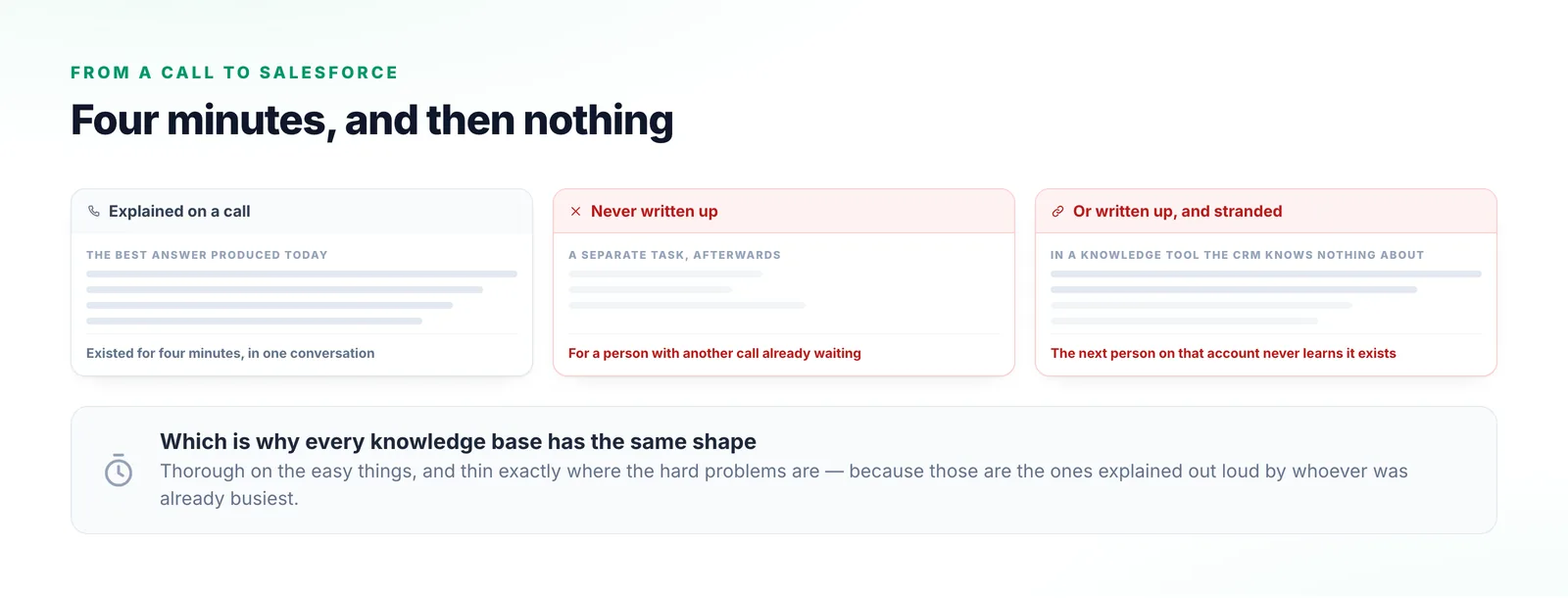
Somewhere this week an engineer explained on a call exactly how to fix something difficult. That explanation was the most valuable knowledge your company produced that day, and it existed for four minutes.
Not because nobody cares — because writing it up is a separate task afterwards for a person with another call waiting. And when somebody does, it lands in a knowledge tool the CRM knows nothing about.
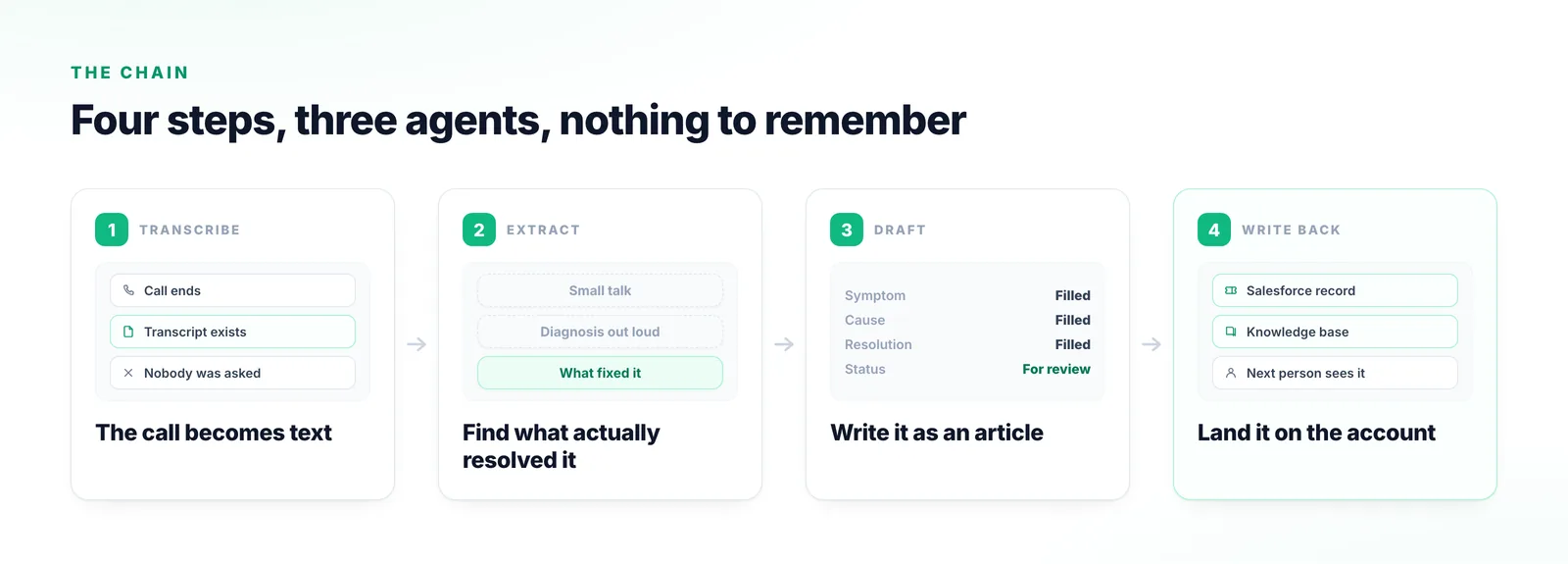
Four steps, three agents, and no point where a person has to remember to do something.
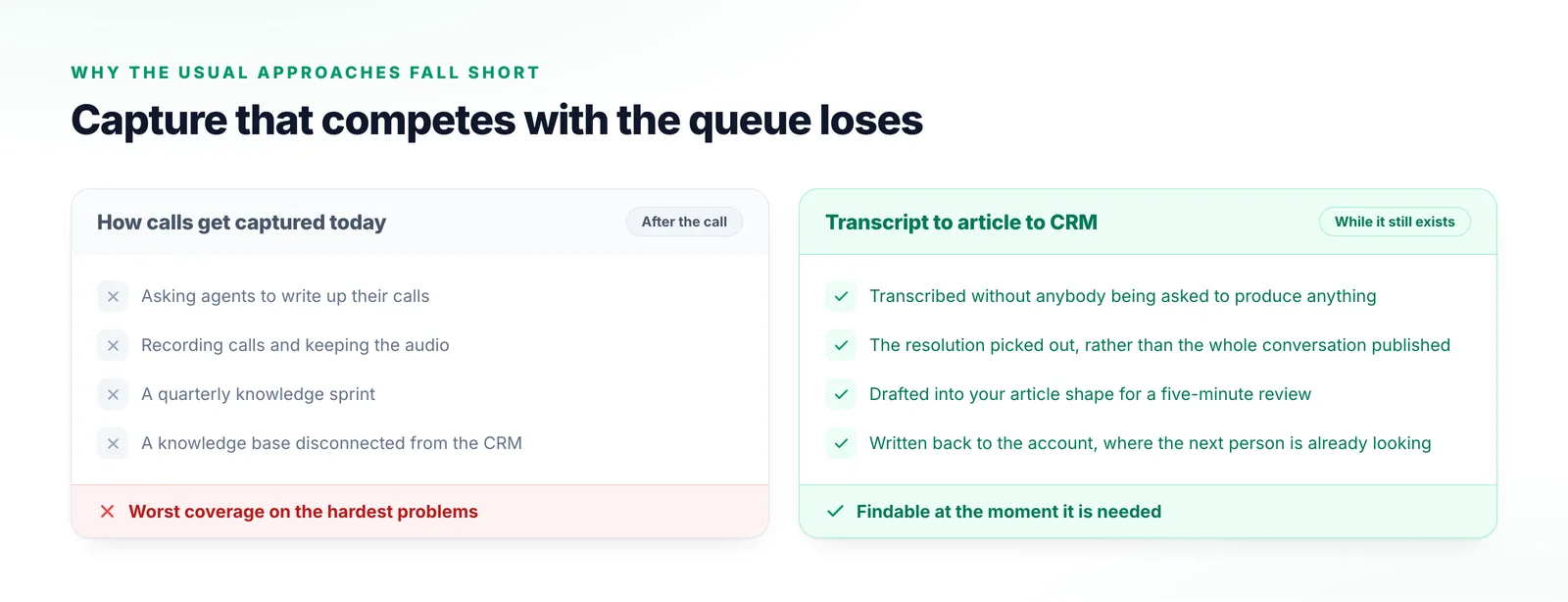
The conversation becomes text automatically, so the raw material for everything downstream exists without anybody producing it.
What actually resolved the problem is picked out. Most of a call is not the answer.
The Knowledge Agent turns that into an article structured the way your knowledge base expects — a draft for review, not a publication.
What was learned is written back into the record, so the next person on that account sees it.
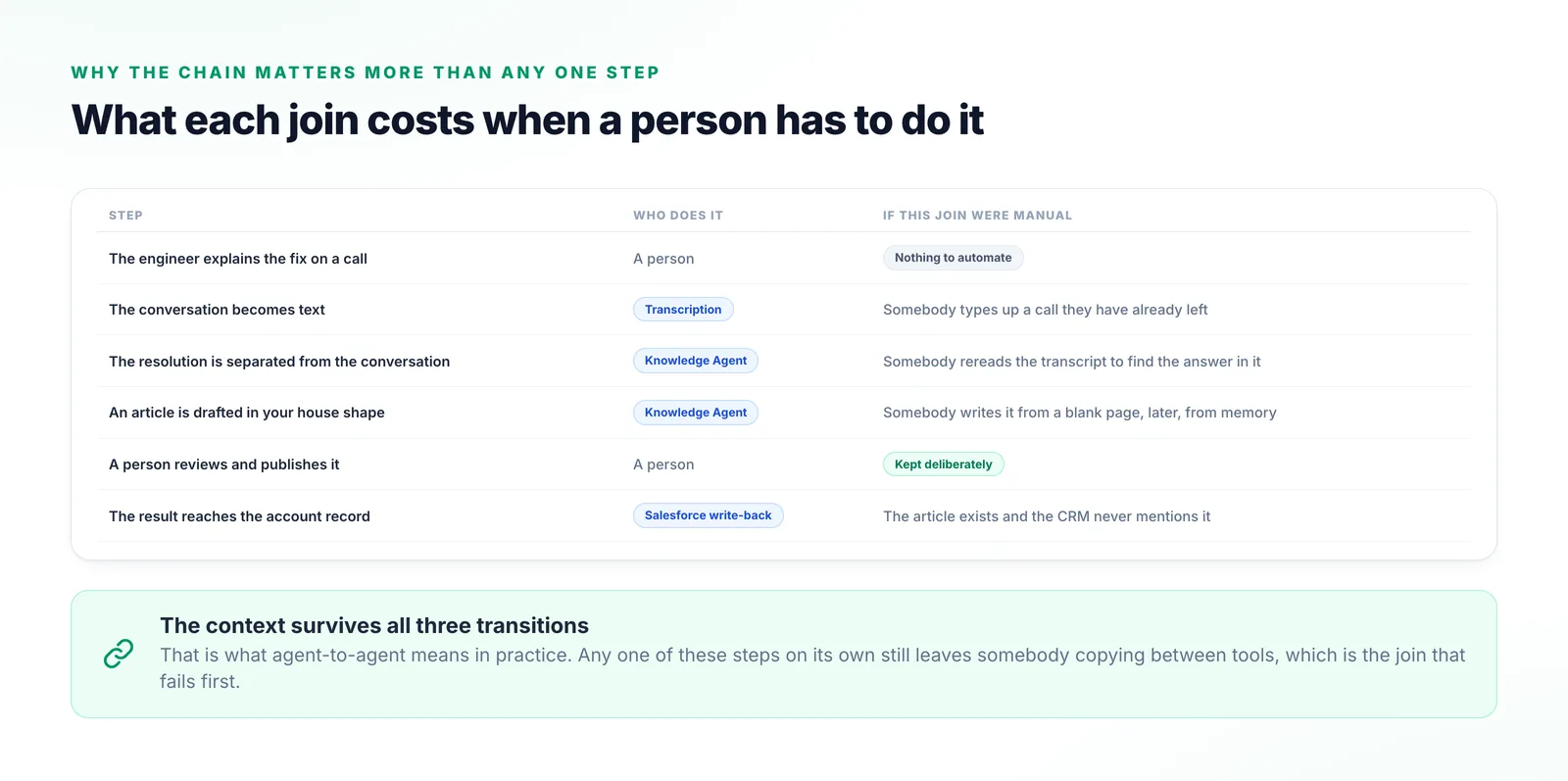
Each of these steps alone would leave a manual handoff at the join.
The window is short. An explanation is complete and precise while the person giving it still has the problem in their head.
Transcription hands to knowledge generation, which hands to the CRM write-back, and the context survives all three. Any one alone leaves somebody copying between tools.
A generated draft is a starting point, not a publication. Somebody checks it before it goes live — five minutes on a draft, an hour on a blank page.
Knowledge capture competes with the queue, and the queue always wins.
Competes directly with the queue and loses. Coverage is worst on the hard problems.
That is storage, not knowledge. Nobody searches a recording when they need the answer.
Written from memory months later. Accurate in outline, wrong in the details that mattered.
The article exists, and the person working the account never finds out that it does.
The three handoffs in this chain, named.
The same capture pattern in a text channel: a resolved thread becoming a reviewable article.
What agents see inside Salesforce once this knowledge exists to be surfaced.
The agent doing the drafting, and how articles are structured and kept current.
Knowledge Agent
If you record support calls, the raw material is already sitting there. Send us a handful and we will show you the articles that would have come out of them.
Talk to us