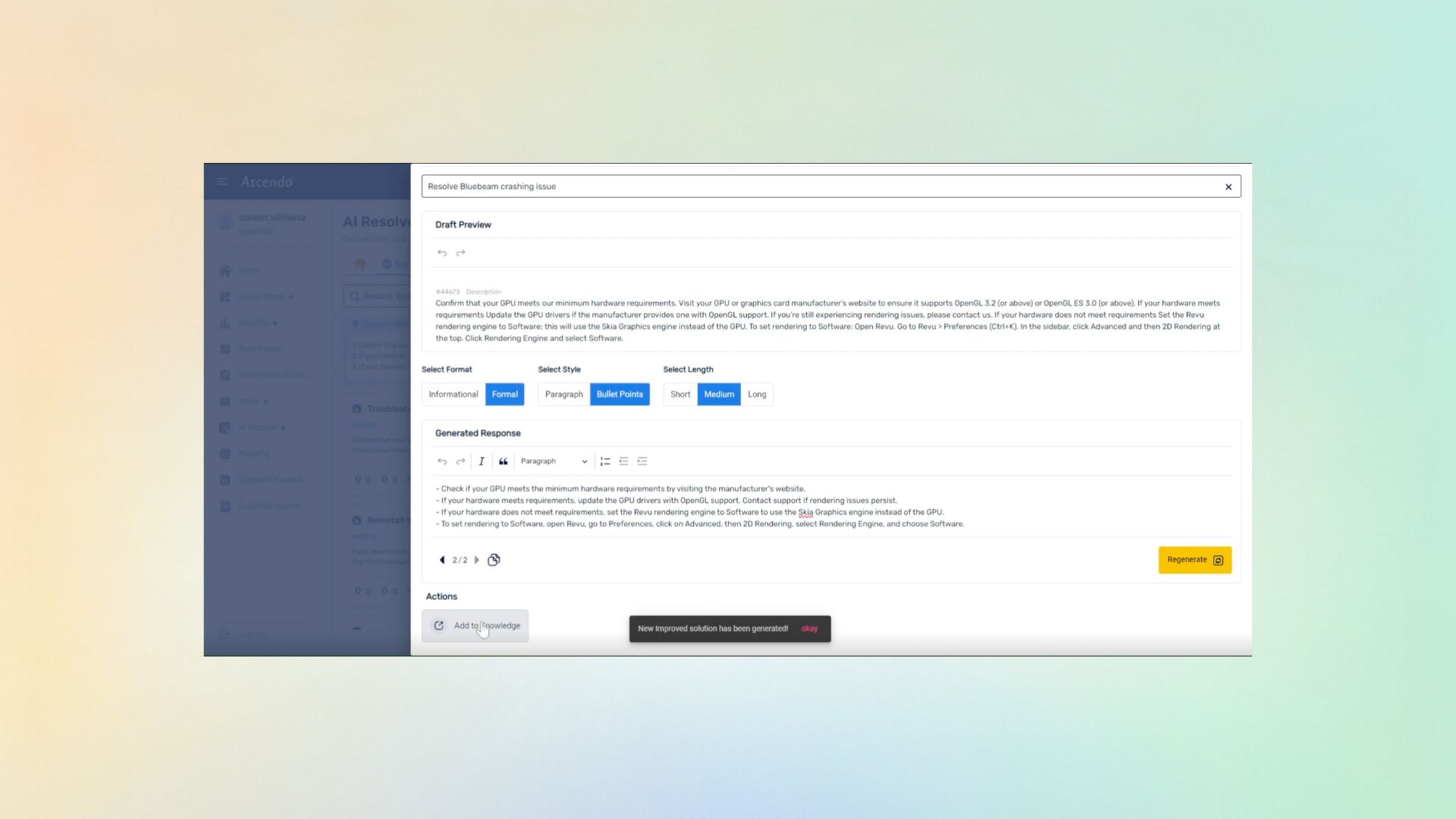
Gaps become visible instead of inferred
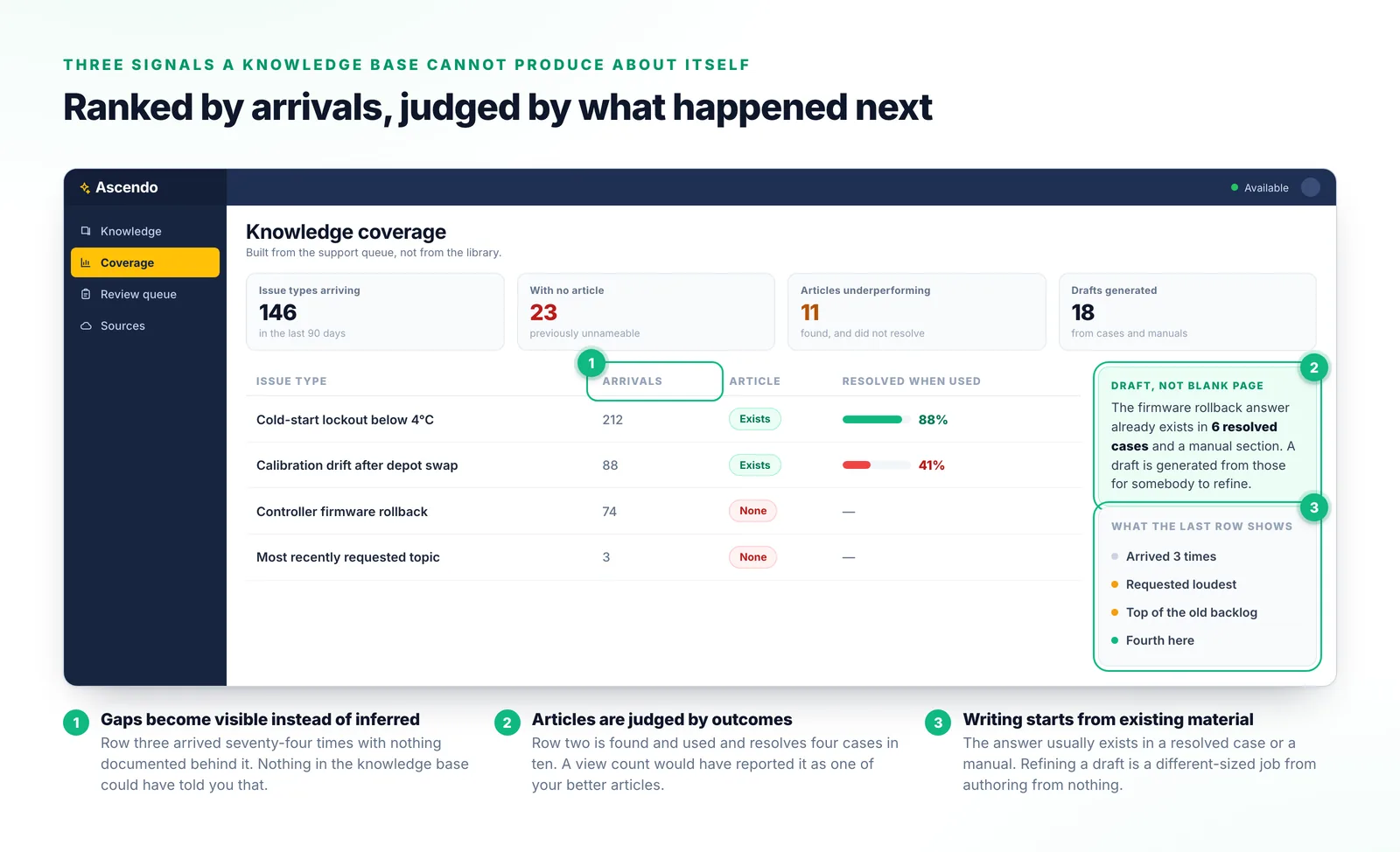
The strongest signal about your documentation is not in your documentation. It is in the questions that arrived and found nothing.
Most knowledge bases are written once, in a burst, by whoever had time — and then left. This is the other model: gaps identified from the questions nobody could answer, weak articles flagged by what happens after someone uses them, and a writing queue ordered by what customers actually ask.
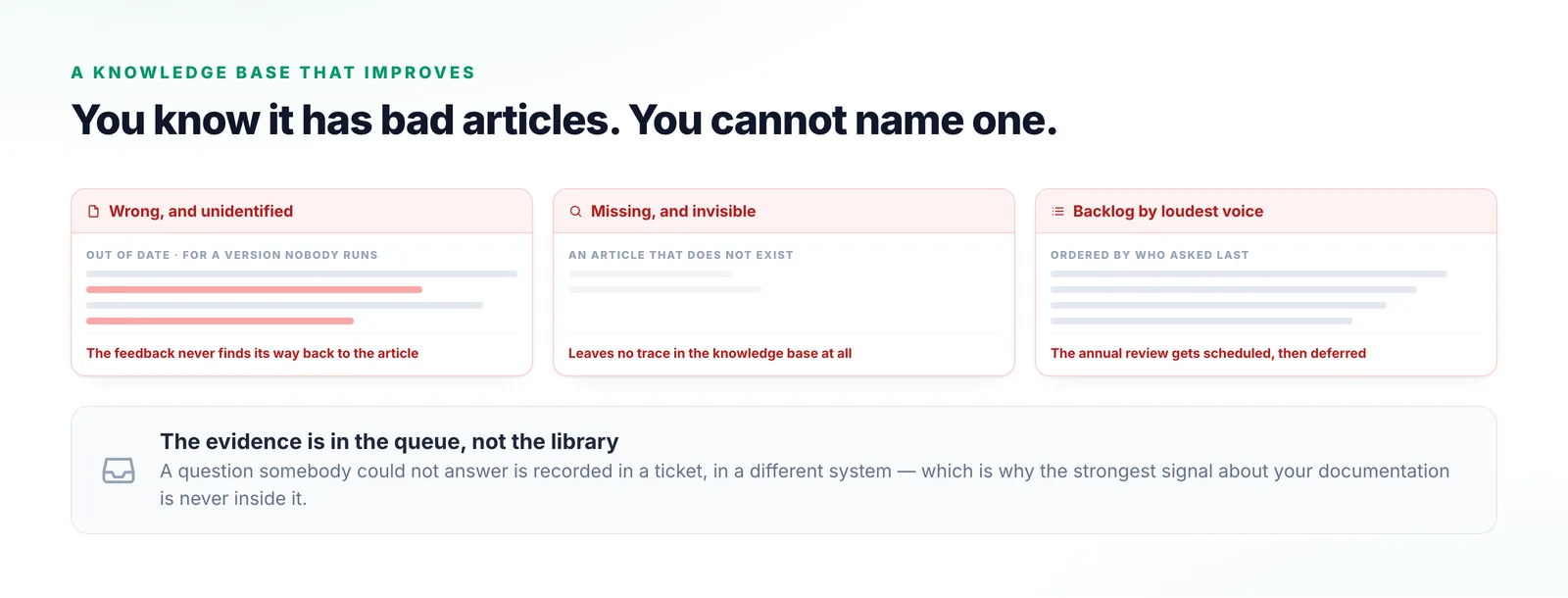
Every knowledge base contains articles that are wrong, out of date, or written for a version nobody runs any more. The organisation knows this and cannot name a single one, because the feedback never finds its way back.
The gaps are harder still: an article that does not exist leaves no trace at all. So content work runs on whoever complained most recently, the annual review gets deferred, and the articles people actually need stay unwritten.
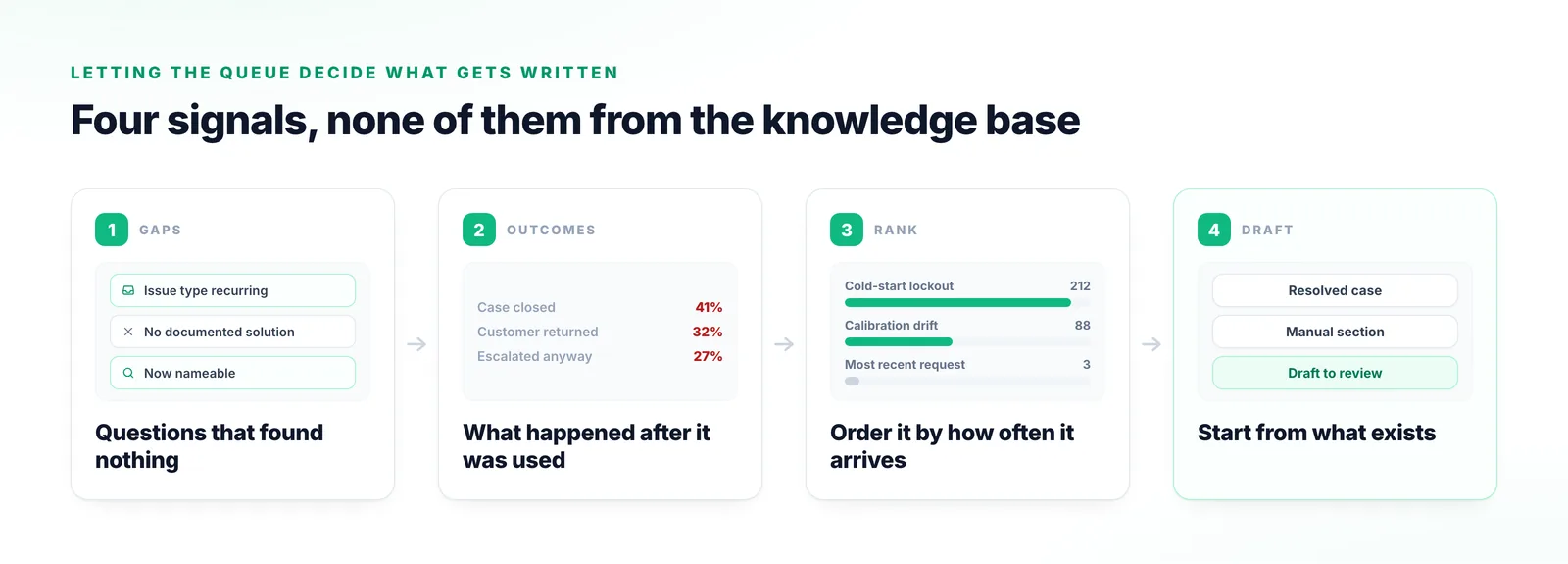
Every one of these signals is a by-product of work your team is already doing.
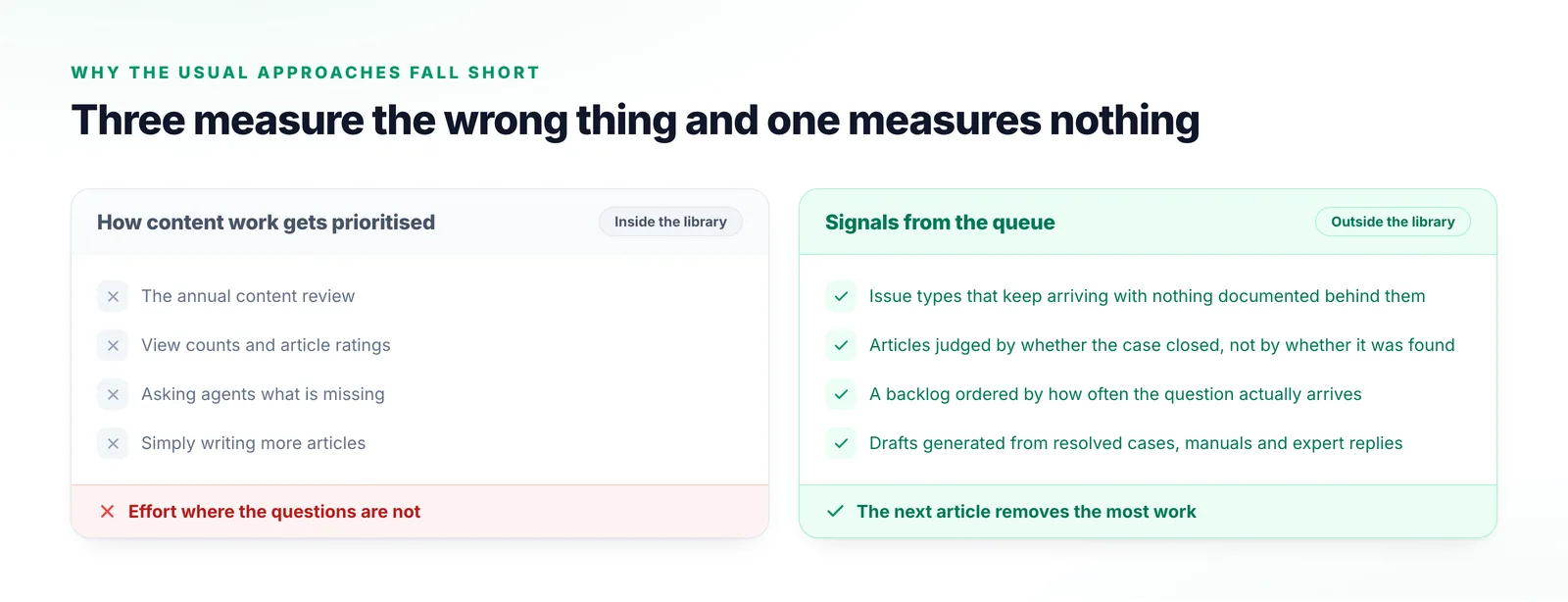
Issue types that keep arriving with no documented solution are the gaps. The knowledge base cannot show you what is missing from it.
An article is judged by what happened after it was used — whether the case closed, whether the customer came back, whether the agent escalated anyway.
The backlog is ordered by how often the question arrives, so the next article written removes the most work.
Where the answer exists already, a draft is generated from it for a person to review. That is a far smaller job than writing from nothing.
All of them live in the queue rather than in the documentation.
The strongest signal about your documentation is not in your documentation. It is in the questions that arrived and found nothing.
View counts measure whether an article was found, not whether it worked. What happened next is the signal that finds the article quietly costing you time.
The answer usually exists already, in a resolved case or a manual. Refining a draft is a different-sized job from authoring from scratch.
Three of these measure the wrong thing and the fourth measures nothing.
Scheduled, deferred, and done in a rush. It reviews what exists and cannot see what is missing.
Measure whether an article was found, and whether somebody was annoyed enough to rate it.
Returns what is recently frustrating rather than what is costly, and only from the agents who reply.
Volume is rarely the problem. Coverage of the questions that actually arrive is.
The vocabulary that comes up when knowledge quality is being measured.
Building an article end to end: templates, attributes, and generation from your own source files.
The capture side of the same loop: a resolved thread becoming a reviewable article.
The agent page: gap detection, article quality and generation across the platform.
Voice of the Customer
Give us your ticket history alongside your current knowledge base and we will show you the issue types that keep arriving with nothing to point at.
Talk to us