A count, not an anecdote
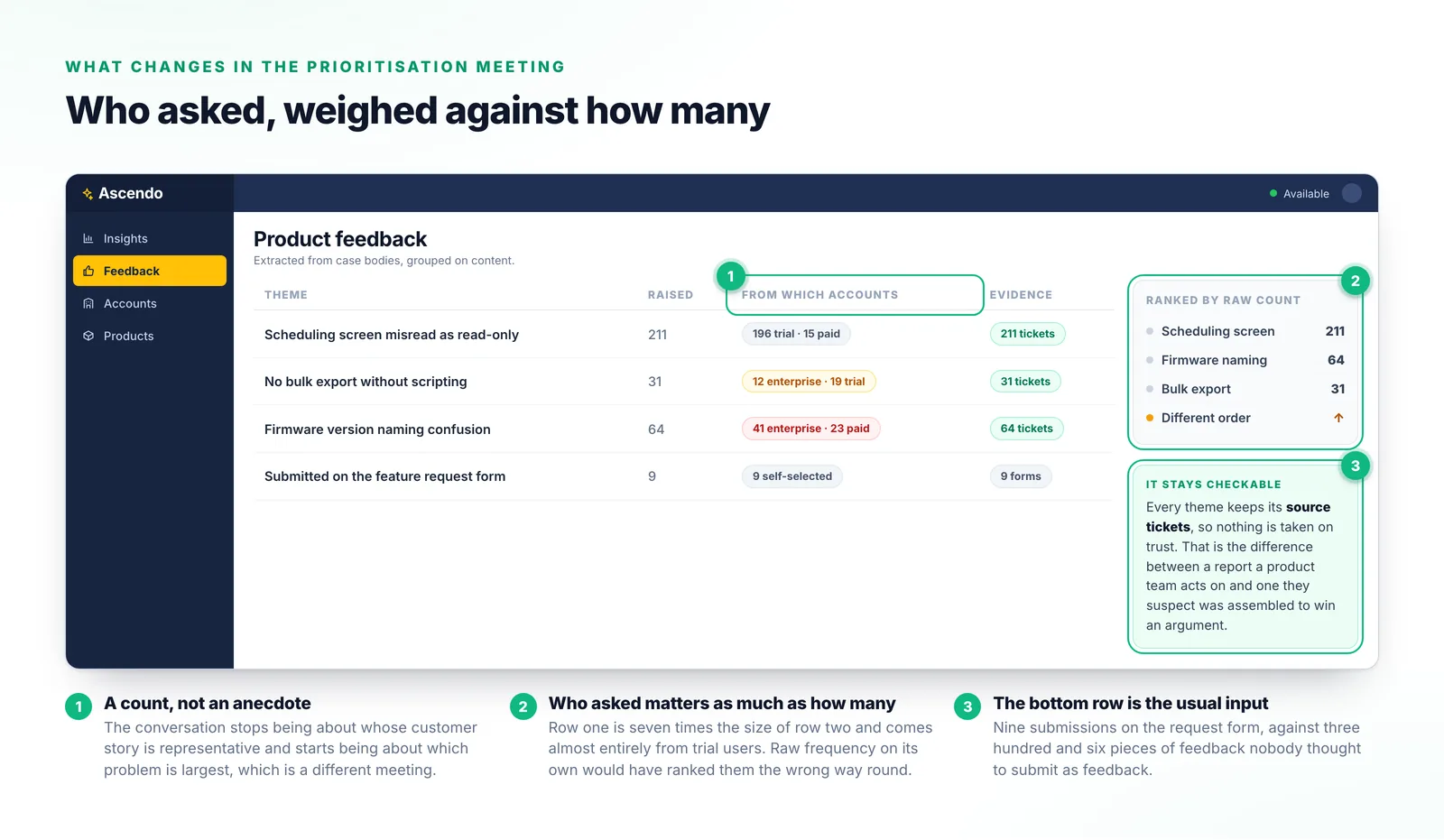
A theme with volume behind it is no longer one person’s recollection against another’s. It moves the conversation from which story is most vivid to which problem is largest.
The most honest product feedback your company receives is already sitting in your support queue, written by customers with a problem in front of them. It is unstructured, buried inside ticket bodies, and it reaches product as anecdotes in a meeting. This turns it into a feed with volume and customer context attached.
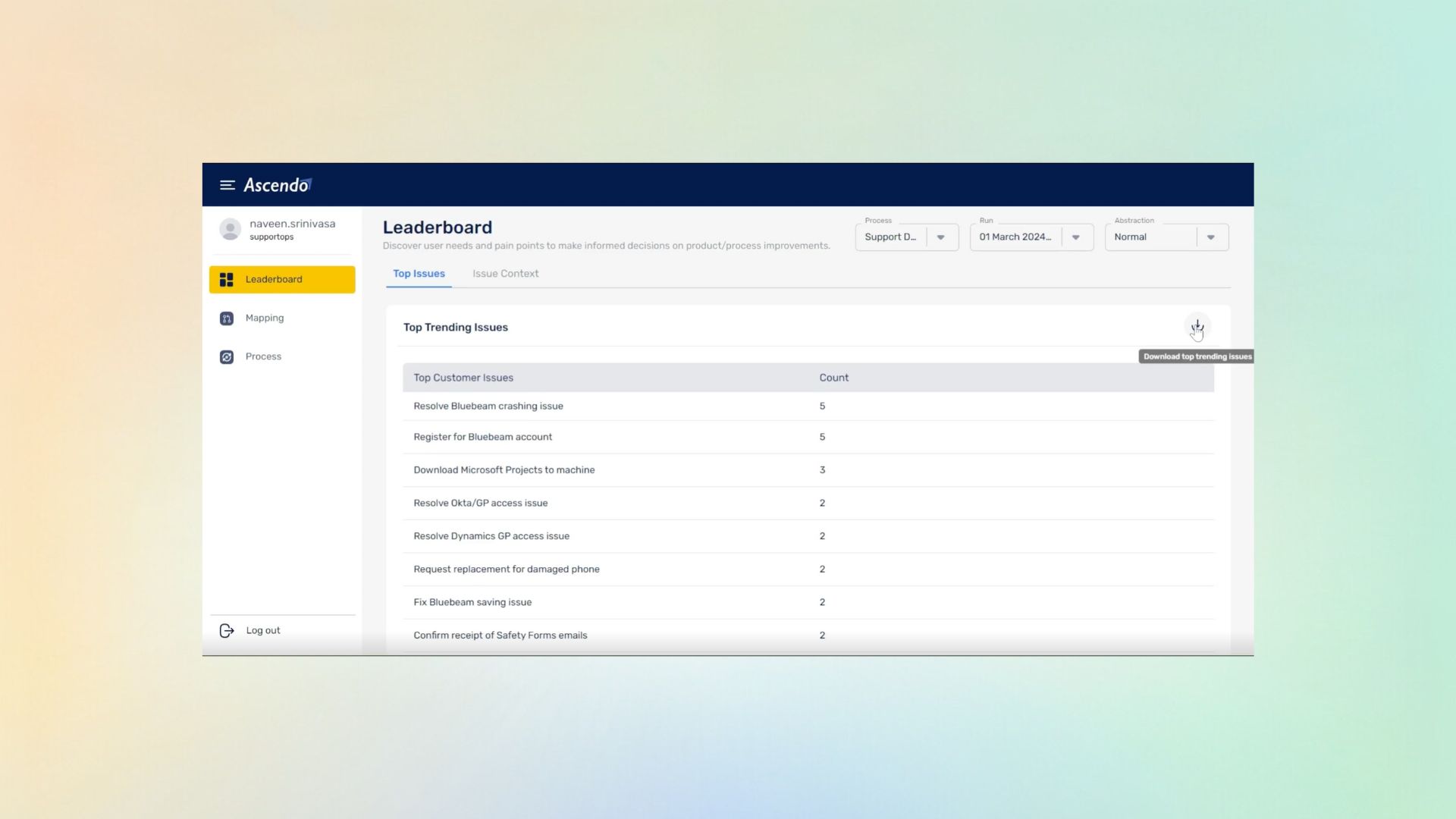
Every day your team is told what is wrong with the product by people using it under pressure. That feedback is specific, unsolicited and free, and almost none of it reaches the people who decide what gets built.
What reaches them is anecdote — the request the loudest customer made on a call, or whatever the account manager remembers. Nobody is being unreasonable; no one can read forty thousand tickets. The consequence is that support keeps looking like a cost centre.
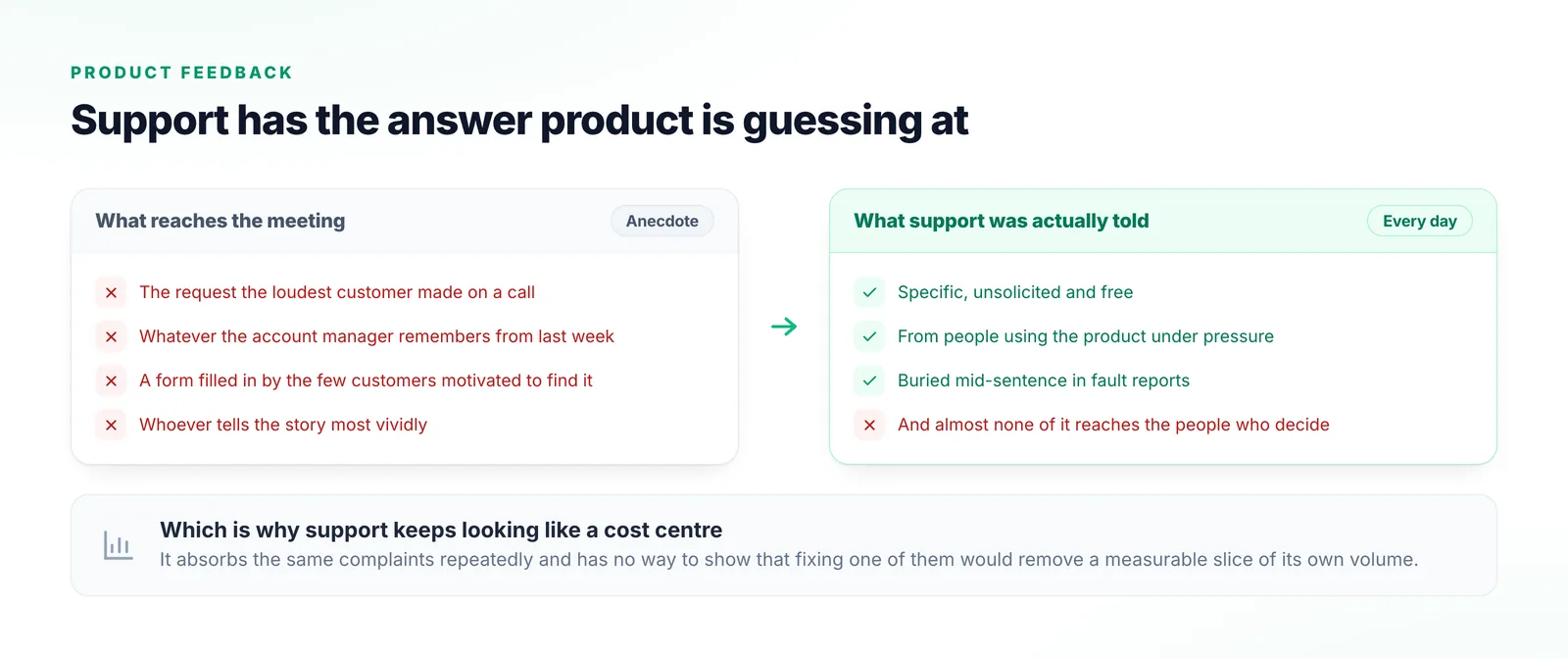
The feedback is already there. What is missing is the counting.
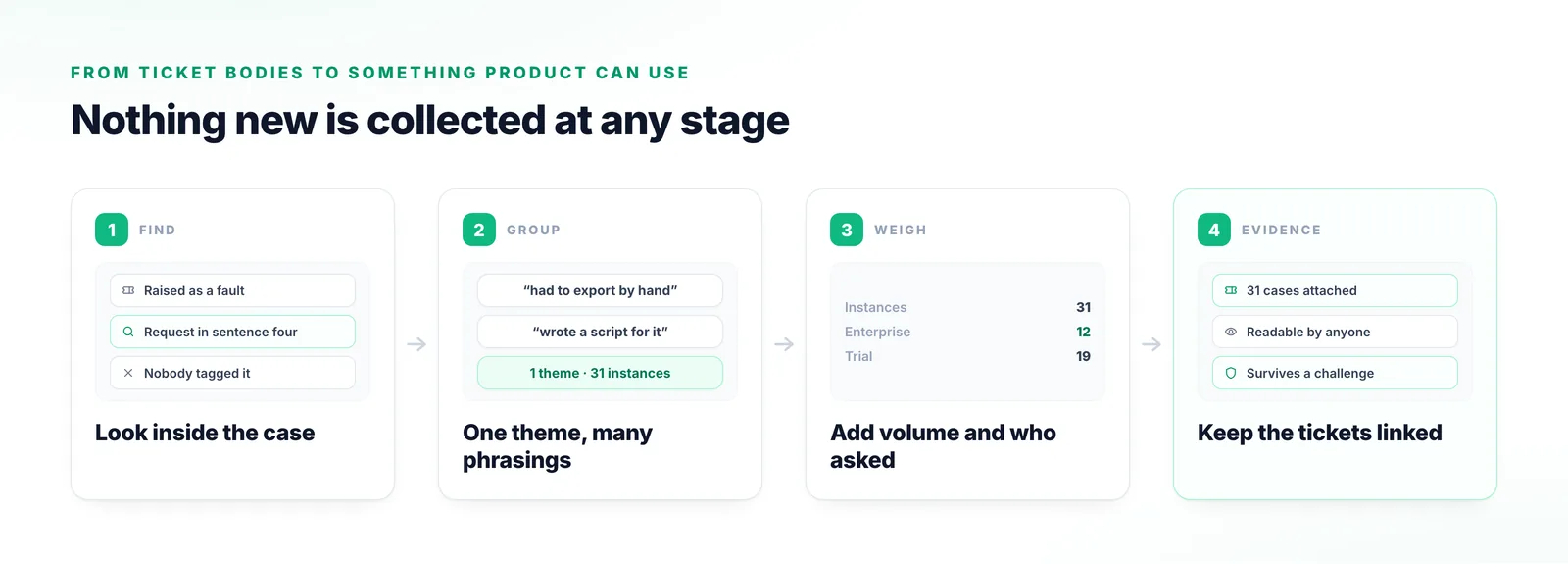
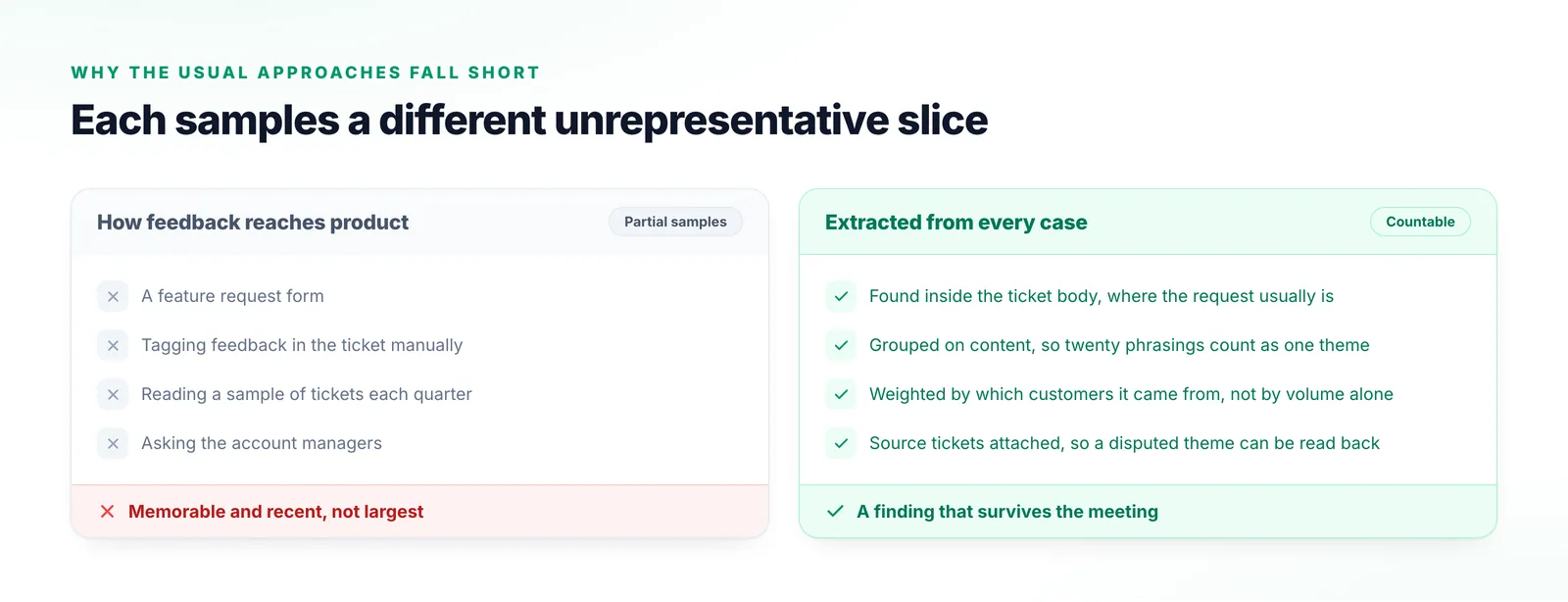
Requests and complaints are usually incidental — a sentence in the middle of a fault report — so they are identified inside the ticket body.
The same request arrives phrased twenty different ways. Grouping on content means it counts once, with twenty instances behind it.
Each theme carries how often it appears and which customers it came from.
The underlying tickets stay linked, which is what lets the feed survive a challenge.
The argument is usually about whose customer story is representative. This ends that argument.
A theme with volume behind it is no longer one person’s recollection against another’s. It moves the conversation from which story is most vivid to which problem is largest.
Raw frequency misleads on its own. Twelve requests from your largest accounts and two hundred from trial users are genuinely different signals.
Every theme keeps its underlying tickets, so nothing is taken on trust.
Each one samples a different unrepresentative slice of your customers.
Captures feedback from the small subset motivated enough to fill in a form.
Depends on agents doing it under time pressure, so the counts cannot be trusted.
Finds whatever happened to be in the sample. Newly emerging themes stay invisible.
Fast, and it returns what is memorable rather than what is largest.
Theme and category get confused constantly, and they measure different things.
The wider version: support conversations read as product intelligence across the whole queue.
The operational counterpart — what is driving volume right now, ranked by volume and impact.
The same signal used differently: what your documentation is failing to answer.
Voice of the Customer
Give us a quarter of tickets and we will show you the themes inside them, with the volume and the accounts attached. Most teams are surprised by at least one of them.
Talk to us