It decides whether any of the rest gets used
Filters look minor next to the intelligence in the platform, and they determine whether it is ever reached. A queue that cannot be narrowed is watched rather than managed.
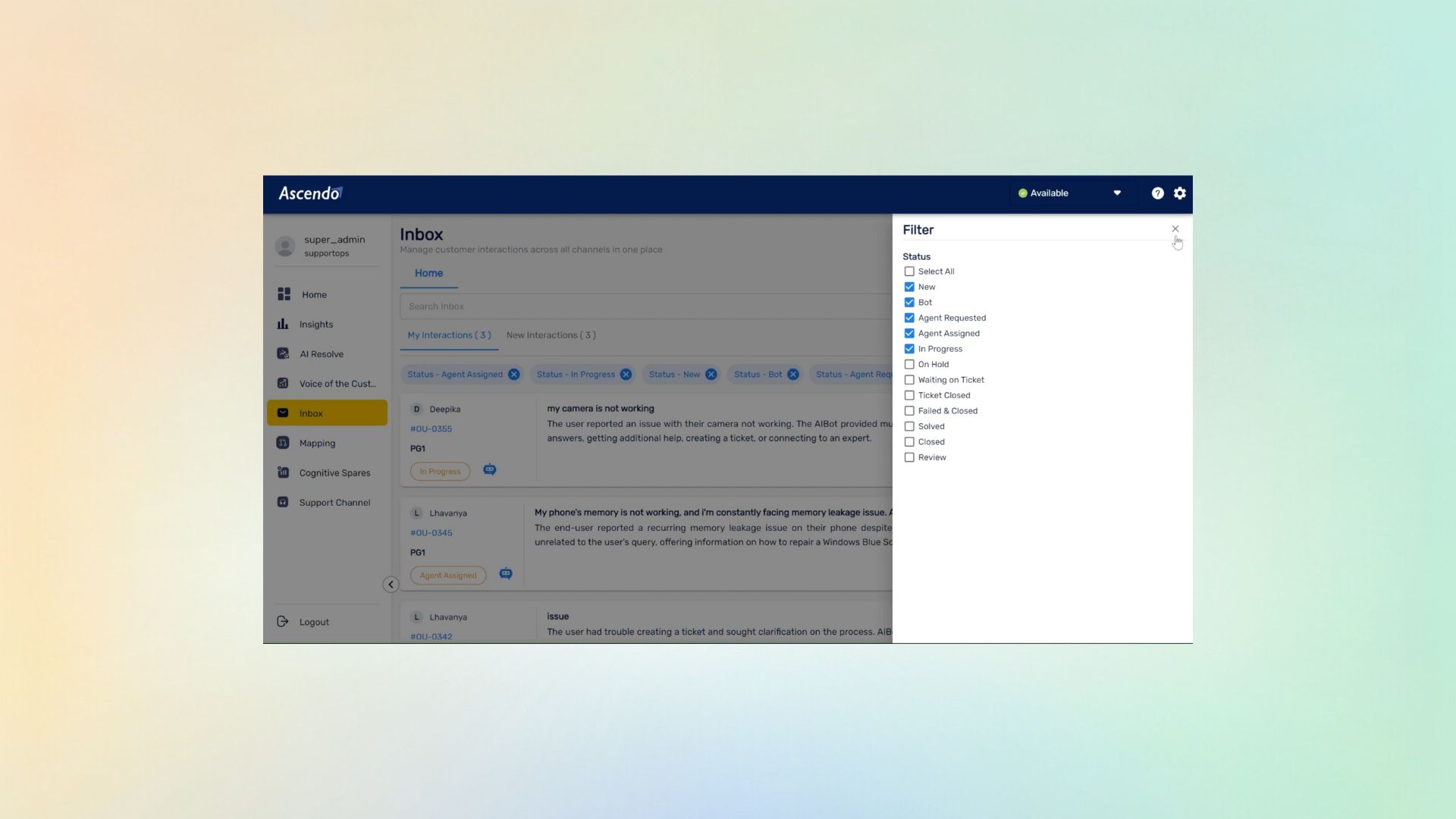
A single queue across every channel is only useful if somebody can narrow it to the part they own. Filters are what turn one large inbox into the working view a support lead actually manages — by product, severity, customer tier, channel or SLA risk.
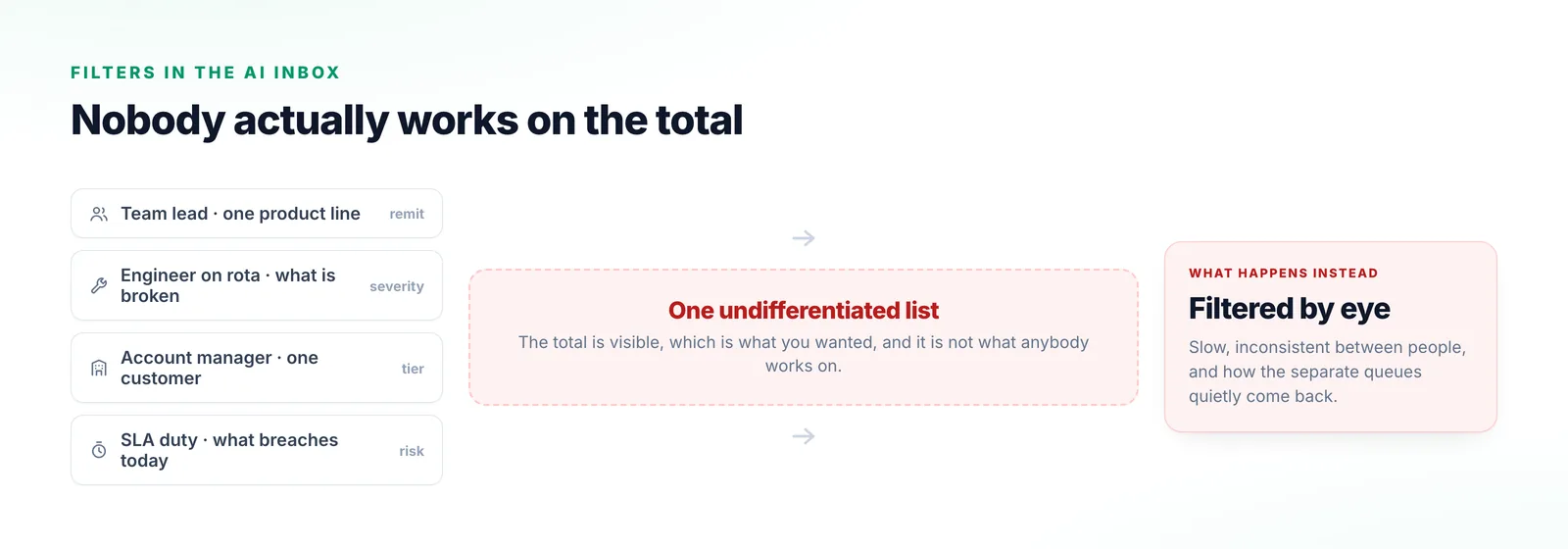
Consolidating every channel into one inbox solves a real problem and immediately creates a smaller one. The total is now visible, which is what you wanted, and nobody actually works on the total.
Without a way to cut it, everybody stares at the same undifferentiated list and filters it in their head — slow, inconsistent between people, and precisely the work that quietly reintroduces the separate queues. That is why shared inboxes fail: the last step never got finished.
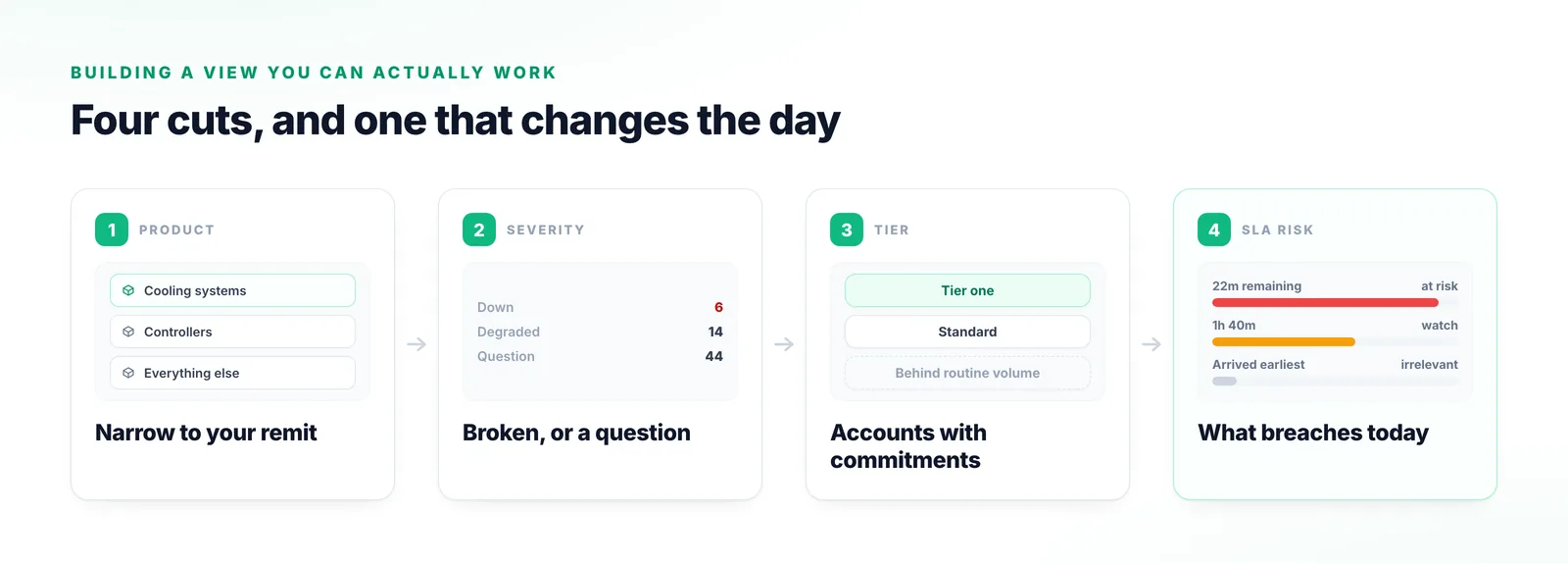
Four cuts, and the fourth is the one that changes how a day goes.
Narrow to the product line you are responsible for, so the queue reflects your remit.
Separate what is broken from what is a question.
Isolate the accounts with commitments attached, so a strategic customer stops sitting behind routine volume.
Surface what is approaching a breach rather than what arrived earliest. This is the view a support lead checks first thing.
This is the difference between a queue that is managed and one that is merely watched.
Filters look minor next to the intelligence in the platform, and they determine whether it is ever reached. A queue that cannot be narrowed is watched rather than managed.
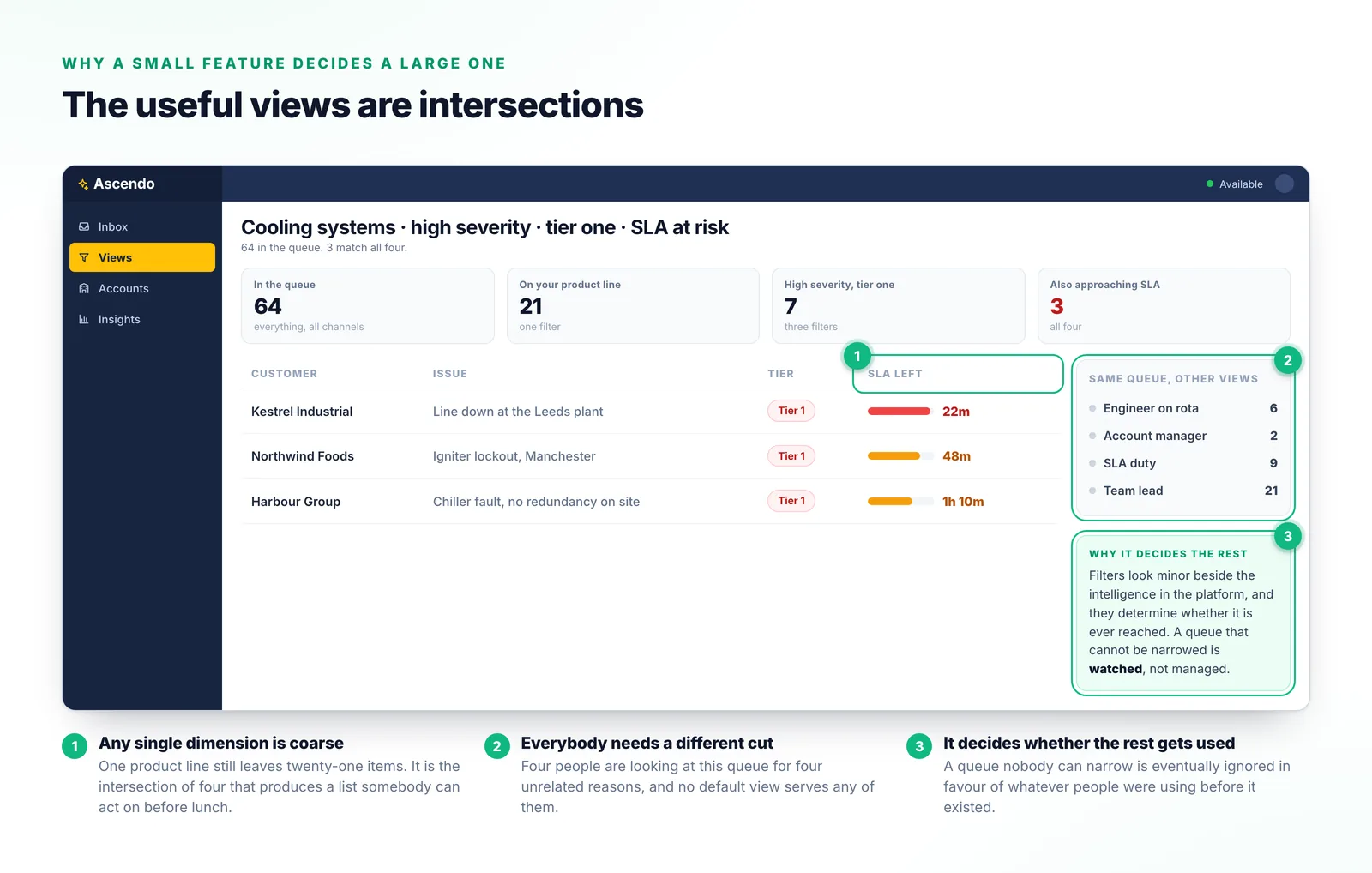
The team lead, the engineer on rota, the account manager and the person on SLA duty are looking at one queue for four unrelated reasons. No default view serves them.
Any single dimension is coarse. The useful views are intersections — high severity, one product line, tier-one customers, approaching an SLA — which no sort order can answer.
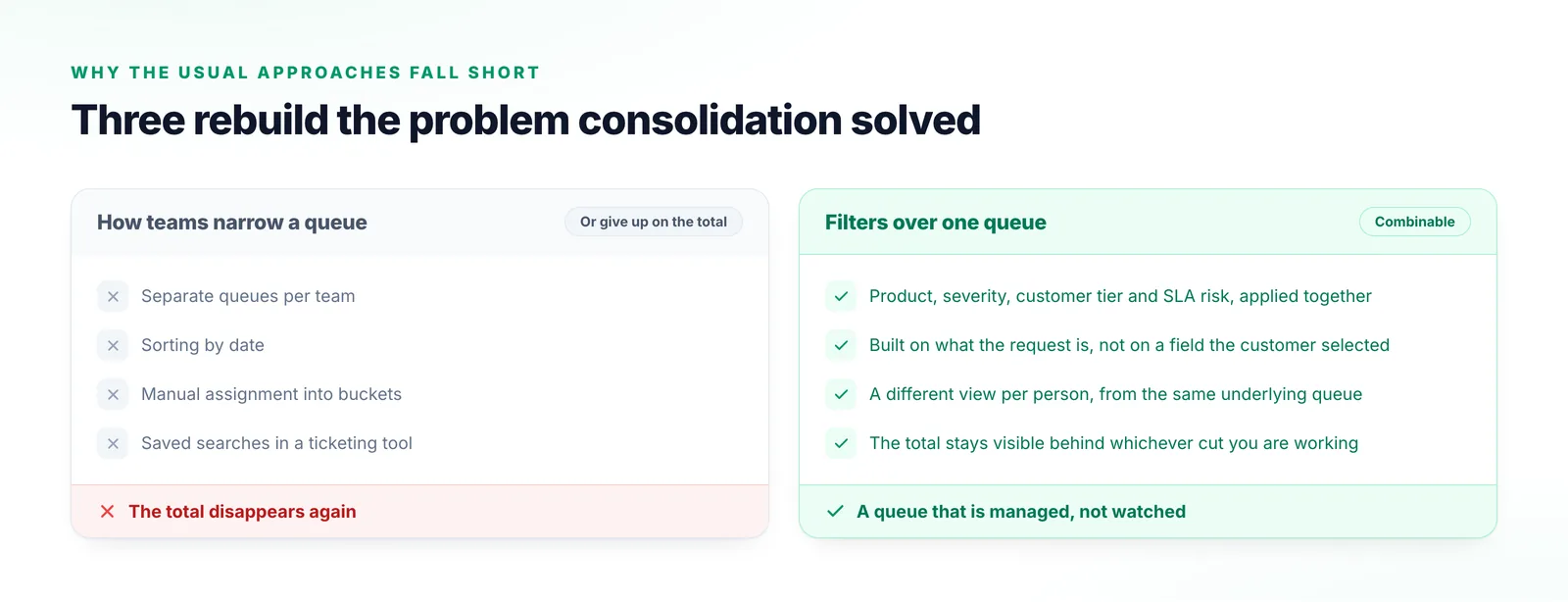
Three of these rebuild the problem consolidation was meant to solve.
Gives everyone their own view and takes the total away again.
Treats arrival time as the most important fact about a request. It is rarely in the top three.
Somebody spends their morning distributing work, and the buckets go stale.
Closest to the right idea, and usually built on fields the customer filled in.
Age and risk in particular are not the same thing.
AI Inbox
Most support leads already know the cut they want and cannot build it in the tools they have. Tell us what it is and we will show it to you against your own queue.
Talk to us