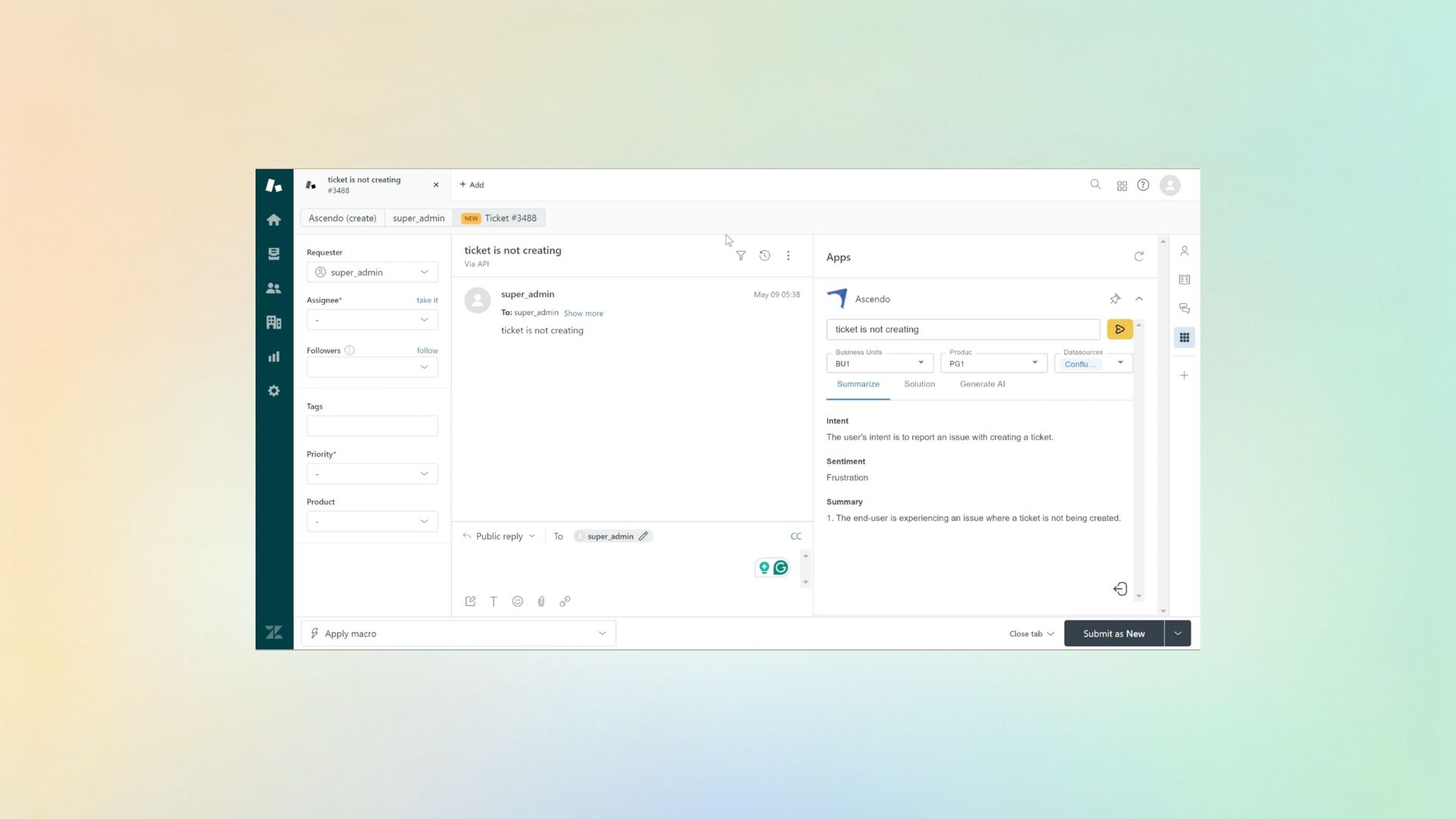
Four signals, not one
Sentiment alone fails on the common case: a frustrated enterprise customer writes tersely, not angrily. SLA tier, ticket age and repeat contacts carry the model when the language gives nothing away.
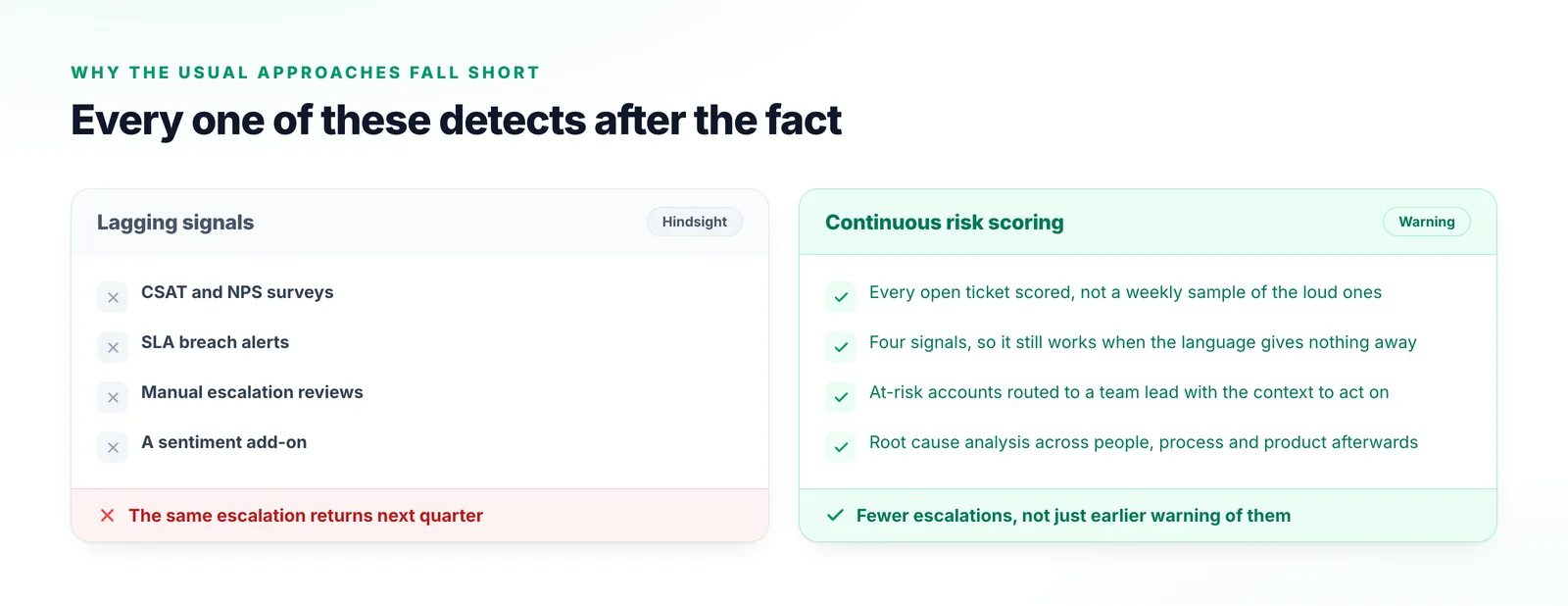
By the time a customer formally escalates, the trust is already gone. Ascendo scores every open ticket continuously on sentiment, SLA tier, age and repeat contacts, and surfaces at-risk accounts to team leads before the customer picks up the phone.
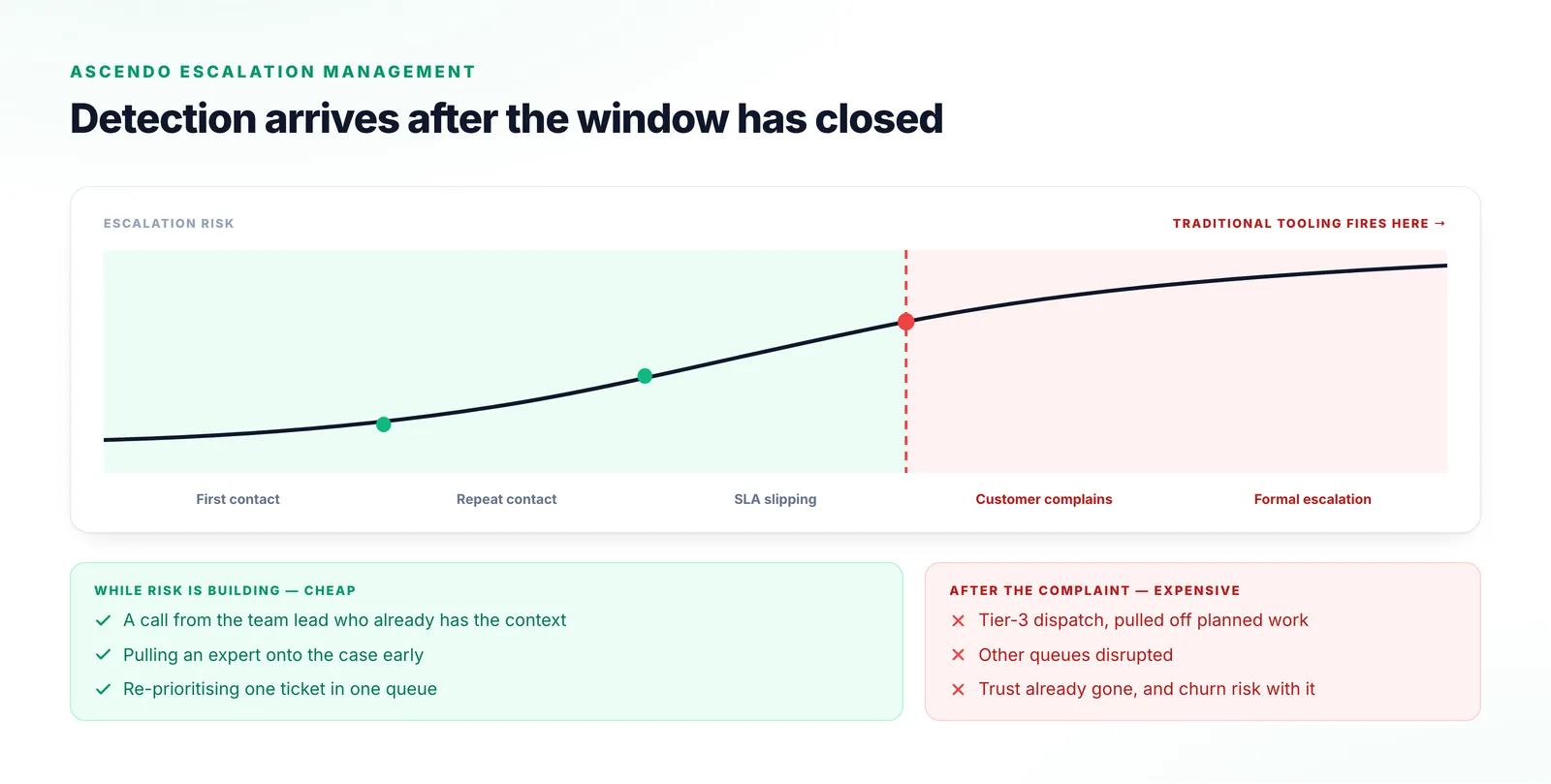
Escalations consume many times the hours of a normal ticket, pull senior engineers off planned work, disrupt other queues and, where they drag on, lead to churn.
The root problem is reactive detection: tooling flags an escalation once the customer has complained, which is precisely when the cheap interventions stop being available. And without root cause analysis afterwards, the same escalation returns next quarter under a different number.
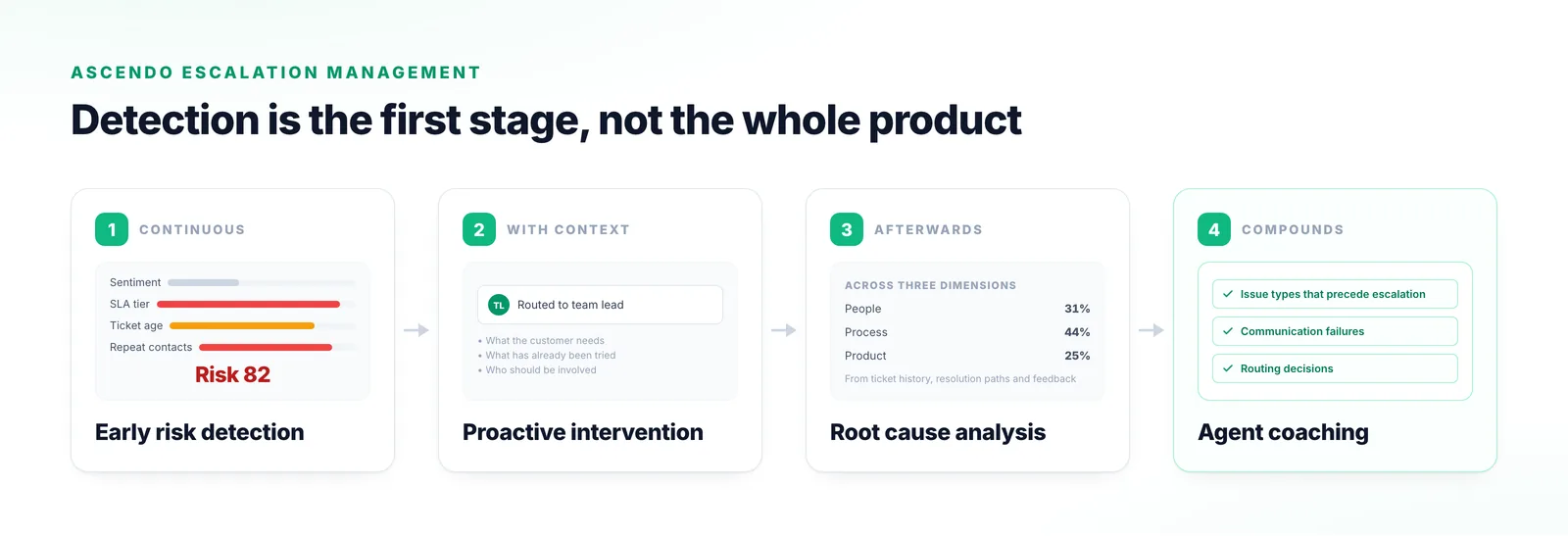
Detection is the first stage, not the whole product.
Scored on sentiment, SLA tier, ticket age and repeat contacts, so at-risk accounts surface before the customer escalates.
Routed to a team lead with context: what the customer needs, what has been tried, who should be involved.
Ticket history, resolution paths and feedback aggregated across people, process and product.
Mined for the issue types, communication failures and routing decisions that most often precede one.
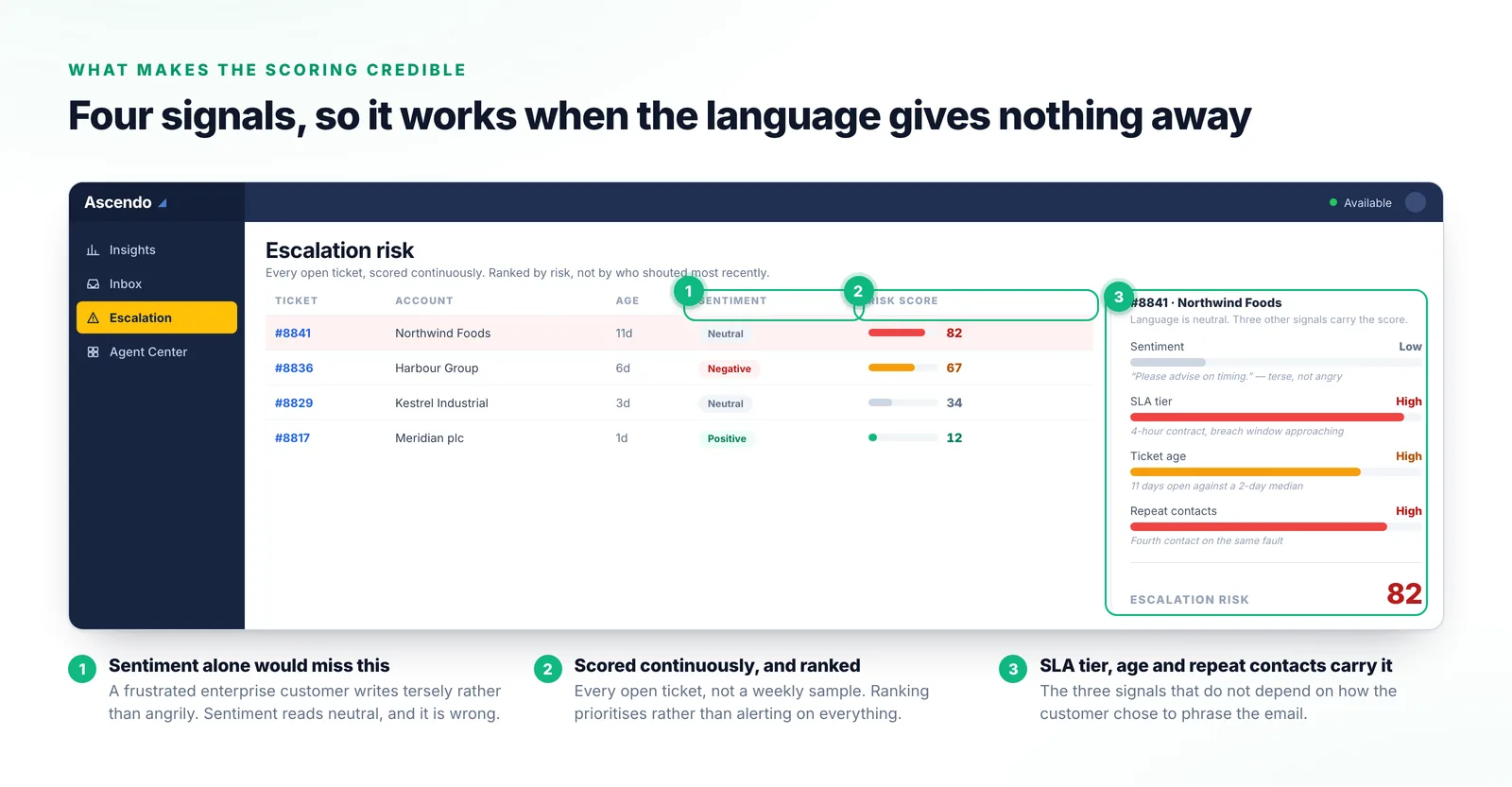
The usual objection is that sentiment analysis does not work. It is mostly right, which is why this is not a sentiment tool.
Sentiment alone fails on the common case: a frustrated enterprise customer writes tersely, not angrily. SLA tier, ticket age and repeat contacts carry the model when the language gives nothing away.
Every open ticket is scored continuously rather than sampled weekly. Scoring prioritises rather than alerting on everything, which keeps it from becoming noise people ignore.
Most tools stop at detection. Root cause analysis plus coaching on the patterns it finds is what reduces escalations rather than just warning about them.
Every one of these detects after the fact.
Lagging by weeks. They tell you reliably who has already decided to leave.
Fire at the moment of breach — the moment the cheap intervention stopped being possible.
A weekly meeting over sampled tickets, producing hindsight rather than warning.
One signal, no SLA tier, no repeat-contact history, no intervention workflow, no analysis afterwards.
Terms used across the escalation product pages.
The full product page, with the published figures on escalation cost and reduction.
Where the sentiment score comes from: it is set on the interaction as it arrives.
The intervention itself, pulling an expert in early instead of dispatching a tier-3 engineer late.
Escalation Management
Give us your escalations from the last two quarters and we will backtest the risk model against them, so you can judge it on cases you already know the ending to.
Talk to us