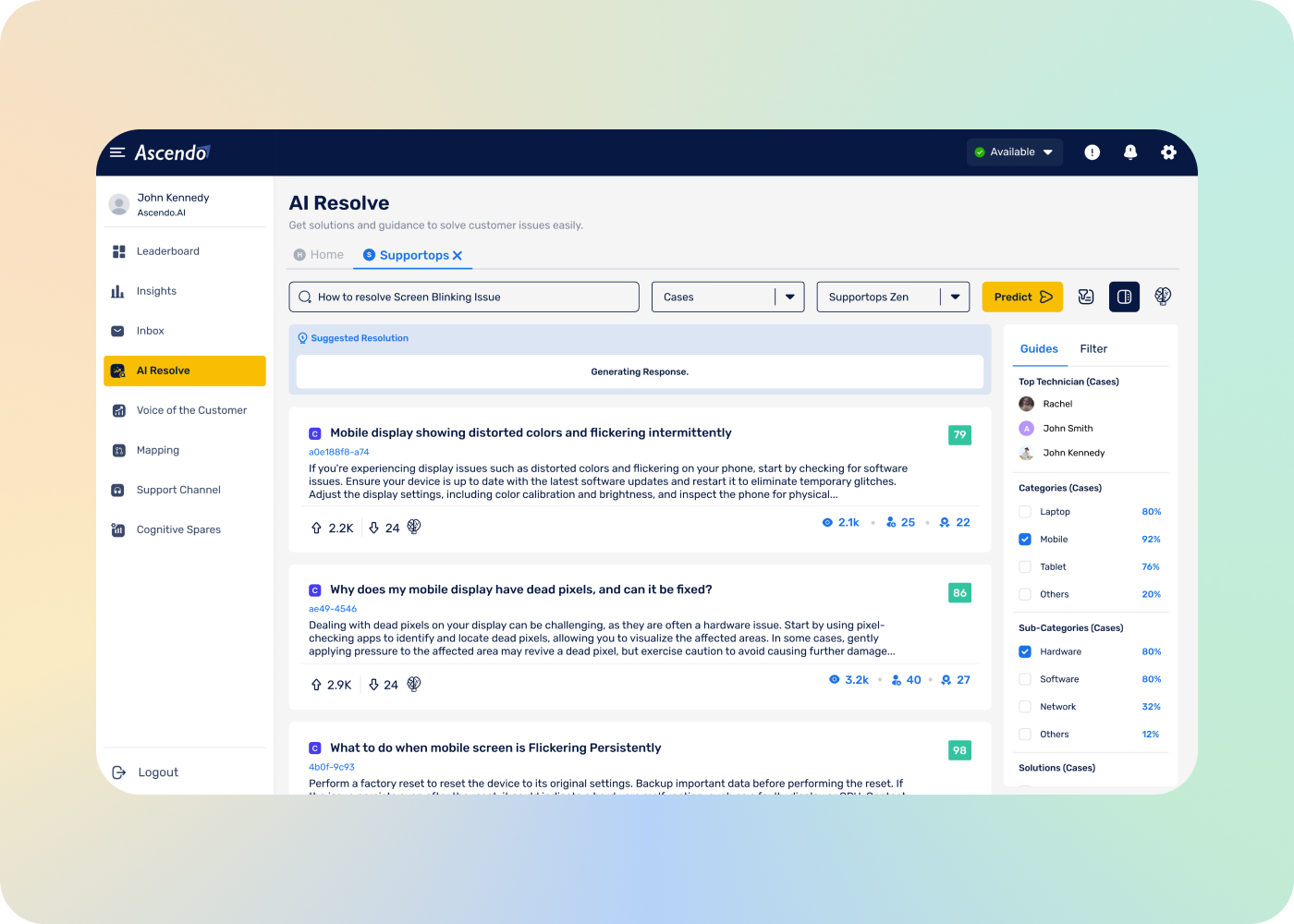
Prior art beats a recommendation
An expert does not need the standard procedure. What they cannot do is remember every case the organisation has closed, or read the ones they never saw.
The usual objection to AI assistance is that it helps juniors and gets in a senior engineer’s way. It is a fair objection, and this is the answer to it: prior art on genuinely hard problems, patterns across the install base that no individual can see, and the parts of a diagnosis worth taking off an expert’s desk entirely.
In most support organisations a small number of people resolve a disproportionate share of the difficult work. They are the bottleneck, the escalation path and the reason hard cases close at all.
Assistance built for a junior surfaces things an expert already knows, so it reads as noise, and every dismissed suggestion is a small tax. What they are short of is different: whether anyone has seen this before, whether it is happening across the install base, and the elimination at the front of a diagnosis.
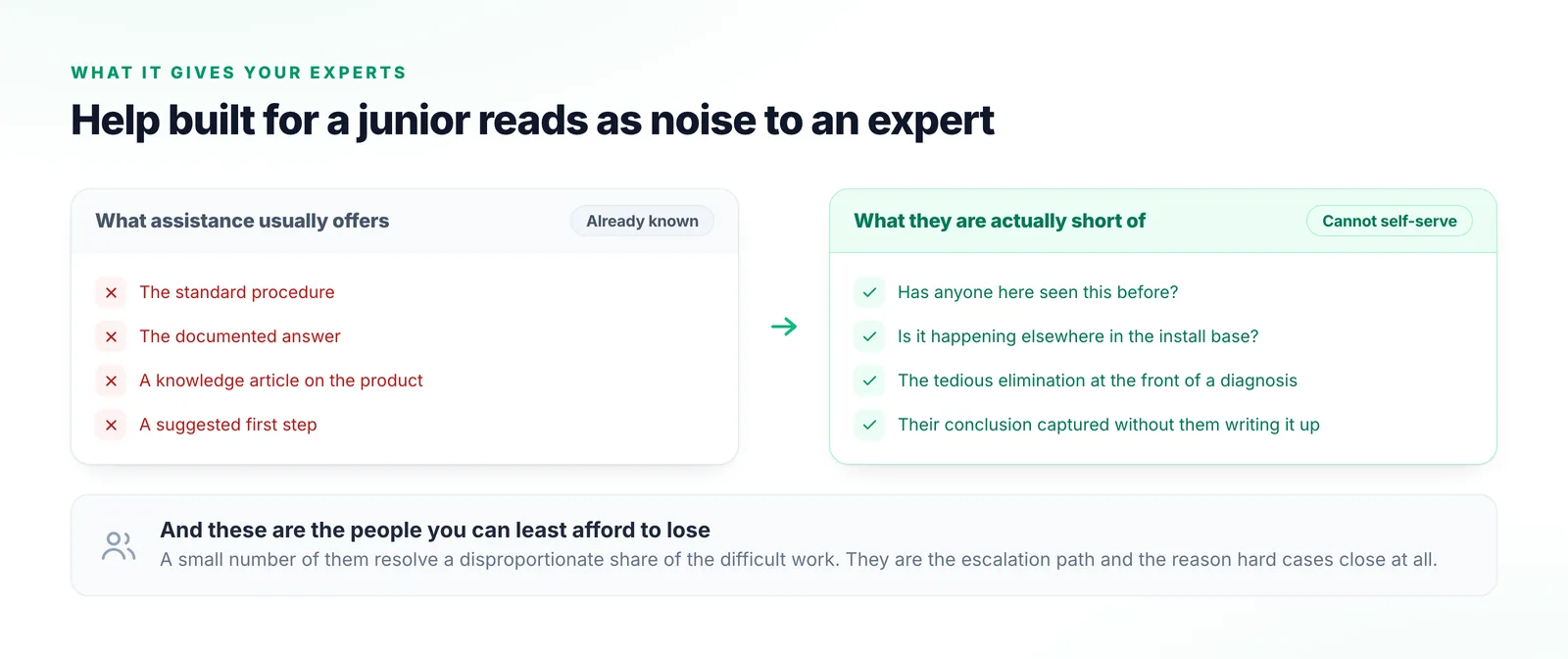
None of these is a suggested procedure, which is the point.
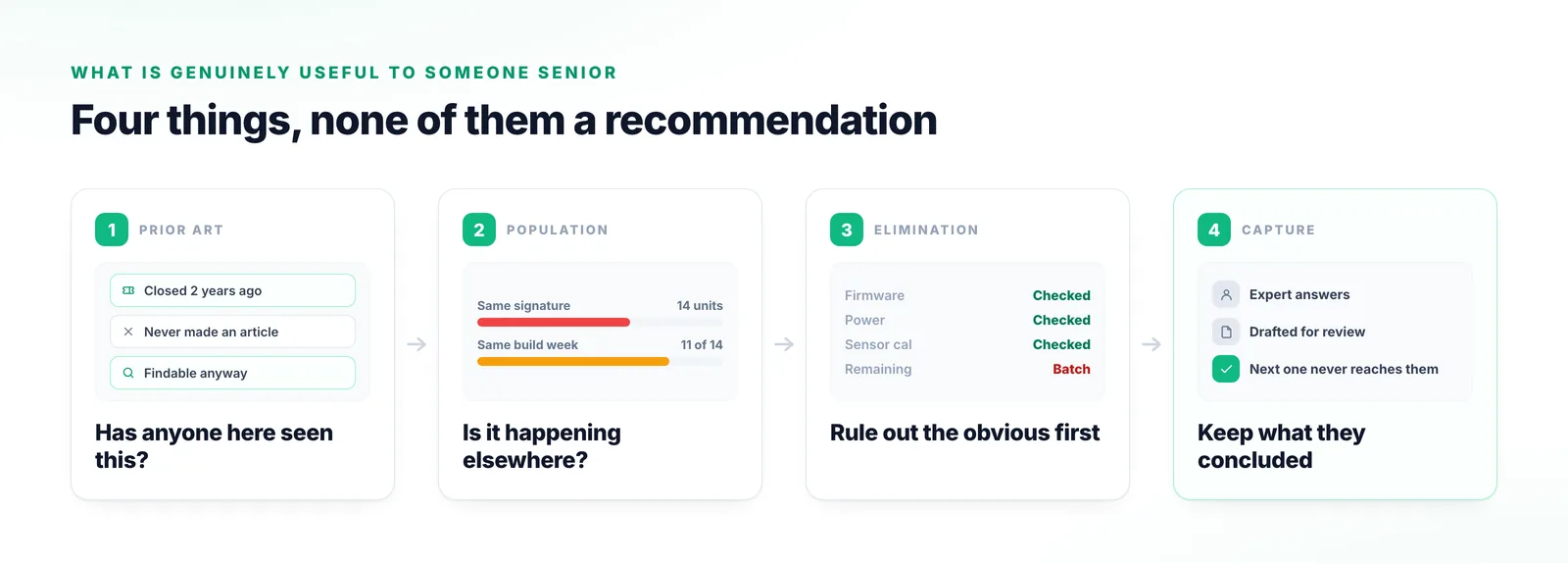
The most valuable thing on a hard case is prior art, and it is usually undocumented.
An expert sees their own cases. Whether the same signature appears across the install base is a different question.
A large part of any diagnosis is ruling things out. Having the obvious candidates already checked means an expert starts where the problem is.
The answer an expert produces is the highest-value knowledge you have. Capturing it as they give it means the next occurrence does not reach them.
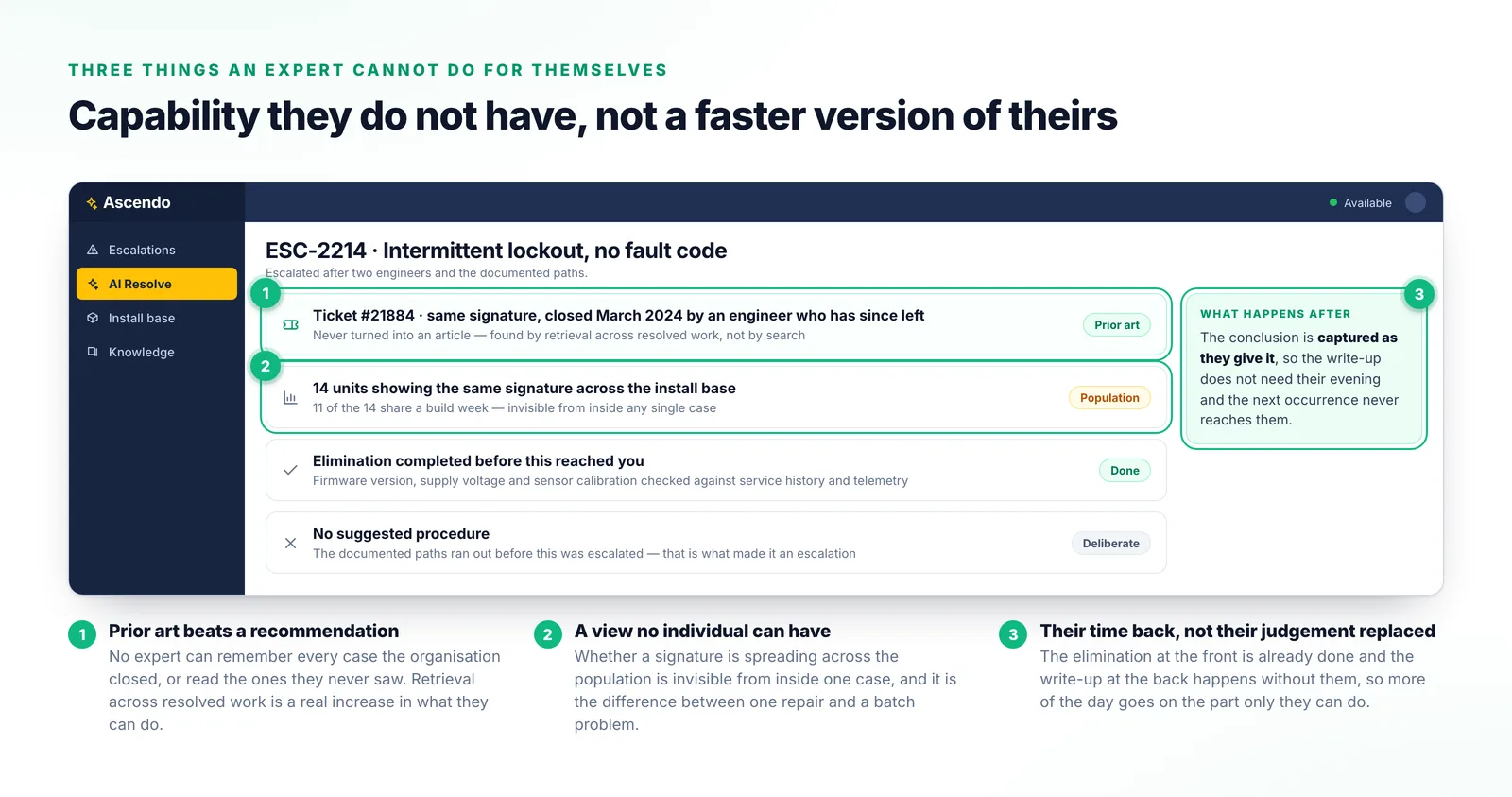
Capability they do not already have, rather than a faster version of what they do.
An expert does not need the standard procedure. What they cannot do is remember every case the organisation has closed, or read the ones they never saw.
Whether a signature is appearing across the install base is invisible from inside a single case. It is the difference between fixing one unit and finding a batch problem.
The offer is not a better answer than theirs. It is that the elimination at the front is done and the write-up at the back happens without them.
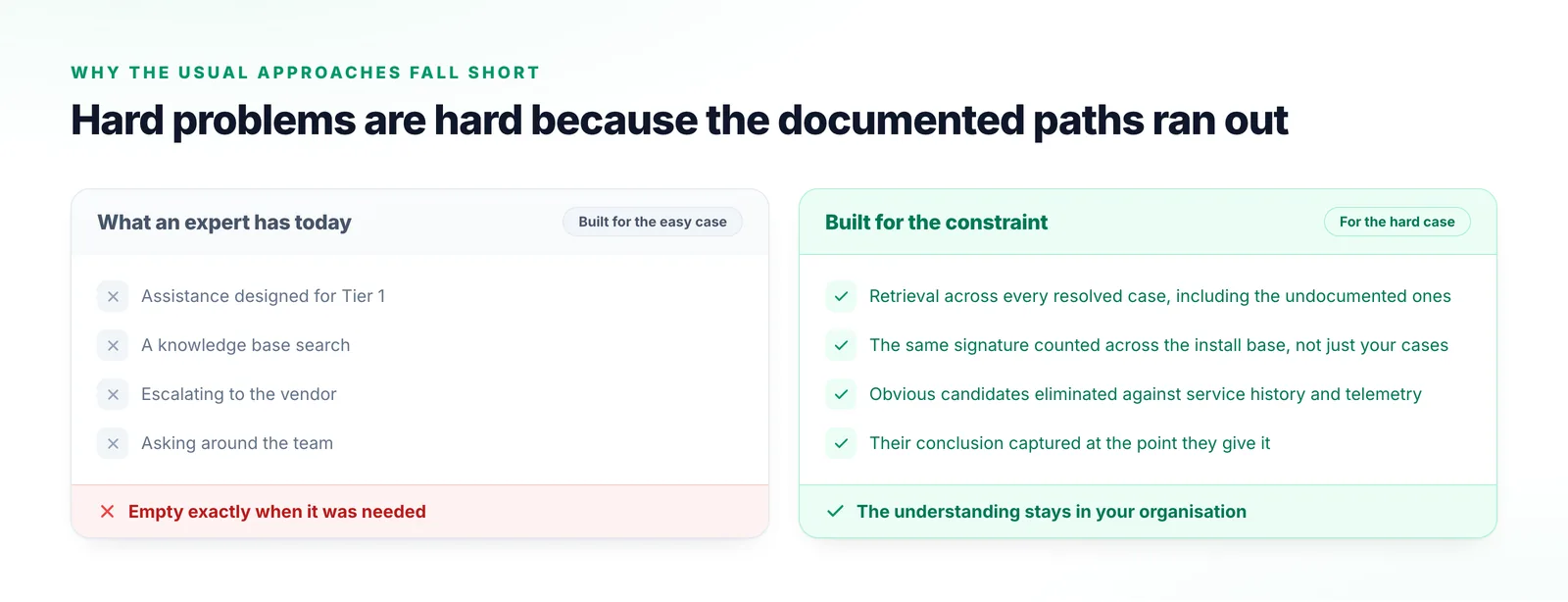
Hard problems are hard precisely because the documented paths have run out.
Surfaces what an expert already knows. Every dismissed suggestion is a small tax, and eventually they stop looking.
Finds documented answers. Hard problems are hard because nobody documented them.
Slow, and it exports the diagnosis with the learning. What comes back is an answer rather than an understanding you keep.
Works when the right person is available and remembers. Coverage is whoever happened to be online.
The terms that matter when the audience is your most senior people.
Reaching the top technician sideways instead of escalating up tiers, and capturing what they say.
The other end of the same system: an unfamiliar problem worked through without escalating.
The agent reasoning across manuals, tickets and service records at once.
AI Resolve
Pick a case your best engineer solved and nobody documented. We will show you what the system finds, and whether it would have got there sooner.
Talk to us