Predict shortages before they breach your SLAs
Understand field failure characteristics, install base growth trends, and consumption patterns at the depot-part level to recommend precise stocking requirements before a single SLA is missed.
See the Agent in Action
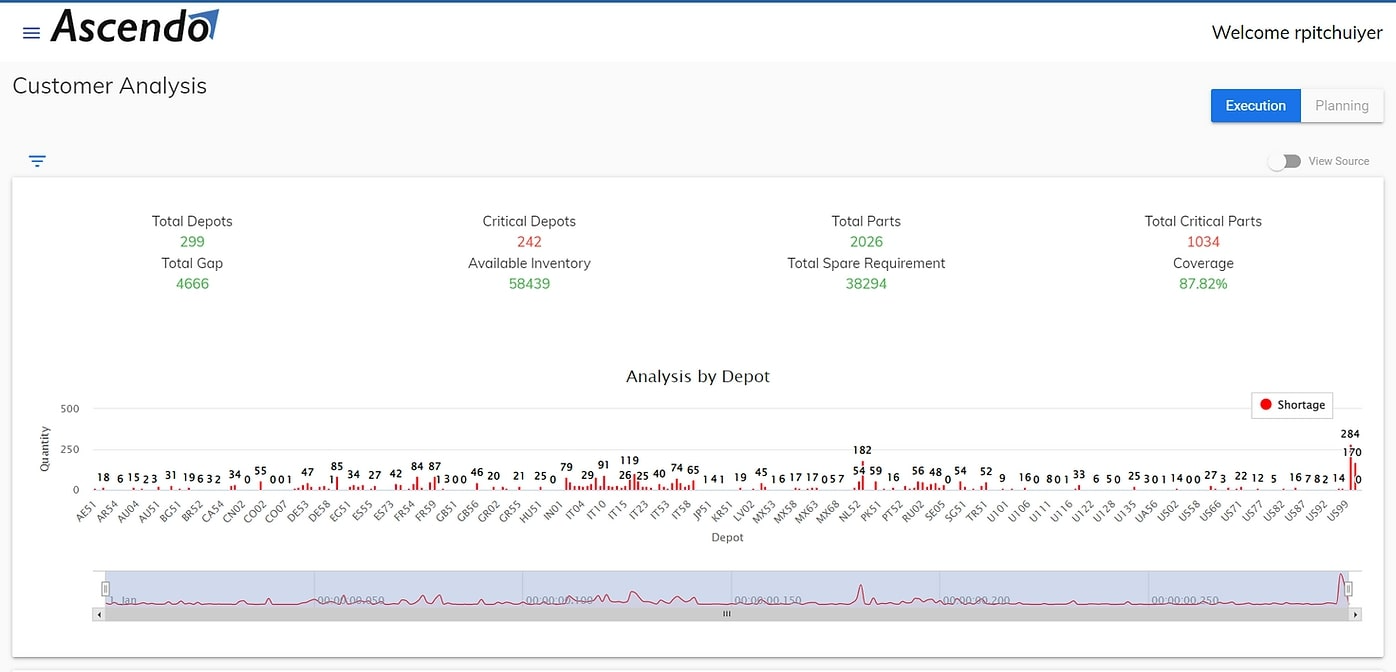
Watch a walkthrough of the Cognitive Spares Agent handling shortage detection, depot rebalancing, and SLA risk scoring.
Context
The complexity of modern spare parts logistics requires a cognitive approach to balance service levels and inventory costs.
The Spares Challenge
Support teams face a unique challenge of needing to stock spare parts in multiple locations (depots) to satisfy support contract commitments. Depending on the mission-critical nature of products, they offer various service levels such as 4-hour, 8-hour, or Next Business Day (NBD) replacement. For global companies, this involves navigating geographically dispersed customers and specific country customs rules when deciding location and quantity.
The Ascendo Solution
Ascendo analyzes field failure characteristics, install base growth trends, and consumption patterns to recommend precise stocking requirements. Planners use these recommendations to determine reorder points (ROP) at the part-location level. The system provides customer SLA risk alerts, detects install base movements, and monitors third-party logistics to ensure proactive planning and procurement.
How It Works
Analyze the impact for changes
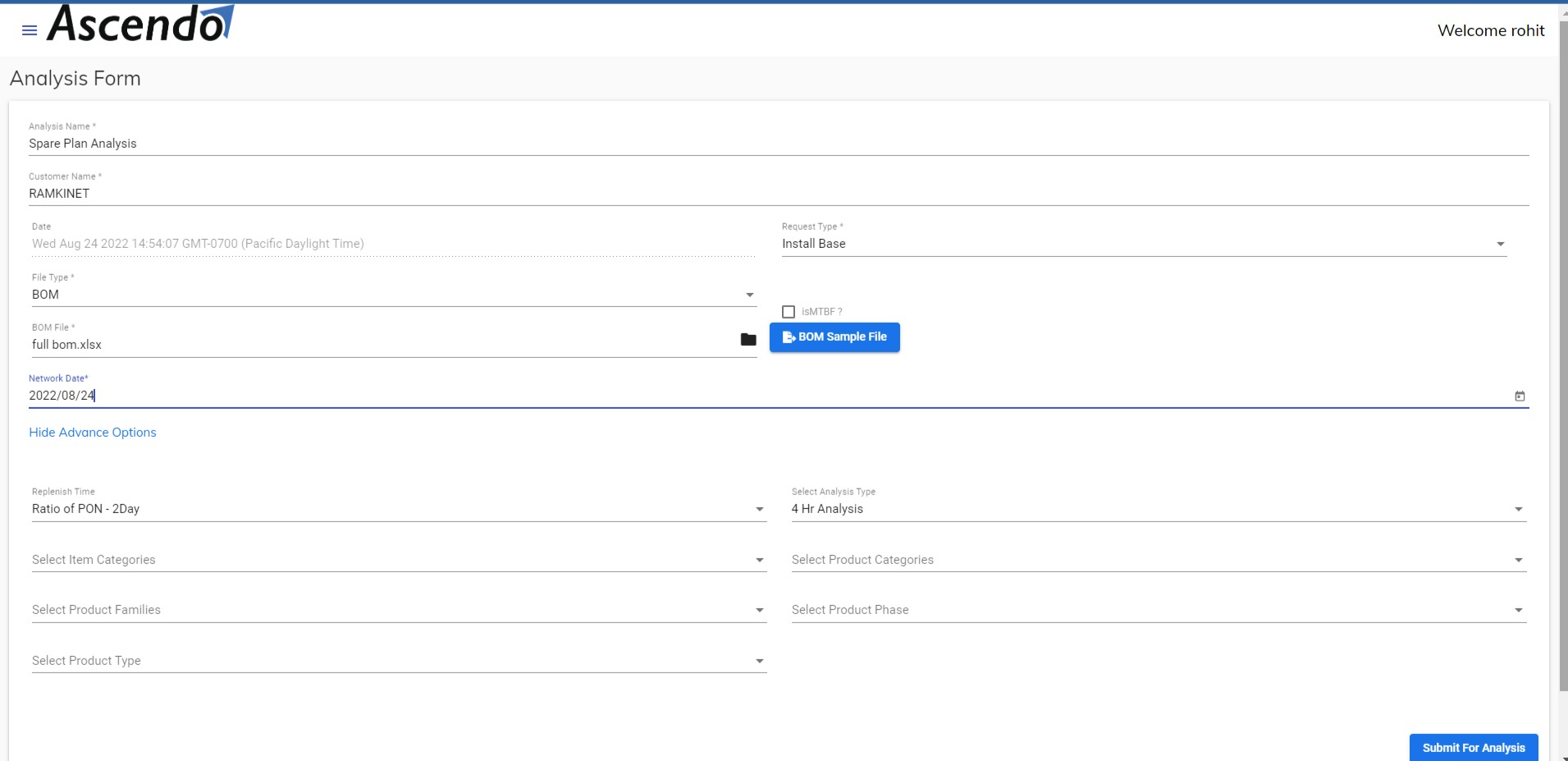
Planners can quickly get the entire shortage and surplus impact at any point in time. Ascendo provides the requirements of part by depot along with opportunity for substitution, cost impact, gaps, and additional needs at regional and global hubs.
Address shortage based on priority
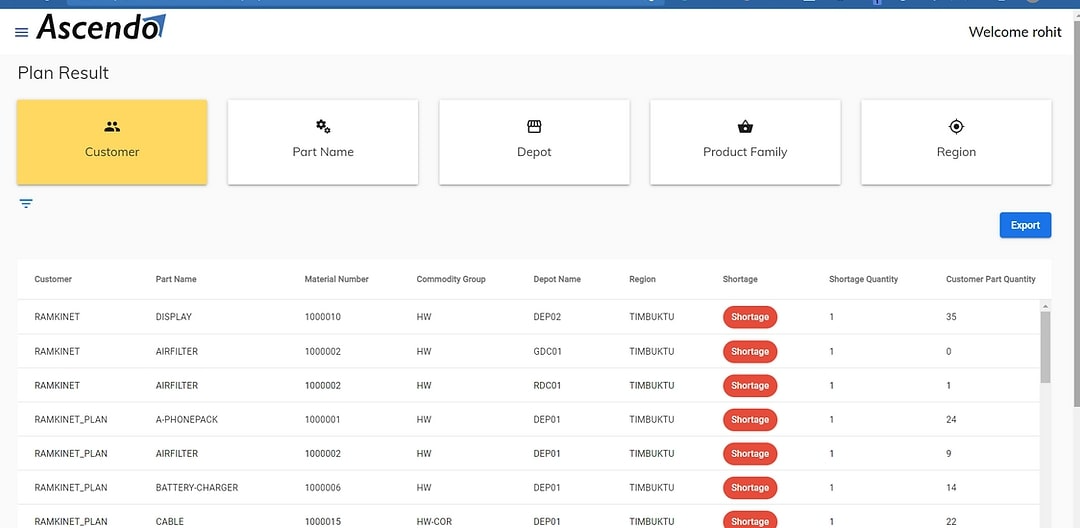
Knowing the potential risk and the level of risk allows planners to either move parts from one location to another or find the supplies to solve potential customer risks. Fully transition to proactive support.
Understand the SLA coverage and risks
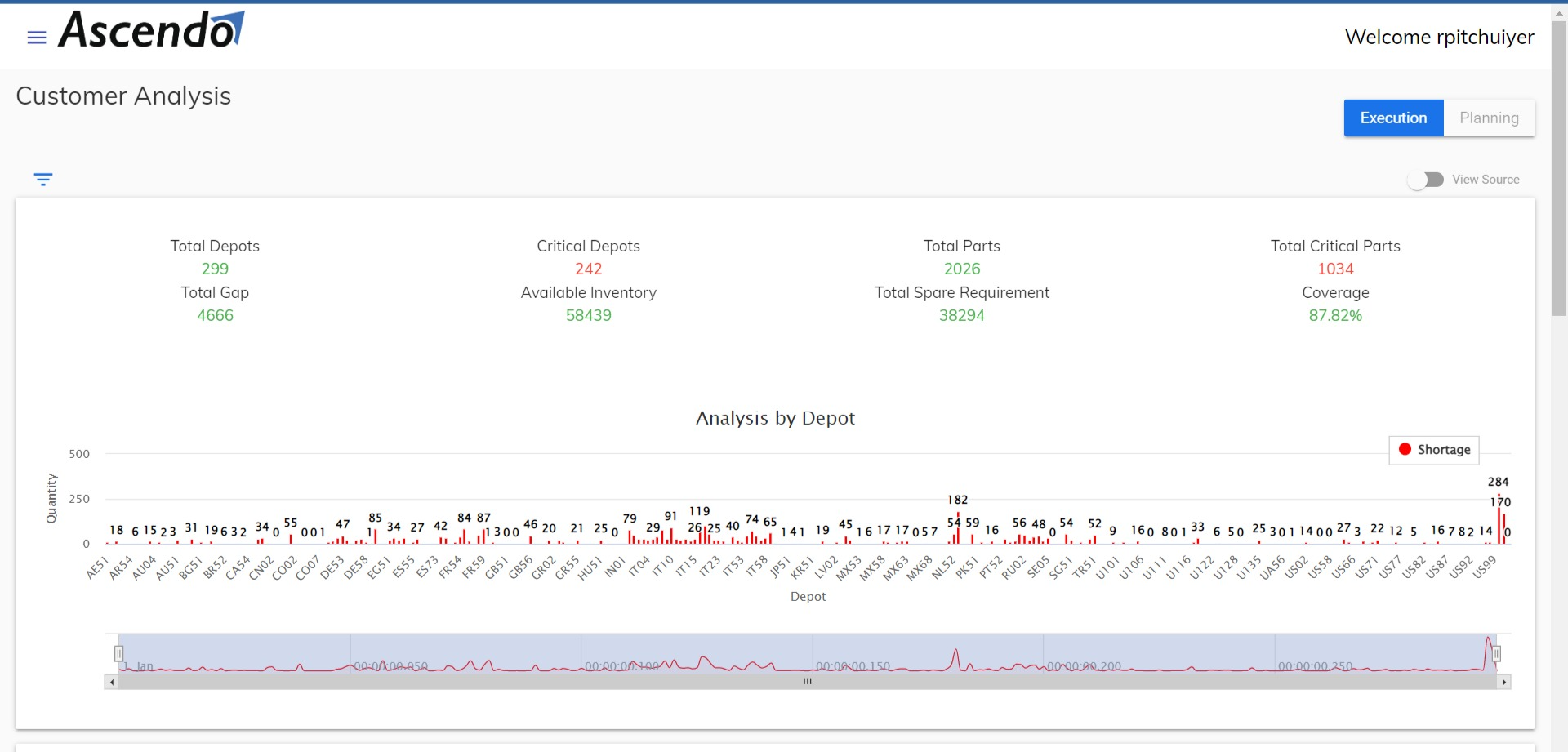
Logistics operations leaders can understand the potential SLA coverage risk by customer, product, depot, and region. They can guide their planners to take actions to solve coverage issues based on customer and business impact.
Why Existing Approaches Break
Three approaches field service teams typically rely on, and the moment each one fails.
Spreadsheets and Manual Review
Planner reviews reorder points monthly. By the time a trend is visible, stockouts have already triggered SLA breaches. Reactive by design.
ERP-Native Planning (SAP / Oracle)
Reorder rules work on historical averages. Install base grows 20% but rules don't update. Overstocked on old parts, understocked on new ones.
Generic AI Forecasting Tools
ML model predicts aggregate demand accurately at HQ level. Planners still manually allocate to depots. The last mile is still guesswork.
Head-to-Head Comparison
How each approach performs across the capabilities that determine SLA outcomes.
| Capability | Spreadsheet / Manual | ERP-Native | Generic AI | Ascendo |
|---|---|---|---|---|
| Demand forecasting | Historical averages, manual | Rule-based reorder points | ML forecast, aggregate level | Part-location level, install base + failure signals |
| Depot-level optimization | None | Basic min/max rules | Manual allocation post-forecast | Automated rebalancing across all depots |
| SLA risk visibility | After the breach | Lagging indicator | Not field-service aware | Proactive risk score by customer + contract |
| FSM / ERP / IoT integration | Export / import only | Native ERP only | API, no FSM context | 100+ connectors: FSM + IoT + ERP in one mesh |
| Time to value | Immediate (but wrong) | 6-18 months | 3-6 months | 2-4 weeks |
Global Field Service Organization
Before Ascendo, this team managed reorder points in SAP with monthly planner reviews. SLA compliance was unpredictable. After deployment: automated depot-level alerts, no manual review cycle, zero rip-and-replace of existing ERP.

Frequently Asked Questions
Stop Managing Parts Reactively
See how the Cognitive Spares Agent turns your field data into predictive stocking decisions, across every depot, every contract, every part.