Resolve
Diagnoses complex technical issues through multi-modal, multi-lingual conversational guidance and delivers step-by-step resolution paths. Draws on asset history, service records, and knowledge articles to support both remote and on-site technicians in reducing time-to-resolution and improving first-time fix rates.
Ascendo
Resolve
Ask Ascendo
Resolve engages technicians through natural, conversational guidance. Ask questions in plain language, get step-by-step answers grounded in asset history and knowledge articles, and close issues without escalating to a senior engineer.
Tour AgentAI Agent with Intelligence
Conversational Resolution Intelligence
Resolve does not rely on static scripts or manual decision trees. It understands the context of each issue by drawing from asset history, service records, and knowledge articles to generate guidance that fits the specific situation.
Technicians interact in their preferred language and format. Resolve responds with ranked resolution paths, surfaces relevant documentation, and adapts in real time as the technician progresses through each step.
Every resolved issue feeds back into the system, so the guidance gets sharper over time. Teams see measurable improvements in first-time fix rates and mean time to resolution without adding headcount or relying on senior experts for every escalation.
Multi-Modal, Multi-Lingual Guidance
Resolve communicates with technicians through text, voice, and visual inputs across any language. Whether a field engineer is on-site or a remote expert is guiding from HQ, Resolve delivers clear, contextual instructions in the format and language that works best for the situation.
Data sources
- Training
- FAQ
- User guides
- Enrichment articles
- Knowledge objects
Asset History and Service Records
Every resolution path is informed by the full lifecycle of the asset. Resolve surfaces prior service records, past failure patterns, and maintenance history to ensure technicians are never starting from scratch. Context-aware guidance means faster diagnosis and fewer repeat failures.
Knowledge Article Integration
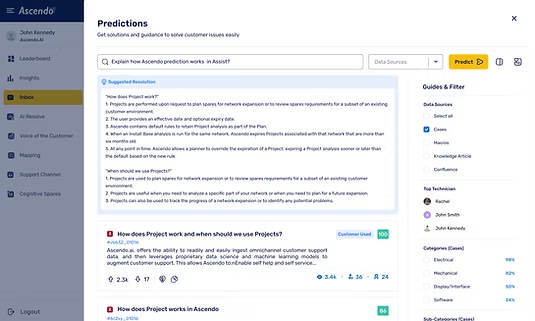
Resolve draws from structured knowledge articles, OEM documentation, and institutional know-how captured from your best technicians. The right article surfaces automatically at the right step, eliminating manual searching and reducing dependency on senior expert availability.
Remote and On-Site Support
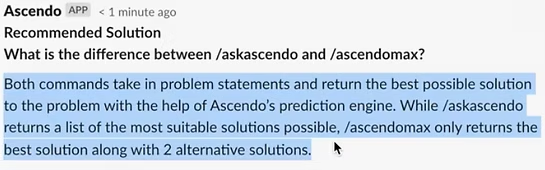
Whether the technician is on the floor or the expert is dialing in remotely, Resolve keeps both in sync. Step-by-step resolution paths are shared in real time, with confirmations, escalation triggers, and handoff points built directly into the workflow.
Reduce MTTR and Improve First-Time Fix Rates
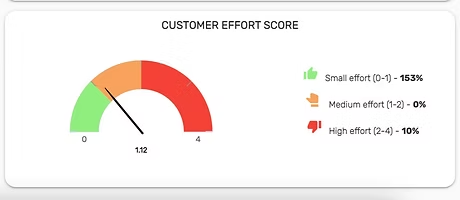
Resolve tracks resolution outcomes across every interaction and continuously improves its guidance based on what actually worked. Teams see measurable reductions in mean time to resolution and consistent improvement in first-time fix rates across the fleet.
Seamless Live Agent Handoff
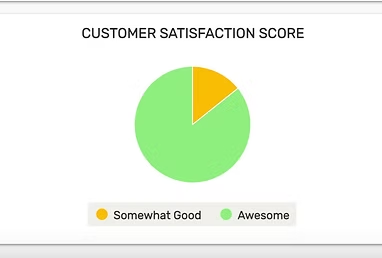
Eradicate customer frustration with seamless live agent handoff! Ascendo AI equips agents with complete interaction history and AI-powered predictions, enabling personalized recommendations and faster resolutions. Make every front-line agent a superhero!
Ready to transform your
customer support?
Join hundreds of enterprises using Ascendo AI to deliver world-class resolution experiences.
Frequently Asked Questions
What is the difference between Resolve and a standard chatbot?
A chatbot follows a script. Resolve understands context. It draws on the full lifecycle of the asset, prior service records, failure history, and your knowledge articles to generate step-by-step resolution paths specific to the situation. Every response is grounded in what actually worked on similar faults, not a generic answer.
What languages does Resolve support?
Resolve supports 161 languages, allowing technicians to interact in their native language and receive guidance in the format that works best for them. Whether a field engineer is in the US or a remote expert is guiding from another country, the same depth of guidance is available in every session.
How does Resolve use asset history during a live service call?
When a technician opens a case, Resolve immediately surfaces the full history of that asset: prior failure modes, previous repair attempts, parts replaced, and which resolution paths succeeded or failed. This eliminates the time technicians spend searching across systems and ensures they never start from scratch on a machine with prior incidents.
Can Resolve support a remote expert and an on-site technician at the same time?
Yes. Resolve keeps both in sync through a shared resolution path. Step confirmations, escalation triggers, and handoff points are built directly into the workflow so the remote expert and on-site technician are always looking at the same state of the problem, without needing a separate collaboration tool.
How does Resolve improve first-time fix rates over time?
Every resolved issue feeds back into the system. Resolve tracks which resolution paths led to first-time fixes and which required follow-up visits, continuously refining its guidance for similar faults. Teams see measurable reductions in mean time to resolution and FTFR improvement across the fleet without adding headcount.